Outlook brightens for leafy greens industry

Spinach industry on the rebound

What is in this article?:

  • There is bad and good news for the U.S. leafy greens industry. First the bad, leafy green consumption has been flat overall for the last 30 years. The good news is the latest data suggest the consumption of spinach and spring mix is on the increase.
  • The spinach industry is on the rebound, says Mary Zischke, chief executive officer of the California Leafy Greens Research Board.
  • The University of California is among several institutions providing valuable production research to advance the U.S. leafy greens industry.

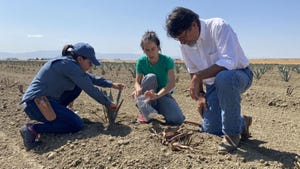
Trevor Suslow, UC Davis Extension Research Specialist, standing, consults with staff research associate Adrian Sbodio on a research project for the California Leafy Greens Research Program.

California leafy greens industry leader Mary Zischke took the podium at the 2012 Fall Desert Crops Workshop in El Centro, Calif., in November with disconcerting news about the U.S. consumer’s lackluster desire to eat vegetables.

Zischke, chief executive officer, California Leafy Greens Research Board, showed PowerPoint slides of USDA Economic Research Service data covering the last 30 years which showed that the per capita consumption of leafy greens had remained basically flat.

“The USDA data suggest that little consumption change has occurred despite the government’s efforts to convince the American public to eat a healthier diet,” says Zischke, chief executive officer of the California Leafy Greens Research Board (CLGRB) in Salinas, Calif. The USDA figures suggest the average consumer eats less than 8 ounces of leafy greens per week.

“This is a very disappointing figure,” Zischke says. “Leafy greens are one of the best nutritional stories in agriculture yet we don’t see much positive response from consumers.”

The data also show a large consumer consumption shift from iceberg lettuce to romaine lettuce.

Zischke says government data may not always be the most accurate information. She shared encouraging new data gathered by the California Leafy Greens Research Program (CLGRP), which the CLGRB oversees, which suggests the pendulum on U.S. leafy green consumption is swinging higher, including more portions of spinach and spring mix. “The spinach industry is on the rebound,” Zischke told the crowd.

The consumer just might be listening to the Obama administration’s ‘get healthy with vegetables’ message.

Zischke shared PowerPoint slides outlining the recent CLGRP data. From 2008-2009, California spinach production climbed from about 17 million cartons, equivalent to about 22 million cartons in 2011-2012; an increase of about 22 percent.

California is the nation’s largest spinach producer. About 80 percent of the crop is processed. The balance is sold fresh.

Spring mix, which includes various baby leaf lettuces, is also finding increased favor with consumers, the CLGRP says. California spring mix production has increased about 18 percent from about 13 million hundredweight in 2008-2009 to about 16 million hundredweight in 2011-2012.

Zischke discussed the latest in leafy green consumption plus the CLGRP’s crop research efforts during the Fall Desert Crops Workshop. The annual event was conducted by the University of California Cooperative Extension (UCCE) in Imperial County and was sponsored by Western Farm Press.

Discuss this Article 2

Vipul
on Apr 12, 2013

Very good article! This is a highly beneficial blogging site which you have.
Property agents gurgaon

jones88
on May 2, 2013

The green industry is showing so much good strength this year. This is definitely so good to hear for the farmers here. So many definitely depend on this crop. Keep up the good work. clour hosting

Post new comment
Sign In or register to use your Western Farm Press ID

(optional)

Continuing Education Courses
This accredited CE course focuses on choosing the correct variety alfalfa based on a number of...
New Course
The 2,000-member Weed Science Society of America’s (WSSA) Herbicide Resistance Action...

The course details six of the primary diseases affecting citrus: Huanglongbing (Citrus...

Newsletter Signup