Organic vegetable production covered in comprehensive study

What is in this article?:

  • Iowa State University researcher Kathleen Delate is examining which organic vegetable growing practices are best for the soil, water, yields and even nutrition.
  • The professor of horticulture and agronomy is undertaking perhaps the most comprehensive study of organic vegetable-growing practices by looking at the use of cover crops, manure, tillage and mulch.

Iowa State University researcher Kathleen Delate is examining which organic vegetable growing practices are best for the soil, water, yields and even nutrition. The professor of horticulture and agronomy is undertaking perhaps the most comprehensive study of organic vegetable-growing practices by looking at the use of cover crops, manure, tillage and mulch.

As the number of organic vegetable growers continues to increase, there has been startlingly little research done on the sustainability of these organic practices.

An Iowa State University researcher is now examining which organic vegetable growing practices are best for the soil, water, yields and even nutrition.

Use of cover crops, manure, tillage and mulch

Kathleen Delate, professor of horticulture and agronomy, is undertaking perhaps the most comprehensive study of organic vegetable-growing practices by looking at the use of cover crops, manure, tillage and mulch.

"We are measuring a lot of things," said Delate. "We are hoping to provide organic producers with science-based information that they can use to make wise decisions affecting the sustainability of their operations. And we think much of this data can be used for conventional crops as well."

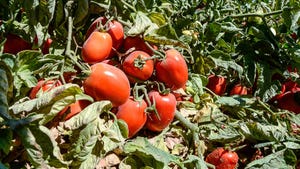
Using 36 farm plots that each employ different combinations of variables, Delate hopes to discover which practices work best. The vegetables in the research include tomatoes, broccoli, onions, beans, squash and lettuce.

The vegetables will be grown in rotation with one crop planted in the spring, followed in the fall by another.

Cover crops

"The first parameter we're looking at is cover crops. For cover crops, we are using hairy vetch and rye," said Delate. "That combination is one that we've had really good luck with for our vegetable farming."

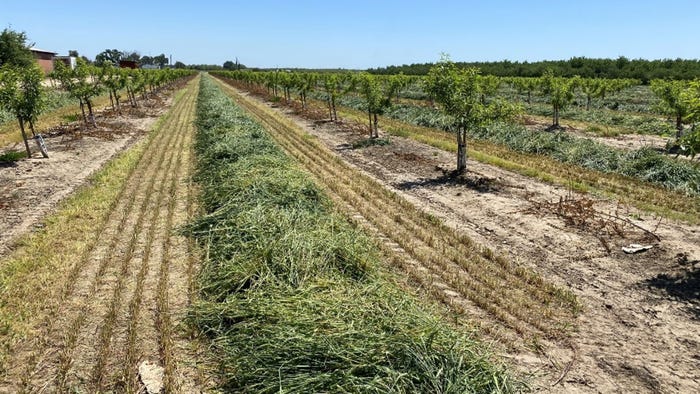
In the research, the rye and hairy vetch are planted in the fall after the second vegetable crop is harvested. The cover crops are allowed to stay in the ground all winter and are then destroyed in the spring prior to the first vegetable crop planting.

Cover crop systems have been shown to improve soil quality and Delate hopes that they have other advantages.

"One of the theories we'll be testing is that cover crops can actually attract beneficial insects," said Delate.

"We also have some data that the straw from the cover crop could prevent some aerial diseases, but it also keeps the soils moist, which could lead to some root rot and a whole suite of soil quality issues. We're eager to see the outcomes," she said.

In keeping with the organic nature of the research, rather than destroying the cover crops with chemicals, Delate's research team will use a large roller to break the plant stems of the plants.

"The blades of the roller crush and kill the cover crops," said Delate. "It physically breaks the transfer of water and nutrients in the plant."

None of the cover crop will be harvested and the plants will remain on the field and will add to the organic matter in the soil, said Delate.

Discuss this article 1

Another great way to resaolve your issues with weeds and to add huge amounts of nutriednts to your land is to use ground shell. the shell will not only prevent any unwanted growth but will also enrich your soil with calcium and other bnutrients allowing crops to grow heartier. there is a company out of Florida that processes and washed their shell. their primary business is to color it, but using their process it removes all of the saline and salt content that was once frowned upon in gardening. the company is called " Shellscape" it may be worth looking in to.

By Anonymous (not verified)  on Feb 18, 2011
Post new comment
Sign In or register to use your Western Farm Press ID
(optional)

Continuing Education Courses
New Course
The 2,000-member Weed Science Society of America’s (WSSA) Herbicide Resistance Action...
New Course

The course details six of the primary diseases affecting citrus: Huanglongbing (Citrus...

Get the latest info on almond insect pest management. California: 2 Hours "Other"
Farmer-to-Farmer Used Equipment