Greenhouse tomato challenges: temperature, fertility, pollination

What is in this article?:

  • Growing greenhouse tomatoes is very labor-intensive.” Three biggest challenges: temperature, fertility and pollination.
  • To grow greenhouse tomatoes, Steve McLawhorn and Mike Skinner made a commitment to learn a new skill set.
  • Although highly experienced in agriculture, they wanted to be sure they were well informed on the specifics of tomato production in a greenhouse environment.

Labor intensive

“Growing greenhouse tomatoes is very labor-intensive,” Skinner said. “There’s something to do all the time. Our three biggest challenges were temperature, fertility and pollination.”

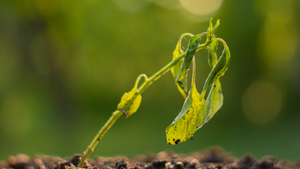
The winter turned out to be colder than expected. Early on, the plants developed dark green, curled foliage and had few flowers. Farrer knew the foliar symptoms could be due to excess nitrogen fertilization or a build-up of ethylene in the greenhouse. Heating systems often emit ethylene, and if a greenhouse is too tightly constructed, the gas cannot escape. When this happens, plant growth is affected and flowers often die off. Low night temperatures can also cause flowers to die.

Farrer recommended airing out the house, increasing night temperatures and then cutting back on nitrogen application. Following this advice, Skinner and McLawhorn let in fresh air at least once a day and made sure the temperature in the greenhouse didn’t fall below 60 degrees at night. They worked closely with Farrer to get the fertilization right.

Fertilizing greenhouse tomatoes is a somewhat intricate process requiring two separate nutrient-solution tanks. One tank contains a calcium nitrate solution. The other contains a solution of phosphorus, potassium and micronutrients.

Using two separate solutions prevents chemical interaction, Farrer said. “When calcium and phosphorus are mixed together, a precipitate can form that tends to clog drip-emitter systems. Growers avoid that problem by setting up two tanks of fertilizer solutions and using them on alternate days,” she said. “Every seventh day, water alone is applied to help flush excess fertilizer salts out of the media.”

McLawhorn and Skinner started out with this alternating schedule. They also followed Farrer’s recommendations to use tissue analysis to monitor the crop’s nutrient needs and solution analysis to ensure that the nutrient solutions were at correct concentrations.

“We submitted tissue samples every two weeks to make sure the fertilizer was adjusted right,” Skinner said.

“Being able to track nutrient needs precisely and adjust them in a timely manner is particularly important for high-value crops like this one,” Farrer said. “When test results indicated a need for additional potassium, I recommended they modify their fertilizer schedule so that each day of calcium nitrate solution would be followed by two days of the potassium solution. This variation provided additional potassium without providing too much. Later in the season when plants have their third fruit cluster, it is typical to use a 3-15-28 grade fertilizer to supply supplemental potassium.”

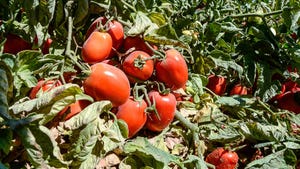
The adjustments in fertilization paid off. In late March, McLawhorn and Skinner began to harvest fruit. By mid-June, they were producing an “endless” supply of tomatoes. Some days they picked 200 to 300 pounds of fruit, often filling 10 to 15, 15-pound boxes.

“We’ve learned a lot,” Skinner said. “With greenhouse tomatoes, start-up costs are high, and there’s a big learning curve, but I also think there’s a lot of potential. So far customers have been receptive. They raved about the flavor, and we had no trouble selling all the fruit in a retail setting.”

Discuss this Article 0

Post new comment
Sign In or register to use your Western Farm Press ID

(optional)

Continuing Education Courses
This accredited CE course focuses on choosing the correct variety alfalfa based on a number of...
New Course
The 2,000-member Weed Science Society of America’s (WSSA) Herbicide Resistance Action...

The course details six of the primary diseases affecting citrus: Huanglongbing (Citrus...

Newsletter Signup