Tristeza threat to Lindcove expected to grow cooperative prevention needed

University of California plant pathologist Beth Grafton-Cardwell warned citrus growers that the UC's Lindcove Research and Extension Center may be under threat of a citrus tristeza virus epidemic if a cooperative effort is not made to protect the trees there.

The Lindcove field station houses some of the industry's foremost citrus production research as well as the California Citrus Clonal Protection Program's Foundation Block that supplies certified disease-free planting stock to nurseries.

Researchers who annually test every tree in the CCPP to guarantee that it is free of disease were stunned last year to find that 44 trees on the 144-acre property and four additional trees within the Foundation Block tested positive for the aphid-borne tristeza virus. That number jumped from three positive trees in 2006, and officials are concerned that those positive finds will increase exponentially without immediate action.

“We have an epidemic,” Grafton-Cardwell said. “We have a serious situation. All those trees have been removed, but we are now surveying to see if we have newly infected trees.”

It takes nine to 18 months after a tree is infected before the virus begins to show up in ELISA tests and Grafton-Cardwell expects the latest round of testing will reveal additional infections.

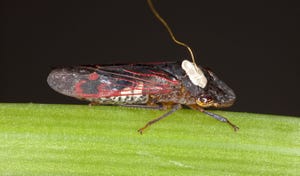
There is no cure for the tristeza virus, which is spread from one tree to another by aphids and eventually causes trees to develop bud union necrosis. Once a tree is contaminated it cannot be cured and becomes a reservoir for infection to spread the disease to additional trees.

Most strains of tristeza currently in the San Joaquin Valley are mild and often produce few symptoms in the tree. Sour orange rootstock is most susceptible and growers have learned to avoid planting that particular rootstock in the Valley. However Grafton-Cardwell says the virus can become more severe over time as inoculum levels build in the tree or more virulent strains appear. And certain aphid vectors, such as the brown citrus aphid, would transmit the disease at much higher rates should they make their way to California. The brown citrus aphid is already present in Florida, Mexico and Hawaii, and Grafton-Cardwell said tristeza has become more severe in citrus regions whenever that vector has appeared.

“How much the virus moves from tree to tree depends on a lot of things,” Grafton-Cardwell said. “How much inoculum is in the trees, how easily the isolate is transmitted, the number of aphids present, and the age of trees are all a factor. Young trees with a rapid flush of new growth are more likely to pick up the virus than more mature trees.”

California citrus growers in the early 1990s created the Central California Tristeza Eradication Agency to test for tristeza virus in the Central Valley and fund the eradication of individual infected trees. Growers fund the program through assessments to county Pest Control Districts. Frustrated at losing large numbers of otherwise productive trees, growers in Tulare County's most productive citrus area near Exeter and Lindsay voted five years ago to opt out of the program, and testing and eradication in that commercial area surrounding the Lindcove field station has since ceased.

Testing and eradication still continues under pest control districts in Kern, Fresno and Southern Tulare County.

Researchers at the time warned that such a move could risk the viability of the Lindcove station and Grafton-Cardwell says that risk is now becoming very real.

Because CCPP couldn't ensure last year that budwood from the Foundation Block was disease-free, that program was forced to curtail budwood releases to nurseries. While the CCPP in 2007 was able to fill some orders with budwood from screened blocks set up as a protected reserve, supplies from that 1.5-acre area are severely limited.

“That really crippled the nursery industry because budwood is not as good from the greenhouse as it in the main block. Because no tango budwood can be released from the outdoor trees it crippled the release of tango budwood,” Grafton-Cardwell said.

Another problem, she noted, is that new plantings of pomegranates in neighboring Tulare County orchards are providing virtual “citrus aphid factories”, which harbor aphids that then move into citrus in large numbers during the season.

“We basically have what I call a perfect storm,” Grafton-Cardwell said.

UC has developed a Science Advisory Council that is meeting with neighborhood growers around the Lindcove Field Station to develop a regional approach for managing citrus tristeza virus near the Lindcove station.

“The only way we can get rid of this virus is to reduce the inoculum levels down to a suppressed level where we can control it,” she said.

The scientific council is proposing a coordinated plan that includes: removing infected trees as they appear; releasing budwood only from protected screenhouses; managing aphids in citrus, pomegranates and other neighboring crops; and studying the release of natural enemies, such as parasitic wasps or fungi, to reduce aphid populations in the region.

“We are going to look at a lot of management tactics as part of this area-wide approach. We may have different operational plans in different parts of the region,” she said. “But we are going to get a hold of this problem to protect Lindcove and the Clonal Protection Program because the research and budwood coming out of there is so valuable to this industry.”

Discuss this article 0

Post new comment

Sign in or Register to use your Western Farm Press ID

(optional)
CAPTCHA
This question is for testing whether you are a human visitor and to prevent automated spam submissions.
Incorrect please try again
Enter the words above: Enter the numbers you hear:
Sign Up
Sign Up!

For the Western Farm Press Newsletter

Keep up with the latest news with our daily newsletter

Continuing Education Courses
New Course

Integrated weed management (IWM) programs and orchard cultural practices have been developed for specific orchard and vineyard crops. This accredited CEU provides information on economically and environmentally sound IWM practices.

New Course

American agriculture exports 20 to 30 percent of its production annually. For specific commodities, the percentage is much higher. When recommending and applying pest management products for crops, license Pest Control Advisers (PCAs) and applicators and farmers must be aware of which products applied are in compliance with Maximum Residue Levels (MRLs) established by foreign customers

New Course

This online accredited course focus on Calcium, an important plant nutrient in fertilizer management for maximum, healthy plant development as well as disease and pest prevention.