Irrigation water concerns cloud prosperous almond industry

What is in this article?:

  • Despite a slow start, due to unusually cool growing conditions earlier in the year, Friedenbach/Turmon Farms’ almond trees fared well this past season.
  • Overall, the 2011 crop was about 10 percent larger than the year before, although nut size was a little smaller. Nonpareil yields, which were down in 2010, were outstanding this season.
  • Vertical integration means that he and his partners can control the quality of the almonds and improve efficiencies along each step of the way, from planting the trees to getting paid for delivering the final product. What he like best about this business, though, is the farming.

Mark Turmon, owner/administrator of Sierra Valley Almonds, at the company’s processing facility near Kerman, Calif.

Mark Turmon was raised on his family’s Thompson seedless raisin vineyard in Fresno County near Caruthers, Calif., and like many of his peers moved down a different farming path in adulthood to California almonds.

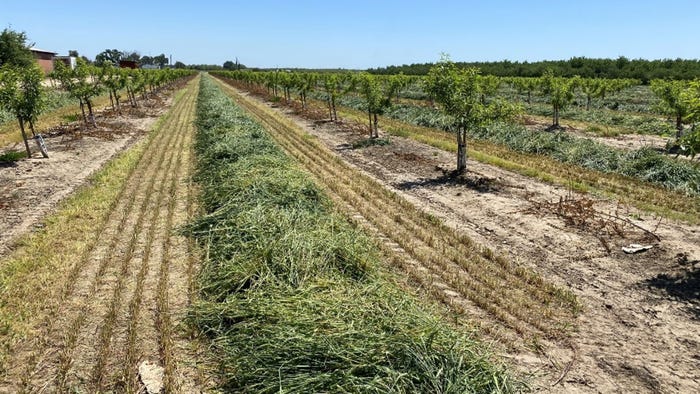
Turmon today grows 1,600 acres of almonds on the West Side of the San Joaquin Valley and hulls, shells and markets almonds worldwide from growers throughout the central San Joaquin Valley.

Such vertical integration means that he and his partners can control the quality of the almonds and improve efficiencies along each step of the way, from planting the trees to getting paid for delivering the final product. What he like best about this business, though, is the farming.

“That’s the exciting part,” he says. “You never know when the year starts what kind of crop you’re going to have when the season is over. It’s fun to watch the crop grow and to see what the yields are at harvest.”

Turmon, who graduated from California State University, Fresno in 1983, began his career as an agricultural banker. Later, he went to work for a cotton company, processing cotton in California and Arizona. In 1998, he had the opportunity to buy into a farm on the West Side where he learned to grow almonds.

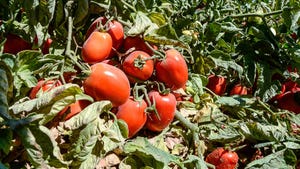
Turmon is now the managing partner in that business, Friedenbach/Turmon Farms. Located within the 600,000-acre Westlands Water District in western Fresno County, this operation also includes 1,200 acres of organic processing tomatoes along with the almonds. Two years ago Turmon got back into the cotton business when the partners planted 300 acres of Pima cotton.

In 2006 he helped establish Sierra Valley Almonds, along with two other partners — Dean Nelson and Michael Friedenbach. Drawing on his lengthy experience in accounting, financing, operations and personal management, Turmon is the company’s administrator. Nelson, a leader in the almond industry and a former chairman of the Almond Board of California, has a long history in sales and marketing as well as almond processing. He’s in charge of selling the almonds. Co-founder Friedenbach made some of the first-ever almond plantings on the West Side more than 30 years ago. Also, he helped start an earlier almond processing company and an almond huller and sheller company.

In addition to buying almonds from growers, Sierra Valley Almonds cleans, sizes, sorts, packs and ships the processed nuts at two facilities — one near Kerman, Calif., the other in Madera, Calif. Together, the two plants employ about 85 workers. Another 30 employees provide custom hulling and shelling services for almond growers at the company’s Sierra Valley Hulling plant near Firebaugh, Calif.

Discuss this Article 0

Post new comment
Sign In or register to use your Western Farm Press ID

(optional)

Continuing Education Courses
This accredited CE course focuses on choosing the correct variety alfalfa based on a number of...
New Course
The 2,000-member Weed Science Society of America’s (WSSA) Herbicide Resistance Action...

The course details six of the primary diseases affecting citrus: Huanglongbing (Citrus...

Newsletter Signup