Education ongoing process for long-time pistachio farmer

What is in this article?:

  • Tom Coleman began growing pistachio trees in the late 1970s, when he owned an ornamental tree and shrub nursery and was asked by a pistachio grower to supply some seedlings.
  • Coleman Farming Company owns 740 acres of pistachio and manages a little over 700 more acres of pistachios for several other growers.
  • “The industry is doing very, very well,” he says. “Nothing I see at the moment concerns me about our industry and that’s what concerns me.  Are things really as good as they look? I believe they actually are. The California pistachio industry has a pretty bright future.”

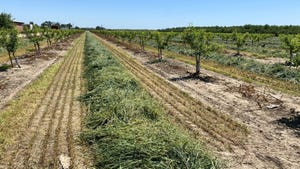
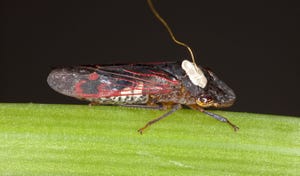
Over more than three decades of growing pistachio trees, first as a nurseryman and then as a producer, Tom Coleman, Fresno, Calif., has learned a thing or two about tending to them. One of his lessons is the devastating speed and power of a horde of hungry grasshoppers. That was eight years ago, a few months after he had planted 160 acres of seedling trees on former wheat and cotton ground southeast of Madera.

At the time the insects descended on the field, Coleman was in a meeting. “A friend called and told me the grasshoppers were moving into the trees in Biblical proportions,”Coleman recalls. “I knew we had grasshoppers around here. But, they were attacking the trees like you can’t believe. They were eating them to death.”

His irrigated orchard was an inviting green, luscious target in an area of ripe stands of wheat and dried grasslands as the grasshoppers moved out of the foothills that summer in search of more succulent food.

“We threw everything we could think of at them,” Coleman says. “We put out poison bait. We sprayed pesticides. And we treated the trees with a crop protectant, containing a clay material (Surround), in an attempt to deter the grasshoppers from feeding on them. They moved in so quickly and so heavily that, even when you drove down the row with a sprayer, as soon as the tractor reached them, they’ve just move 20 feet and escape being sprayed. Every other week we’d send a truck to the nursery to get more trees to replant and spray again.”

The battle ended with the arrival of fall. However, Coleman’s problems weren’t over yet.

“I made a classic mistake,” he admits. Having lost ground to the grasshoppers in getting his seedlings off to a strong start, he fed and watered them longer than he would have normally. Then, So, to shut down the trees’ activity in time to protect them from the cold temperatures of winter, he sprayed them with zinc sulfate to defoliate them. When that failed, he hit the trees with a second, stronger dose. “I still couldn’t burn the leaves off,” he relates. “The trees didn’t shut down and a frost killed a bunch of them.”

His lessons in pistachio production will continue this year. In early April he expects to learn how much a freeze this past November damaged some seedlings planted early last summer west of Fresno near Tranquility.

Coleman began growing pistachio trees in the late 1970s, when he owned an ornamental tree and shrub nursery and was asked by a pistachio grower to supply some seedlings. At the same time, construction activity and sales of ornamental stock were beginning to decline. Producing pistachio nuts seemed a more attractive alternative.

So, in 1982, Coleman bought a 20-acre mature pistachio orchard. The next year he purchased a second 20-acre field of producing pistachio trees. In 1985, he planted his first pistachio orchard, a 160-acre block of trees.

Today, Coleman Farming Company owns several pistachio orchards in Fresno and Madera counties. They include 500 acres of Kerman variety trees that are in production and 240 acres of Golden Hills. A University of California cultivar released in 2005, it should produce its first marketable crop in 2015. Adding the earlier-maturing Golden Hills to his mix is designed to spread the harvest work and the risks of adverse weather over a longer period when it’s time to shake the trees. The company also manages a little over 700 more acres of pistachios for several other growers.

Discuss this article 0

Post new comment
Sign In or register to use your Western Farm Press ID
(optional)

Continuing Education Courses
New Course
The 2,000-member Weed Science Society of America’s (WSSA) Herbicide Resistance Action...
New Course

The course details six of the primary diseases affecting citrus: Huanglongbing (Citrus...

Get the latest info on almond insect pest management. California: 2 Hours "Other"
Farmer-to-Farmer Used Equipment