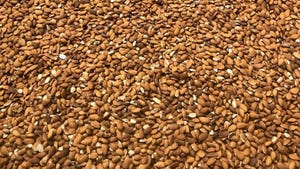
Antioxidant effects from eating almonds

Eating almonds significantly decreased levels of two biomarkers for oxidative stress in a group of 27 male and female volunteers with elevated cholesterol. The study was conducted by scientists funded by the Agricultural Research Service, the Almond Board of California, and the Canada Research Chair Endowment.

Coauthor Jeffrey Blumberg is director of the Antioxidants Research Laboratory at the Jean Mayer USDA Human Nutrition Research Center on Aging (HNRCA) at Tufts University in Boston, Mass. He and colleagues reported the findings from this study in the Journal of Nutrition.

HNRCA scientists analyzed blood and urine samples from the subjects who had consumed three different dietary treatments, consisting of the same amount of calories each, for one month. The study was a cross-over, randomized clinical trial, so each subject received each treatment in random order.

Treatments consisted of a "full dose" of almonds, defined as 73 grams daily (about 2.5 ounces), a "half-dose" of almonds plus a half-dose of muffins, and a full-dose of muffins as a control. The subjects consumed a low-fat background diet and were counseled on strategies to maintain weight and to consistently follow their usual exercise routines throughout each test phase.

The researchers wanted to investigate possible antioxidant effects from eating almonds.

The team found that when the volunteers ate the full dose of almonds, their concentration of two biomarkers of oxidative stress — plasma malondialdehyde (MDA) and urinary isoprostanes — were significantly lowered. MDA decreased by nearly 19 percent compared to the start of the study in the full-dose almond group. Isoprostane decreased by 27 percent in both the almond groups when compared to the control period, suggesting a possible threshold effect for that biomarker.

While this study helps to show the antioxidant benefit of eating almonds, further research is needed to shed light on the individual contributions of vitamin E and polyphenolic constituents, such as flavonoids, found in almonds and other tree nuts. The study did not demonstrate a minimum amount of dietary almonds that would result in a biological effect.

Discuss this article 0

Post new comment

Sign in or Register to use your Western Farm Press ID

(optional)
CAPTCHA
This question is for testing whether you are a human visitor and to prevent automated spam submissions.
Incorrect please try again
Enter the words above: Enter the numbers you hear:
Sign Up
Sign Up!

For the Western Farm Press Newsletter

Keep up with the latest news with our daily newsletter

Continuing Education Courses
New Course

Integrated weed management (IWM) programs and orchard cultural practices have been developed for specific orchard and vineyard crops. This accredited CEU provides information on economically and environmentally sound IWM practices.

New Course

American agriculture exports 20 to 30 percent of its production annually. For specific commodities, the percentage is much higher. When recommending and applying pest management products for crops, license Pest Control Advisers (PCAs) and applicators and farmers must be aware of which products applied are in compliance with Maximum Residue Levels (MRLs) established by foreign customers

New Course

This online accredited course focus on Calcium, an important plant nutrient in fertilizer management for maximum, healthy plant development as well as disease and pest prevention.