Research and development, Extension at the heart of California ag

Aug 5, 2008 11:01 AM, By Bob Curtis
Senior Manager
Production Research
Almond Board of California

A disturbing link between reduced spending on agricultural research and Extension and emerging evidence that the rate of growth in both U.S. and California agricultural productivity is declining, was revealed recently in a new study led by UC and University of Minnesota economists.

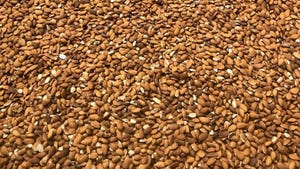
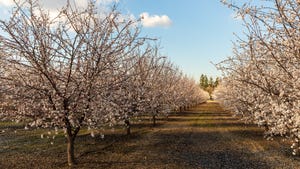
Over the past 50 years, California growers have more than doubled their production with only a moderate increase in inputs, according to the new economic study, which was unveiled at a symposium held in Sacramento in June. This increase in production efficiency equates to about $20 billion saved annually in resources. In the case of almonds, the average yield has increased 86 percent over the last two decades, largely resulting from adoption of improved horticulture techniques developed through research.

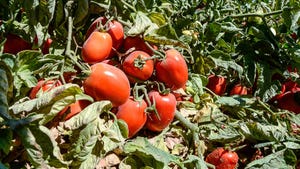
California agriculture is a $32 billion industry, producing over 350 commodities, providing more than 50 percent of the nation’s fresh fruits, vegetables and tree nuts, creating over 1 million jobs and exporting more than $10 billion a year in products.

High return on investment

The new research demonstrates that a key contribution to this success is publicly-funded agricultural research and development and Extension. One of the researchers, Dr. Jenni James of Cal Poly-SLO, who spoke at the Symposium on Agricultural Research and Extension, noted that public funding for agricultural research and development generates a dividend of $20 to $30 or more for every $1 invested — an enviable return for any investment.

There is evidence, however, that there is a 10 to 20-year or more “lag effect” between research spending and productivity, and that a productivity slowdown is just now emerging. In the past, California agricultural productivity grew at an annual rate of 1.85 percent in contrast to the current rate of growth, which is a much slower 1.08 percent per year. The new study points out that from 1950 through the 1970s public spending nationwide on agricultural research grew rapidly, but this growth has slowed and has become erratic. This is at least partly due to a redirection of public investment to other areas such as food safety and quality, human health and nutrition, natural resources and the environment. “The recent U.S. productivity slowdown may reflect past slowdown in growth of public research spending,” Dr. James said at the event. This decrease in spending on productivity-enhancing agricultural research and development will result in a continued decrease in farm productivity growth. The consequences could be a decline in global competitiveness for California agriculture.

Fewer researchers, Extension staff

In fact, symposium speaker Dr. Rick Standiford, associate vice-president, UC Agriculture and Natural Resources, underscored the link between productivity-growth slowdown and reductions in public research spending by noting that there has been a 24 percent reduction in UC Agricultural Experiment Station researchers and Cooperative Extension staff since 1990. This is a result of significant budget downturns in the mid-1990s and in 2003, he said.

Another concern is that the UC academic staff is expected to shrink through retirement: 52 percent of all Cooperative Extension academics will retire within the next 10 years. In the case of almonds, while yields have increased significantly, we are currently faced with a shortage of UC Cooperative Extension farm advisors. In the south San Joaquin Valley, which has the most acreage and has expanded the most rapidly, three of four positions are vacant. Furthermore, the almond industry has begun to lose farm advisors to retirement, and within the next 10 years, 66 percent of our UC Extension farm advisors will retire.

To fulfill the shared vision for California agriculture and its people, strong, publicly-funded agricultural research, development and Extension is needed, according to the symposium speakers. The purpose of the symposium, sponsored by the California Commodity Committee and the University of California Division of Agriculture and Natural Resources, was to develop a greater awareness of the importance of agricultural research and Extension in California, and to assist participants in developing a strategy for promoting and funding commodity research and Extension in the future.

To that end, the closing speaker, Dan Dooley, vice-president, UC Agriculture and Natural Resources, said his department is in the process of listening to stakeholders and developing a 20-year strategic plan for California agriculture that will be endorsed and funded by the UC regents. He also plans to reach out to major food companies to contribute as advocates for agriculture in California.

Almond Board production research

The Almond Board of California has supported UC research through grants for more than 30 years. Each year, growers and other industry members are invited to attend the Almond Industry Conference, where UC and other researchers present their most recent findings from ABC-supported research in horticulture, the environment, and other areas. This year, the Conference will be held Dec. 10-11 at the Modesto Centre Plaza. Registration is free and is available online at www.almondboard.com.

Get Copyright ClearanceWant to use this article? Click here for options!
© 2008 Penton Media, Inc.


Latest Jobs

resources

events icon events

product info icon tradeshows

tradeshow icon digests

research icon photos

Continuing Education

Accredited by California DPR and California and Arizona Certified Crop Advisers:


(New Course)

Nutrient Management in Key California Crops


This online CEU course offers a detailed look at the nutrient management in key California crops. It is sponsored online by Western Plant Health Association and funded by a grant from the California Department of Food and Agriculture Fertilizer Research and Protection Program (FREP). It is accredited for one (1)-hour of credit by the California Department of Pesticide Regulation for California Pest Control Advisers (PCA), Private Applicators, Qualified Applicators and Aerial Applicators. The course is also accredited for 3 units in Nutrient Management (NM) for California and Arizona Certified Crop Advisers (CCAs).

Accredited in California, Arizona, Idaho, Oregon and Washington and for Certified Crop Advisers:


(New Course)
Organic/Sustainable Agricultural Production in the West

Organic/sustainable agriculture is expanding rapidly in the U.S. with an average annual increase of 20% during the last 15 years. This course covers a wide range of pests and organic control strategies. It is accredited for up to 4 continuing education hours for PCAs and Applicator Licensees in California, Arizona, Idaho, Oregon and Washington. It is also approved for Certified Crop Adviser credit.

ACCREDITED IN OREGON AND WASHINGTON:


(New Course)
Managing Spray Drift to Minimize Problems

This online spray drift management course has been certified by the Oregon Department of Agriculture and the Washington Department of Agriculture for 2 hours of credit for licensed Applicators and Consultants in Oregon and Washington.

ACCREDITED IN CALIFORNIA ONLY:


Almond Pest Management

Get the latest info on almond insect pest management and earn 2 hrs. CE DPR and CCA credit in California.

California Groundwater Protection Regulations

Earn 2 hrs. in California laws and regs CE and learn how to protect California groundwater supplies.


Disease Management in California Almonds

Managing diseases in California almond production is a year-long process. This course provides the latest information on controlling these diseases with management practices and fungicides. The course is approved for 2 CEUs by DPR for PCAs and all applicator categories and California CCAs.

Powdery Mildew Control in California Grapevines

Learn about the No. 1 grape disease in California; earn 2 California CE hours.

ACCREDITED IN CALIFORNIA AND ARIZONA:


The Role of Copper in Disease Control

Copper has long been a key tool in disease control in a many crops. This 2-CEU course accredited California PCAs and all DPR applicator categories and Arizona applicators details how best to use copper to maximize its potential.

Insecticide Resistance Management in Agronomic and Row Crops

A 3-hr. CE approved for California and Arizona licensees and CCAs in both states.

Agronomic Weed Resistance Management in Row Crops, Trees Nuts and Vines

Weeds Resistance Management is approved for 3 hours of CE credit for all California and Arizona licensees and Certified Crop Advisers.

Lepidopterous Pest Management/ Pesticide Safety

This course is approved for 2 hours in Arizona and California (1 hr. of laws/regs; 1 hour Other) and for CCAs.

Managing Spray Drift to Minimize Problems

2-hrs laws and regs for California licensees; 2 hours in Arizona and for CCAs.

Back to Top

Browse Print Issues

Additional Resources

subscribe to Farm Press Daily Southeast Farm Press Southwest Farm Press Delta Farm Press