Three keys to properly managing late season navel orangeworm

Jul 9, 2008 11:05 AM, By Bob Curtis
Senior Manager, Production Research
Almond Board of California

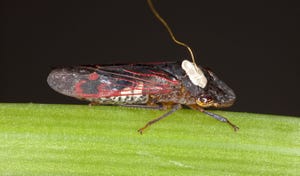
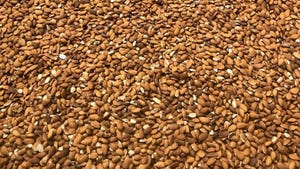
Moving toward almond harvest, it is important to take steps to effectively manage the navel orangeworm (NOW). This pest is a double threat to almond quality: In addition to causing direct damage to the kernel, NOW has broader quality implications because it opens the door to fungal infections and contaminants. Research shows the mold Aspergillus and the aflatoxin contaminant it produces is associated with reject kernels, particularly those damaged by navel orangeworm. Aflatoxin produced by Aspergillus mold is a known carcinogen and mutagen.

Aflatoxins are regulated the world over, with the European Union (EU) having particularly low maximum limits. The EU is the largest market for California almonds, even larger than the U.S. market, and has put pressure on the California almond industry to reduce aflatoxin contamination, which requires NOW prevention and control. Growers must take critical steps to minimize NOW damage to attain a goal of no more than 2 percent damage, which reduces the risk of aflatoxin contamination.

Early harvest, sanitation

The first two keys to NOW control and prevention are winter sanitation to remove and destroy mummy nuts from the trees and orchard, and early harvest. Knock as soon as possible after the nuts are mature — when 95 percent to 100 percent of the hulls have split along at least a portion of their suture as best measured at the 6–8 foot level of the tree canopy. When nuts are knocked to the ground, they escape late season NOW egg-laying and the resulting damage. Late season orangeworm populations starting 30-40 days after the very first nuts split can be explosive because the NOW has cycled through the new crop, which is a plentiful food source. After nuts have been shaken to the ground, remove them as soon as possible to avoid ant damage.

Hull-spilt sprays

A third component of managing late-season NOW is hull-split sprays. Under higher pressure from NOW, a spray at hull-split initiation can be considered if winter sanitation is insufficient (e.g., average of more than one mummy left per tree by June) and/or mated female moths fly in from adjacent uncleaned areas (including pistachios and walnuts), particularly within a half-mile.

It is very important that hull-split sprays to susceptible varieties are applied at hull-split initiation at the same time as NOW egg laying. Just as hull split begins, egg laying can be confirmed by using egg traps, which are effective at the beginning of hull split and lose effectiveness as split progresses; and/or tracking day degrees from the biofix of the spring NOW flight (see ipm.ucdavis.edu for details). Balance egg-laying activity with spray timing, typically from about 1 percent to 5 percent hull split, which will be nuts in the upper outer portions of the tree canopy.

A number of new insecticides are being registered and the Almond Board of California is currently funding research to evaluate them. Studies under way by David Haviland (UCCE entomologist, Kern County), Brent Holtz (UCCE pomology farm advisor, Madera County) and Frank Zalom (entomologist, UC Davis) are evaluating their performance and best “fit” in-season (e.g., May or hull-split). In addition, their work is getting an “assist” from past and current research being conducted by Joel Siegel (USDA ARS, Parlier), Brad Higbee (Paramount Farming), and Walt Bentley (UC IPM advisor, Kearney).

This work is in progress, but there are some general observations. These insecticides fall into two groupings: 1) Reduced risk compounds (e.g., Intrepid, Delegate); and 2) Next generation pyrethroids (e.g., Brigade, Baythroid, Warrior). Traditionally, well-timed and applied hull-split sprays have offered 50 percent to 60 percent control. Historically, pyrethroids have given good insect control because they have contact activity against all stages (egg, larvae, and adult), while reduced risk compounds are not as active against adults; however, pyrethroids adversely affect mite predators and can prompt mite flare-ups.

When the active ingredient in Brigade was initially registered in crops like cotton and strawberries, it had a “mite suppressive” effect, but this subsided with use, and application resulted in mite flare-ups. Therefore, pyrethroids are probably best considered under high-pressure situations and later season application such as hull split. In contrast, reduced risk compounds may have appropriate “fits” for both earlier May and later season sprays. The ongoing research will fine-tune these observations.

Get Copyright ClearanceWant to use this article? Click here for options!
© 2009 Penton Media, Inc.


Latest Jobs

resources

events icon events

product info icon tradeshows

tradeshow icon digests

research icon photos

Continuing Education

Accredited for California, Arizona and CCA hours:


(New Course)
Biopesticides -- Effective Use in Pest Management Programs

Biopesticides are increasingly being recommended as components of Integrated Pest Management (IPM) programs in the production of non-organic high-value specialty crops such as fruit, nut, vegetable, vine, ornamental and turf. This online, accredited course, sponsored by Marrone Bio Innovations, details some of the 245 registered biopesticide active ingredients used in a wide array pest management products.

Accredited in California and Arizona:


(New Course)
Agronomic Principles and Efficient Chemigation and Fertigation Using Center Pivot/Linear Sprinkler Systems

This online CE course details sound mechanical irrigation design and management practices to allow efficient chemigation and fertigation. It is accredited for Certified Crop Adviser CE units and is approved for credit hours in California and Arizona.


(New Course)
Pome, Stone Fruit Pest Management Using New Mode of Action Chemistry

New chemistry Rynaxypyr has proven effective against a wide range of economically important Lepidoptera species. Marketed under the trade name Altacor for use in grapes, pome and stone fruit, details on how to use this new chemistry are in this online Continuing Education course that is accredited in California, Pennsylvania, and New Jersey with CE applications pending in Oregon and Washington.


(New Course)
Vegetable Pest Management Using New Mode of Action

Integration of a new mode of action compound like Coragen into IPM and IRM programs to control Lepidoptera in leafy greens, fruiting vegetables, peppers and brassica or cole crops is always welcome. This online CE accredited details how best to use this new mode of action in intensive vegetable production. It is accredited in California, Arizona, Texas, Georgia, New Jersey and Pennsylvania. Application for credit is pending in Florida and Washington.

Accredited by Accredited in California and Washington:


(New Course)
Utilizing Calcium as Nutrient That Protects Against Disease Organisms

This online accredited course focus on Calcium, an important plant nutrient in fertilizer management for maximum, healthy plant development as well as disease and pest prevention. It is accredited in California, Georgia,: Pennsylvania and New Jersey. Credit pending in Florida, South Carolina, Tennessee, Virginia, West Virginia and Washington.


Accredited by California DPR and California and Arizona Certified Crop Advisers:


(New Course)

Nutrient Management in Key California Crops


This online CEU course offers a detailed look at the nutrient management in key California crops. It is sponsored online by Western Plant Health Association and funded by a grant from the California Department of Food and Agriculture Fertilizer Research and Education Program (FREP). It is accredited for one (1)-hour of credit by the California Department of Pesticide Regulation for California Pest Control Advisers (PCA), Private Applicators, Qualified Applicators and Aerial Applicators. The course is also accredited for 3 units in Nutrient Management (NM) for California and Arizona Certified Crop Advisers (CCAs).

Accredited in California, Arizona, Idaho, Oregon and Washington and for Certified Crop Advisers:


(New Course)
Organic/Sustainable Agricultural Production in the West

Organic/sustainable agriculture is expanding rapidly in the U.S. with an average annual increase of 20% during the last 15 years. This course covers a wide range of pests and organic control strategies. It is accredited for up to 4 continuing education hours for PCAs and Applicator Licensees in California, Arizona, Idaho, Oregon and Washington. It is also approved for Certified Crop Adviser credit.


ACCREDITED IN CALIFORNIA ONLY:


Almond Pest Management

Get the latest info on almond insect pest management and earn 2 hrs. CE DPR and CCA credit in California.

California Groundwater Protection Regulations

Earn 2 hrs. in California laws and regs CE and learn how to protect California groundwater supplies.


Disease Management in California Almonds

Managing diseases in California almond production is a year-long process. This course provides the latest information on controlling these diseases with management practices and fungicides. The course is approved for 2 CEUs by DPR for PCAs and all applicator categories and California CCAs.

Powdery Mildew Control in California Grapevines

Learn about the No. 1 grape disease in California; earn 2 California CE hours.

ACCREDITED IN CALIFORNIA AND ARIZONA:


The Role of Copper in Disease Control

Copper has long been a key tool in disease control in a many crops. This 2-CEU course accredited California PCAs and all DPR applicator categories and Arizona applicators details how best to use copper to maximize its potential.

Insecticide Resistance Management in Agronomic and Row Crops

A 3-hr. CE approved for California and Arizona licensees and CCAs in both states.

Agronomic Weed Resistance Management in Row Crops, Trees Nuts and Vines

Weeds Resistance Management is approved for 3 hours of CE credit for all California and Arizona licensees and Certified Crop Advisers.

Lepidopterous Pest Management/ Pesticide Safety

This course is approved for 2 hours in Arizona and California (1 hr. of laws/regs; 1 hour Other) and for CCAs.

ACCREDITED IN CALIFORNIA, ARIZONA, OREGON, AND WASHINGTON:

Managing Spray Drift to Minimize Problems

This online CEU on managing spray drift to minimize problems is accredited for 2-hours in California (Laws and Regs); Arizona, Oregon and Washington.

Back to Top

Browse Print Issues

Additional Resources

subscribe to Farm Press Daily Southeast Farm Press Southwest Farm Press Delta Farm Press