California almonds: Fumigation rules affect new plantings

Apr 1, 2008 10:28 AM, By Marni Katz
Contributing Writer

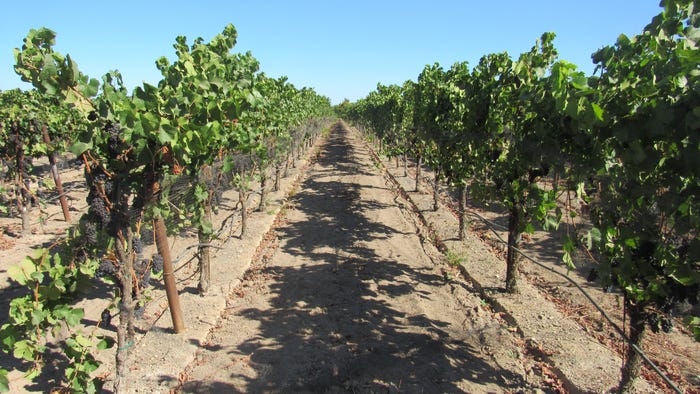
New state restrictions on the use of soil fumigants are expected to hit Ventura County strawberry growers hard, but these new rules will also have an immediate impact on the ability of San Joaquin Valley growers to fumigate ground for planting permanent crops like almonds and other tree and vineyard crops.

The new regulations will apply to the use of all seven fumigants with the potential to release volatile organic compounds (VOCs) during the months of May through October. These include methyl bromide, 1,3-Dichloropropene (Telone), chloropicrin, metam-sodium, metam-potassium, dazomet, and sodium tetrathiocarbonate.

Almond growers rely on soil fumigation to prevent orchard replant disorder when they pull out aging orchards to replant new trees. Soil fumigation is the best way to destroy microorganisms that can otherwise jeopardize the growth and yield potential of young new orchards, said Roger Duncan, a University of California Cooperative Extension farm advisor in Stanislaus County.

Duncan said that while there is still a lot unknown about the orchard replant problem, researchers and growers agree it is likely a combination of nematodes and other biological organisms that cause the soil to reject newly planted trees.

“Fumigation alleviates that, especially methyl bromide because it is a wide-spectrum biocide,” Duncan said.

Chloropicrin, which helps target biological agents, and Telone, a nematicide, are also commonly used in almonds.

The problem is particularly acute in sandier soils but can impact growth across all soil types, Duncan said.

“With sandier soils we know we need a fumigant, but we guess growers would also see a growth response in heavier soils as well,” he said.

The California Department of Pesticide Regulation in January enacted the long-discussed new regulations on soil fumigants for regions of the state with the dirtiest air — the San Joaquin Valley, Southeast Desert and Ventura County. They are part of DPR’s effort to curb emissions of smog-forming volatile organic compounds (VOCs) during the peak ozone period from May 1 to Oct. 31.

These restrictions are intended to reduce pesticide VOC emissions by 20 percent compared to 1991 levels, as required by a 2006 court order. Emissions reductions through changes in timing and application method are the focus for 2008. Starting in 2009, caps on soil fumigant use will go into place for those remaining non-attainment air quality areas. This allocation plan will significantly impact the availability of preplant soil fumigants to almond growers in the San Joaquin Valley in 2009.

“If an almond grower wants to do any kind of soil fumigant application between May 1 and Oct. 31 for the 2008 growing season, he needs to be aware that methods of application will be limited to so called lower emission methods,” said Gabriele Ludwig, senior manager of global technical and regulatory affairs for the Almond Board of California.

Ludwig said almond growers looking to use soil fumigants on orchard replants must now rely on lower emission application methods or alter their timing outside of the peak ozone period from May 1 to Oct. 31.

Under terms of the new rules, methyl bromide and chloropicrin applications during that period are limited to deep shank broadcast applications and must be tarped, which more than doubles the application cost, Duncan said.

Telone applications must meet more stringent soil moisture requirements. But Telone tends to bind in water, reducing its efficacy in higher soil moisture conditions. For a full list of requirements, check the DPR Web site under VOCs.

To get around these application requirements, growers have the option of moving their fumigations outside the ozone window. But timing applications during cooler months from November to April could reduce their performance, as fumigants work best under dry, warm soil conditions.

If DPR does not hit its VOC reduction target through changes in application rates and timing, then beginning in 2009, growers will be required to petition their county agricultural commissioner for the use of a soil fumigant to early in the calendar year. Based on those applications, DPR may cut the requested fumigant amounts if they exceed the VOC estimated emissions targets for the ozone season.

Filing petitions with county ag commissioners early in the season can also be challenging, because growers often don’t know at that time what their fumigation plans will be.

“A lot of times a grower doesn’t know if he’s going to take an orchard out and fumigate during this period,” Duncan said.

In addition, in 2009, PCAs statewide who do soil fumigations will be required to meet special training and licensing requirements. Despite the challenges, the new regulations are now here and growers will have to learn to work around them. Industry input has helped create a more workable set of rules in contrast to earlier drafts of the regulation. Still, experts say it’s now up to almond growers to seek guidance on how to integrate those rules into their operation, especially if they are planning to replant an orchard.

Get Copyright ClearanceWant to use this article? Click here for options!
© 2009 Penton Media, Inc.


Latest Jobs

resources

events icon events

product info icon tradeshows

tradeshow icon digests

research icon photos

Continuing Education

Accredited for California, Arizona and CCA hours:


(New Course)
Biopesticides -- Effective Use in Pest Management Programs

Biopesticides are increasingly being recommended as components of Integrated Pest Management (IPM) programs in the production of non-organic high-value specialty crops such as fruit, nut, vegetable, vine, ornamental and turf. This online, accredited course, sponsored by Marrone Bio Innovations, details some of the 245 registered biopesticide active ingredients used in a wide array pest management products.

Accredited in California and Arizona:


(New Course)
Agronomic Principles and Efficient Chemigation and Fertigation Using Center Pivot/Linear Sprinkler Systems

This online CE course details sound mechanical irrigation design and management practices to allow efficient chemigation and fertigation. It is accredited for Certified Crop Adviser CE units and is approved for credit hours in California and Arizona.


(New Course)
Pome, Stone Fruit Pest Management Using New Mode of Action Chemistry

New chemistry Rynaxypyr has proven effective against a wide range of economically important Lepidoptera species. Marketed under the trade name Altacor for use in grapes, pome and stone fruit, details on how to use this new chemistry are in this online Continuing Education course that is accredited in California, Pennsylvania, and New Jersey with CE applications pending in Oregon and Washington.


(New Course)
Vegetable Pest Management Using New Mode of Action

Integration of a new mode of action compound like Coragen into IPM and IRM programs to control Lepidoptera in leafy greens, fruiting vegetables, peppers and brassica or cole crops is always welcome. This online CE accredited details how best to use this new mode of action in intensive vegetable production. It is accredited in California, Arizona, Texas, Georgia, New Jersey and Pennsylvania. Application for credit is pending in Florida and Washington.

Accredited by Accredited in California and Washington:


(New Course)
Utilizing Calcium as Nutrient That Protects Against Disease Organisms

This online accredited course focus on Calcium, an important plant nutrient in fertilizer management for maximum, healthy plant development as well as disease and pest prevention. It is accredited in California, Georgia,: Pennsylvania and New Jersey. Credit pending in Florida, South Carolina, Tennessee, Virginia, West Virginia and Washington.


Accredited by California DPR and California and Arizona Certified Crop Advisers:


(New Course)

Nutrient Management in Key California Crops


This online CEU course offers a detailed look at the nutrient management in key California crops. It is sponsored online by Western Plant Health Association and funded by a grant from the California Department of Food and Agriculture Fertilizer Research and Education Program (FREP). It is accredited for one (1)-hour of credit by the California Department of Pesticide Regulation for California Pest Control Advisers (PCA), Private Applicators, Qualified Applicators and Aerial Applicators. The course is also accredited for 3 units in Nutrient Management (NM) for California and Arizona Certified Crop Advisers (CCAs).

Accredited in California, Arizona, Idaho, Oregon and Washington and for Certified Crop Advisers:


(New Course)
Organic/Sustainable Agricultural Production in the West

Organic/sustainable agriculture is expanding rapidly in the U.S. with an average annual increase of 20% during the last 15 years. This course covers a wide range of pests and organic control strategies. It is accredited for up to 4 continuing education hours for PCAs and Applicator Licensees in California, Arizona, Idaho, Oregon and Washington. It is also approved for Certified Crop Adviser credit.


ACCREDITED IN CALIFORNIA ONLY:


Almond Pest Management

Get the latest info on almond insect pest management and earn 2 hrs. CE DPR and CCA credit in California.

California Groundwater Protection Regulations

Earn 2 hrs. in California laws and regs CE and learn how to protect California groundwater supplies.


Disease Management in California Almonds

Managing diseases in California almond production is a year-long process. This course provides the latest information on controlling these diseases with management practices and fungicides. The course is approved for 2 CEUs by DPR for PCAs and all applicator categories and California CCAs.

Powdery Mildew Control in California Grapevines

Learn about the No. 1 grape disease in California; earn 2 California CE hours.

ACCREDITED IN CALIFORNIA AND ARIZONA:


The Role of Copper in Disease Control

Copper has long been a key tool in disease control in a many crops. This 2-CEU course accredited California PCAs and all DPR applicator categories and Arizona applicators details how best to use copper to maximize its potential.

Insecticide Resistance Management in Agronomic and Row Crops

A 3-hr. CE approved for California and Arizona licensees and CCAs in both states.

Agronomic Weed Resistance Management in Row Crops, Trees Nuts and Vines

Weeds Resistance Management is approved for 3 hours of CE credit for all California and Arizona licensees and Certified Crop Advisers.

Lepidopterous Pest Management/ Pesticide Safety

This course is approved for 2 hours in Arizona and California (1 hr. of laws/regs; 1 hour Other) and for CCAs.

ACCREDITED IN CALIFORNIA, ARIZONA, OREGON, AND WASHINGTON:

Managing Spray Drift to Minimize Problems

This online CEU on managing spray drift to minimize problems is accredited for 2-hours in California (Laws and Regs); Arizona, Oregon and Washington.

Back to Top

Browse Print Issues

Additional Resources

subscribe to Farm Press Daily Southeast Farm Press Southwest Farm Press Delta Farm Press