What is in this article?:
- Western PCAs hear latest on HLB threat
- HIV of citrus world
- First mistake
- Huanglongbing disease is the HIV of the citrus world, says University of Florida entomologist Michael Rogers.
- HLB is one of the most significant citrus diseases worldwide due to difficulties in disease management.
- HLB-related tree death is usually not caused by the disease alone. A feeding psyllid punctures the tree’s phloem which increases the tree’s susceptibility to other citrus-related pests and diseases which speed up the tree’s decline and eventual death.
More About:

RESEARCHERS COLLECT yellow sticky pest traps looking for the Asian citrus psyllid.
The Western citrus industry could be saved from its greatest challenges, Huanglongbing (HLB) disease and the Asian citrus psyllid (ACP), due to a small group of people who provide strong leadership, knowledge, and the passion to effectively manage these menaces.
One such person is University of Florida entomologist Michael Rogers based at the Citrus Research and Education Center in Lake Alfred, Fla.
Rogers lives more than 2,600 miles from the heart of the Western citrus industry in California yet his contributions to help California and Arizona citrus growers prepare for the pest-disease combo are multitudinous. Rogers is a highly sought-after speaker on the subject.
Florida, which boasts the nation’s largest citrus industry, first found the psyllid and HLB in 1998 and 2005, respectively. Rogers has openly shared the details in Florida’s fight against the insect and disease with the western citrus industry to help the West prepare for the battle against these citrus nemeses.
The first psyllid was found in California in 2008. The first and only identified case of HLB in the state was in a residential pummelo-lemon hybrid tree found in the Hacienda Heights area of Los Angeles in March. Tens of thousands of psyllids are currently in the L.A. Basin and are slowly spreading into some commercial citrus groves.
Psyllids at much lower numbers have been trapped in Arizona. HLB has not been found.
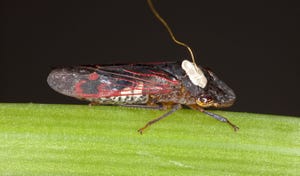
The psyllid is the primary vector of the bacterium Liberibacter which causes HLB, a global citrus disease. Every citrus tree infected with HLB around the world has died. Tree death has resulted in the removal of thousands of acres of citrus worldwide.
California citrus leaders concur that the psyllid and disease could wipe out the state’s citrus industry which could have happened also in Florida.
Rogers conducts research to better understand psyllid feeding behavior. His goal is to alter the feeding cycle to reduce or eliminate the insect’s ability to vector the bacterium to the tree.
In the West, Rogers is a knight in shining armor of sorts for his willingness to share the Sunshine State’s psyllid-HLB control successes and failures. The entomologist has spoken at numerous California citrus meetings.
Rogers shared his latest findings during Bayer CropScience’s Vegetable and Citrus Consultants Meeting held in San Diego in late July.