SJV peach growers saving water

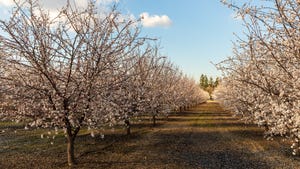
  • The SJV has about 25,000 acres of peach orchards that must be irrigated throughout the summer.
  • USDA scientists are helping peach growers make the most of dwindling water supplies in California's San Joaquin Valley.

U.S. Department of Agriculture scientists are helping peach growers make the most of dwindling water supplies in California's San Joaquin Valley.

Agricultural Research Service (ARS) scientist James E. Ayars at the San Joaquin Valley Agricultural Sciences Center in Parlier, Calif., has found a way to reduce the amount of water given post-harvest to early-season peaches so that the reduction has a minimal effect on yield and fruit quality. ARS is USDA's principal intramural scientific research agency, and the research supports the USDA priority of promoting international food security.

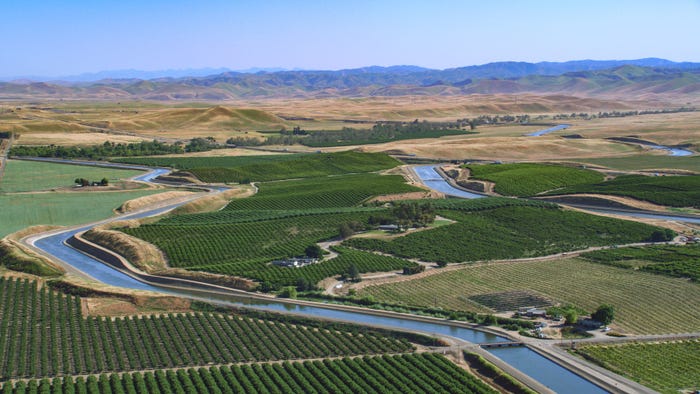
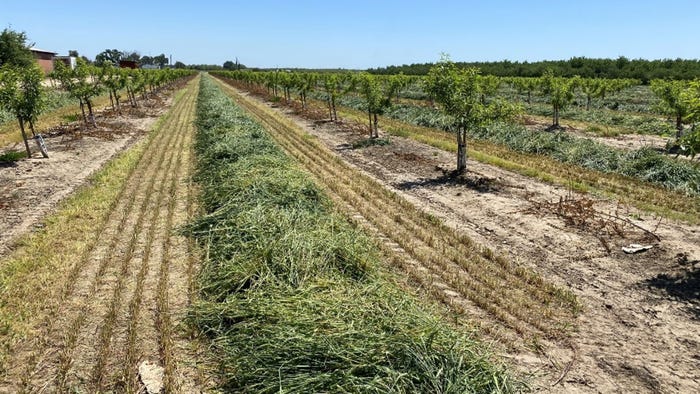
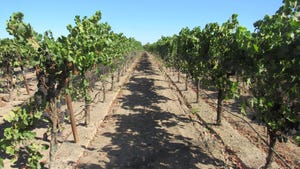
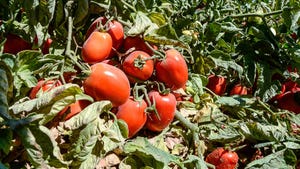
The valley has about 25,000 acres of peach orchards that must be irrigated throughout the summer. Early-season peaches are normally harvested in May, but require most of their water from June through September, a time when temperatures and demands for water are at their highest. Snow packs in the Sierra Nevada have traditionally been a sufficient water source for growers, but earlier snowmelts have made water more precious with each summer. Wells that supply the valley have had to reach deeper to meet increasing demands.

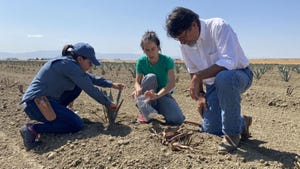
Ayars and ARS scientist Dong Wang, also based at Parlier, irrigated a 4-acre plot of early-season peach trees from March to the May harvest. From June to September, they gave the trees either 25 percent of the amount of water they'd normally receive, 50 percent of the normal amount, or 100 percent. The scientists measured soil water content once a week to be sure that even with periodic rainfall, trees were given appropriate deficit-irrigation treatments. They also used three types of irrigation systems: microspray, subsurface drip irrigation, and furrow irrigation, in which water is distributed in shallow canal-like rows near the trees. Defective fruit were counted and removed after each harvest.

The results showed that reducing post-harvest irrigation levels to 25 percent of the normal amount had negative effects on yield and fruit quality, but that giving 50 percent less water than normal had minimal effects on the following year's quality and yield. The subsurface drip irrigation systems tended to have the lowest yields within a given year, but differences were generally not statistically significant. The researchers also found that trees needed less pruning and maintenance because the deficit irrigation slowed plant growth.

The results of this study have been submitted to the scientific journal HortScience for publication.

Read more about this research in the November/December 2012 issue of Agricultural Research magazine.

Discuss this Article 1

Marc Suderman, CCA (not verified)
on Nov 29, 2012

4 acres. Nice. Probably nice uniform class 1 soil too.[sarcasm implied]

Take your trial out to six to ten growers and perform this same test on "real" acreage. I understand what is trying to be done here, but it's not real life to "quantify" the results by multiplication and show "mathematical results"...it's also really easy to "farm" on the taxpayer's dime and not on your own borrowed credit line that has to be repaid annually with interest!

[And by the way, what should a grower tell their bank loan officer at the end of the second year, when the fruit quality turns out bad and the ROI doesn't pan out? "Oh, but LOOK at the money I saved on my pumping bill?!" Seriously...What exactly does, "...minimal effect on the following year's quality and yield..." mean?!] Any grower knows that early season fruit is prone to “split-pits” due to cultural practices AND plant stress in the prior season can also contribute substantially.

Also, how has the declining water quality of the past La Nina year been factored into this study and the effects left behind by increased EC levels in deep wells?

How about USDA do something sensible with SJV water like stopping the outflow of 70%-80% of the snowmelt and runoff into the Pacific through San Francisco Bay? Then we won't have to think "terminally" about growing a crop that needs 3'-4' of water to grow both this year's fruit and develop next year's fruit hangers. And, we will need the additional water to help leach salts that are building in the rootzone from the lessening water quality of our deep wells and the lessening of quantity of available surface district water to growers.

Subscribe to www.familiesprotectingthevalley.com and stay informed to what is really happening to California's farmers and THEIR ground water AND their DEEP WELLS that they paid for with hard earned money.

Thank you.

Post new comment
Sign In or register to use your Western Farm Press ID
(optional)

Continuing Education Courses
This accredited CE course focuses on choosing the correct variety alfalfa based on a number of...
New Course
The 2,000-member Weed Science Society of America’s (WSSA) Herbicide Resistance Action...

The course details six of the primary diseases affecting citrus: Huanglongbing (Citrus...

Newsletter Signup