Mechanical harvest lifeline for California table olives

What is in this article?:

  • With a critical California shortage of hand harvest labor this fall, the timing couldn’t have been better for the first California commercial mechanical harvest of Manzanilla table olives.

A decade of focused research, investment, and careful testing, both in the field with growers and with consumers, has borne successful fruit for California’s table olive growers this month. With a critical statewide shortage of hand harvest labor this fall, the timing couldn’t be better.

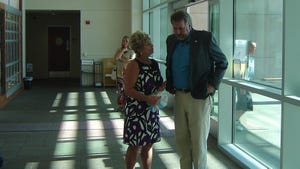
A broad coalition of growers, olive trade organizations, top USDA/ARS scientists, leading UC Davis agricultural scientists and leaders, gathered Oct. 10 -11, 2012, to observe an impressive demonstration of the first California commercial mechanical harvest of Manzanilla table olives. The event was organized by Dennis Burreson, grower, and Bill McFarland, president of the California Olive Association.

“This is a turning point for our industry. I foresee growth in table olive acreage because of this innovation,” said Michael Silveira, grower, and chairman of the California Olive Committee (Federal Marketing Order).

Two types of canopy shaking harvest machines were put to the test and both have yielded the necessary volume (75%-80%) of high-quality undamaged fruit, and cooperation and tolerance from the trees.

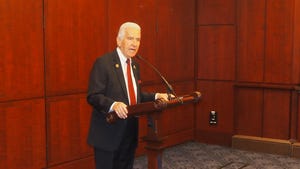
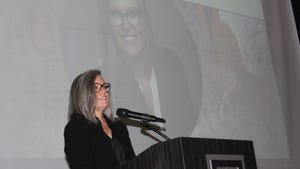
An informative talk by leading agriculture scholar, Dr. Louise Ferguson of UC Davis preceded the harvest demonstration. Dr. Ferguson has directed and supported the concept of mechanical harvest with years of active research and development.

“This is the future of California table olives”, said Adin Hester, President of the Olive Growers Council of California. “A mechanical harvester will increase profits and yield over time. We can see from the results that it will also maintain the same superior product our consumers expect and enjoy.”

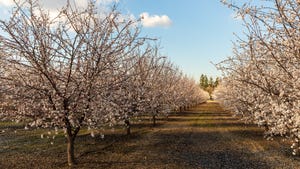
Over fifty growers who attended were pleased with the condition of the olives and the trees – they walked the orchard, inspected the olives and trees as the mechanical harvester moved through the grove.

The table olive crop has lost an alarming amount of acreage (down to 25K, from 40K in the 1980s) in recent years to more profitable tree nut crops, in no small part driven by high costs and current shortages of labor for hand harvesting, as well as low returns per acre for growers. US and EU subsidizing of international table olive crops have further undercut California’s growers in an increasingly competitive market.

“If a tree crop is harvested by hand it will soon be grown offshore. It is imperative to adopt mechanical harvesting in order to keep these crops in California” said grower Dennis Burreson who hosted this olive summit and demonstration on his family’s ranch.

Discuss this Article 1

stuart
on May 8, 2013

It was great to see the old printshop and everyone who works there again. I am excited to see a printing business still operating and growing, great job guys
latex mattress

Post new comment
Sign In or register to use your Western Farm Press ID
(optional)

Continuing Education Courses
This accredited CE course focuses on choosing the correct variety alfalfa based on a number of...
New Course
The 2,000-member Weed Science Society of America’s (WSSA) Herbicide Resistance Action...

The course details six of the primary diseases affecting citrus: Huanglongbing (Citrus...

Newsletter Signup