Core rot in Fuji apples

  • Many Fuji apple blocks were heavily affected this season by core rot, which seems to recur in years with unseasonably long, cool, and wet spring weather conditions.
  • Coniothyrium sporulosum is the most commonly isolated causal agent of core rot in California.

Many Fuji apple blocks were heavily affected this season by core rot, which seems to recur in years with unseasonably long, cool, and wet spring weather conditions. Other varieties are susceptible to core rot but, when conditions are favorable, Fuji always seems to be affected much more than others.

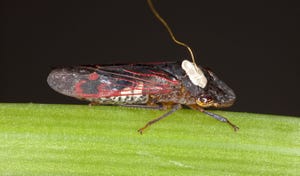
UC Plant Pathologist Themis Michailides has investigated Fuji core rot and found that the fungus, Coniothyrium sporulosum, is the most commonly isolated causal agent of the disease in California. In his studies, a small fungus-feeding mite, Tarsonemus confusus, is often found inhabiting the core and calyx areas of apples with core rot. Because of its close association with core rotted apples, there is some speculation that this mite may play a role in core rot by, for example, transporting fungal spores into the sinus or core area of fruit.

Cool wet spring conditions may favor core rot in several ways, though none have been well documented in scientific studies. Among apple varieties, Fuji has a relatively large and open sinus – the opening that connects the calyx with the core. Prolonged cool spring weather may affect fruit development in ways that cause the sinus to be larger or remain open longer. Cool wet conditions may also favor growth and sporulation of Coniothyrium, or may in some way favor development of the mites associated with core rot.

Core rot is especially devastating because it is difficult to detect before harvest, thus infected apples easily slip through defect sorting efforts during harvest and packing. Core rot affected apples soften and turn yellow on the tree well before other apples on the tree, so pre-harvest scouting for this symptom can provide some help by triggering more intensive harvest sorting in the field and packing shed. There may be opportunities to improve electronic sorting for this defect in sheds, but I am not aware of any that have succeeded in completely eliminating it from packed product.

What strategies could be used to control core rot in the orchard? In studies conducted on other varieties in other areas and other core rot fungi, bloom fungicide sprays have been shown to provide some benefit in reducing core rot. But systematic controlled experiments on Fuji, in California, on C. sporulusum have not been done. Could spring miticide treatments help reduce core rot? The close association of Tarsonemus mites with core rot suggests that well-timed miticide treatments may be another approach but, again, no systematic studies have been done to test this idea. Further complicating any efforts to control core rot with early spring sprays is the fact that the disease occurs only sporadically in cool wet years, and it may not be possible to predict such conditions early in the spring (for example, at or shortly after bloom) when preventive chemical treatments would need to be made.

Discuss this article 2

I am a huge Fuji apple eating kinda girl all year long. This past 6 months or so I have had some bad ones and thought I would go on line to see if there was something going on with my favorite snack after just returning home from Costco to buy some and came home with Organic Braeburn instead, which by the way just don't taste the same.
So is there really a problem with the Fuji apples? I have notices them to be very yellow in color, brownish like dots all over them, and not at all sweet. They have no taste and seem to get soft very fast.
I really hope that if this is a problem it has been identified and has a cure. Would love to hear back from someone, that is if there is someone out there reading this.

Thanks, Renee

By Anonymous (not verified)  on Apr 4, 2011

I live in Atlanta, GA and have been experiencing this same problem with Fuji apples (my son's favorite) for months now. I cannot offer you any solutions but you are not alone! :-)

By Anonymous (not verified)  on Jun 1, 2011
Post new comment
Sign In or register to use your Western Farm Press ID

(optional)

Continuing Education Courses
New Course
The 2,000-member Weed Science Society of America’s (WSSA) Herbicide Resistance Action...
New Course

The course details six of the primary diseases affecting citrus: Huanglongbing (Citrus...

Get the latest info on almond insect pest management. California: 2 Hours "Other"
Farmer-to-Farmer Used Equipment