UC Davis mosquito researcher wins awards at national conference

Dec 11, 2008 10:40 AM

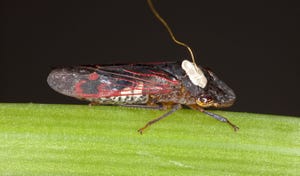
Research on a mosquito that transmits the West Nile virus won two awards for a University of California, Davis doctoral candidate at the recent Entomological Society of America's 56th annual meeting, held in Reno.

Wei Xu, a researcher in chemical ecologist Walter Leal's lab, received first place in the 2008 Overseas Chinese Entomology Student Research Paper Competition and second place in the student competition for the President's Prize in the Diptera category.

Xu's topic: "The Localization of Culex quinquefasciatus Odorant Binding Protein-1 (CquiOBP1)." Mosquitoes detect scents with the sensilla on their antennae.

“Wei was able to explain in simple terms how he pinpointed the sensilla on mosquito antennae that express a certain olfactory protein,” said Leal, the winner of the ESA's 2008 Recognition Award in Insect Physiology, Biochemistry and Toxicology, presented at the same meeting. “Because the sensilla is sensitive to an oviposition pheromone, the implication of his work is that the protein is a pheromone-binding protein. We are now using this protein as a molecular target for the development of novel mosquito oviposition attractants as part of our approach to fend off WNV transmission by mosquito bite.”

Xu is a Ph.D. student research assistant in the Agricultural and Environmental Chemistry Program (molecular biology and biochemistry section), housed in the Department of Entomology. Xu studies olfaction systems in mosquitoes.

A native of China, Xu is finishing his master's degree in entomology at UC Davis while also working on his doctorate in agricultural and environmental chemistry. He earlier received two degrees from Zhongshan University, Guangzhou, China: his bachelor of science degree in microbiology in 2001 and his master's in biochemistry and molecular biology in 2004.

The Leal lab drew international news coverage in August when Leal and Zain Syed revealed the mode of action for the mosquito repellent, DEET. The repellent, discovered more than 50 years ago and considered the "gold standard" of insect repellents, does not mask the smell or jam the senses, as previously thought. Mosquitoes avoid DEET because they dislike the smell.

Culex mosquitoes are the primary transmitters of the West Nile virus. So far this year, the disease has sickened 407 California residents in a total of 25 counties and killed 13 people. Counties reporting fatalities this year: Fresno, Los Angeles, Orange, Riverside and San Bernardino.

Get Copyright ClearanceWant to use this article? Click here for options!
© 2009 Penton Media, Inc.


Latest Jobs

resources

events icon events

product info icon tradeshows

tradeshow icon digests

research icon photos

Continuing Education


*View the entire list of courses offered.


Accredited for California, Arizona and CCA hours:


New Course
Using Organic Acids to Improve Plant Production

Healthy plants have a greater ability to resist soil pathogens and insect damage. This course details how organic acids can enhance plant health. It is accredited for 1 unit in nutrients for CCAs and .5 hours for Arizona licensees. Credit is pending at California Department of Pesticide Regulation


New Course

The ABCs of MRLs

American agriculture exports 20 to 30 percent of its production annually. For specific commodities, the percentage is much higher. When recommending and applying pest management products for crops, license Pest Control Advisers (PCAs)  and applicators and farmers must be aware of which products applied are in compliance with Maximum Residue Limits (MRLs) established by foreign customers. This CE course details the MRL issue and why compliance is critical to marketing into world trade.

Back to Top

Browse Print Issues

Additional Resources

subscribe to Farm Press Daily Southeast Farm Press Southwest Farm Press Delta Farm Press