California tree fruit growers reduce nitrogen to improve quality

Jul 7, 2008 10:27 AM, By Harry Cline
Farm Press Editorial Staff
Progressive California fresh fruit growers have significantly reduced nitrogen use on peach, plum and nectarine trees, and the result has been improved quality fruit.

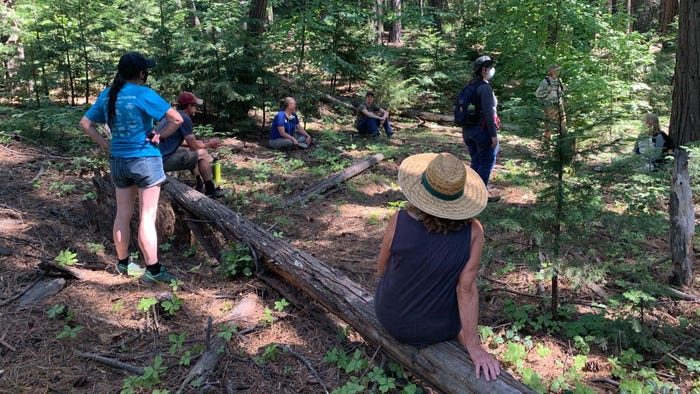
University of California Extension Pomologist Scott Johnson told growers at a University of California Kearney Agricultural Center field day featuring nutrient management that growers have reduced nitrogen use by half, compared to a decade or more ago.

“I am sure some growers continue to over-fertilize, but quite a few have realized that reducing N improves quality without significantly affecting size,” Johnson told growers and pest control advisers (PCAs) on a field tour of his nutrient management research plots.

Over-fertilizing is not all the fault of growers. A demand for increasingly larger fruit by buyers forced producers to pour on the N, and thin and girdle to achieve larger sizes, often at the expense of quality.

The size demand was particularly detrimental to early fruit quality, said Johnson. “It is a little easier to get size with later varieties.”

Johnson said 3 percent leaf nitrogen is sufficient for a healthy tree to produce good fruit, and growers can expect to continue to get good vegetative growth and acceptable quality production at that nitrogen level.

He said he has never identified a phosphorous deficiency, which leaves him wondering why growers continue to use N-P-K triple fertilizer.

However, that is not true of the other major nutrient, potassium.

A potassium deficiency can result in cracked fruit and limb dieback, particularly in the lower areas of trees. A telltale sign of K-deficiency is end-of-the-season leaf roll that can be mistaken for water stress.

Johnson said K levels of less than 1 percent in a leaf sample can cause problems. “One percent to 2 percent is a little low” and could benefit from a potassium sulfate application.

Zinc was the only minor nutrient addressed at the field day.

“Zinc does not represent a major expense for growers,” he noted. “However, zinc prices have gone up with the significant increase in all fertilizers and that is why we continue to look at it.”

Johnson’s research shows that timing and sampling for zinc deficiency are critical to determining whether trees need zinc or not. That is of interest to PCAs and growers because with the rising cost of fuel, unnecessary trips through an orchard are costlier than ever.

“Growers also realize that zinc is a heavy metal that does not leach out of the soil. It is an environmental issue—maybe not a major one, but a potential issue nonetheless.”

Johnson says zinc moves within the trees, particularly in the spring when there is a flush of new growth. Then it tends to move to the growing tip where sampling would not necessarily reflect a deficiency within the whole tree. However, a visual symptom of zinc deficiency is thinning of the top of the trees and a lack of fruit there.

“In a deficient tree, our research is indicating that zinc moves from older leaves to younger leaves.”

Johnson said a debate is ongoing about the current university recommendations for zinc deficiency, but a reading of 12 ppm zinc in older, basal leaves should be considered a zinc deficiency signal.

He has had “good success” in identifying zinc-deficient trees by dormant shoot sampling lower in the canopy. “We can get a nice difference between deficient and sufficient trees the first of September. However, I realize that could be too late for most growers.”

It does not take much zinc to mitigate a deficiency, but it takes heavy applications of zinc to get a small amount into the trees. However, applications of zinc can cause fruit and leaf toxicity.

Unlike the movement of zinc within the tree “zinc tends to be immobile” when applied as a foliar spray.

Johnson has been evaluating a wide array of material to see if any are less phytotoxic than zinc sulfate. Pure basic zinc (52 percent) does not cause damage like zinc sulfate. However, not much zinc gets into fruit trees from this formulation.

Bicco’s Chelated Zinc 12 percent with ethylene diamine acetic acid (EDTA) is a particular product Johnson used that did not cause leaf shot holes or spots on the fruit.

email: hcline@farmpress.com

Get Copyright ClearanceWant to use this article? Click here for options!
© 2009 Penton Media, Inc.


Latest Jobs

resources

events icon events

product info icon tradeshows

tradeshow icon digests

research icon photos

Continuing Education

Accredited for California, Arizona and CCA hours:


(New Course)
Biopesticides -- Effective Use in Pest Management Programs

Biopesticides are increasingly being recommended as components of Integrated Pest Management (IPM) programs in the production of non-organic high-value specialty crops such as fruit, nut, vegetable, vine, ornamental and turf. This online, accredited course, sponsored by Marrone Bio Innovations, details some of the 245 registered biopesticide active ingredients used in a wide array pest management products.

Accredited in California and Arizona:


(New Course)
Agronomic Principles and Efficient Chemigation and Fertigation Using Center Pivot/Linear Sprinkler Systems

This online CE course details sound mechanical irrigation design and management practices to allow efficient chemigation and fertigation. It is accredited for Certified Crop Adviser CE units and is approved for credit hours in California and Arizona.


(New Course)
Pome, Stone Fruit Pest Management Using New Mode of Action Chemistry

New chemistry Rynaxypyr has proven effective against a wide range of economically important Lepidoptera species. Marketed under the trade name Altacor for use in grapes, pome and stone fruit, details on how to use this new chemistry are in this online Continuing Education course that is accredited in California, Pennsylvania, and New Jersey with CE applications pending in Oregon and Washington.


(New Course)
Vegetable Pest Management Using New Mode of Action

Integration of a new mode of action compound like Coragen into IPM and IRM programs to control Lepidoptera in leafy greens, fruiting vegetables, peppers and brassica or cole crops is always welcome. This online CE accredited details how best to use this new mode of action in intensive vegetable production. It is accredited in California, Arizona, Texas, Georgia, New Jersey and Pennsylvania. Application for credit is pending in Florida and Washington.

Accredited by Accredited in California and Washington:


(New Course)
Utilizing Calcium as Nutrient That Protects Against Disease Organisms

This online accredited course focus on Calcium, an important plant nutrient in fertilizer management for maximum, healthy plant development as well as disease and pest prevention. It is accredited in California, Georgia,: Pennsylvania and New Jersey. Credit pending in Florida, South Carolina, Tennessee, Virginia, West Virginia and Washington.


Accredited by California DPR and California and Arizona Certified Crop Advisers:


(New Course)

Nutrient Management in Key California Crops


This online CEU course offers a detailed look at the nutrient management in key California crops. It is sponsored online by Western Plant Health Association and funded by a grant from the California Department of Food and Agriculture Fertilizer Research and Education Program (FREP). It is accredited for one (1)-hour of credit by the California Department of Pesticide Regulation for California Pest Control Advisers (PCA), Private Applicators, Qualified Applicators and Aerial Applicators. The course is also accredited for 3 units in Nutrient Management (NM) for California and Arizona Certified Crop Advisers (CCAs).

Accredited in California, Arizona, Idaho, Oregon and Washington and for Certified Crop Advisers:


(New Course)
Organic/Sustainable Agricultural Production in the West

Organic/sustainable agriculture is expanding rapidly in the U.S. with an average annual increase of 20% during the last 15 years. This course covers a wide range of pests and organic control strategies. It is accredited for up to 4 continuing education hours for PCAs and Applicator Licensees in California, Arizona, Idaho, Oregon and Washington. It is also approved for Certified Crop Adviser credit.


ACCREDITED IN CALIFORNIA ONLY:


Almond Pest Management

Get the latest info on almond insect pest management and earn 2 hrs. CE DPR and CCA credit in California.

California Groundwater Protection Regulations

Earn 2 hrs. in California laws and regs CE and learn how to protect California groundwater supplies.


Disease Management in California Almonds

Managing diseases in California almond production is a year-long process. This course provides the latest information on controlling these diseases with management practices and fungicides. The course is approved for 2 CEUs by DPR for PCAs and all applicator categories and California CCAs.

Powdery Mildew Control in California Grapevines

Learn about the No. 1 grape disease in California; earn 2 California CE hours.

ACCREDITED IN CALIFORNIA AND ARIZONA:


The Role of Copper in Disease Control

Copper has long been a key tool in disease control in a many crops. This 2-CEU course accredited California PCAs and all DPR applicator categories and Arizona applicators details how best to use copper to maximize its potential.

Insecticide Resistance Management in Agronomic and Row Crops

A 3-hr. CE approved for California and Arizona licensees and CCAs in both states.

Agronomic Weed Resistance Management in Row Crops, Trees Nuts and Vines

Weeds Resistance Management is approved for 3 hours of CE credit for all California and Arizona licensees and Certified Crop Advisers.

Lepidopterous Pest Management/ Pesticide Safety

This course is approved for 2 hours in Arizona and California (1 hr. of laws/regs; 1 hour Other) and for CCAs.

ACCREDITED IN CALIFORNIA, ARIZONA, OREGON, AND WASHINGTON:

Managing Spray Drift to Minimize Problems

This online CEU on managing spray drift to minimize problems is accredited for 2-hours in California (Laws and Regs); Arizona, Oregon and Washington.

Back to Top

Browse Print Issues

Additional Resources

subscribe to Farm Press Daily Southeast Farm Press Southwest Farm Press Delta Farm Press