Springtime in the San Joaquin Valley just never gets old

Apr 21, 2008 10:47 AM, By Harry Cline
Farm Press Editorial Staff

It has been 33 years since I took my first spring drive through California’s San Joaquin Valley. It remains a challenge to focus on the road surrounded by an agricultural Mecca found nowhere else in the world.

This year’s spring sojourn was made earlier this month in a long one-day photo-gathering road trip from Fresno to Corcoran to the San Joaquin Delta west of Lodi and back to Fresno via Highway 99 and Interstate 5.

It was another mesmerizing voyage.

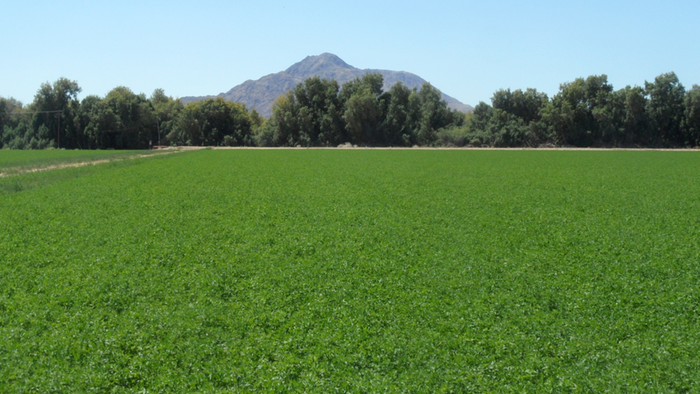
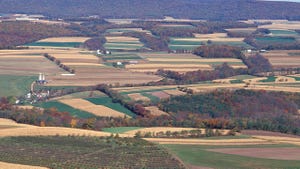
Although it was blustery cold, the San Joaquin Valley air was crisp and clear. Fields of mostly wheat, alfalfa and winter forages were carpets of glistening green.

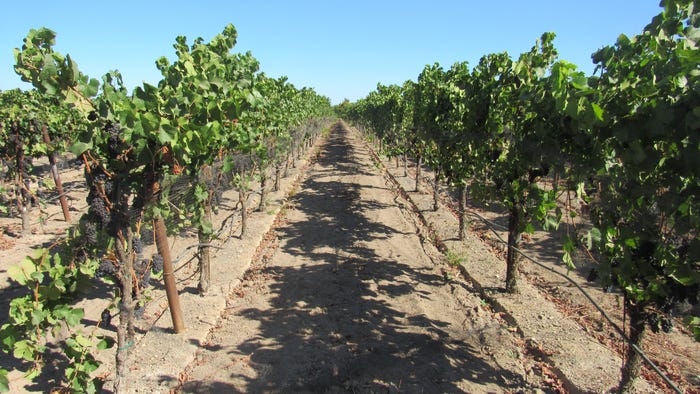
Orchards and vineyards were awash in new, fresh growth. Signs of continual renewal were everywhere. New vineyards and orchards are still being planted despite ominous irrigation water forecasts and more regulations than any industry should bear. Older orchards top-worked and whitewashed were ready for a new beginning.

The landscape is never the same. Three decades ago in April, thousands of acres were furrowed out, awaiting cotton planters. Few fields were bare awaiting planters in April 2008. Permanent crops, alfalfa and one of the state’s biggest irrigated winter wheat crops made the 2008 spring drive much greener than three decades ago. Dark earth fields were few and far between.

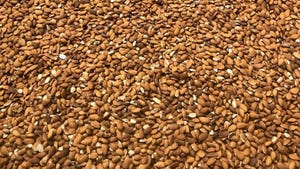
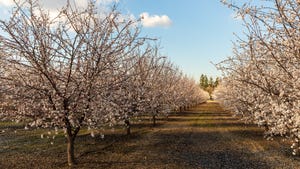
I am no expert, but my prediction is that there is a huge almond harvest in the making. No doubt it is another billion-pounder. Trees seem to be sagging from the weight of the crop much earlier this season. The bloom this year started off a slow, but the weather cleared and a long cool spell seemed to extend the bloom far longer than I can recall from past years. Almond trees were blinding white at bloom time this year.

Driving down I-5, honeybees splattered on the pickup windshield like rocks from 18-wheelers. It would take a one-pound coffee can lid to cover some of the individual bee carnage because the pollinators were so engorged before their demise, another Cline sign of a huge almond crop.

On one stretch of I-5 the smell of citrus blooms filled the pickup. On another stretch the Harris Ranch feed yard filled the cab with an entirely different odor. Forage choppers in another area spawned that fresh cut forage smell.

California’s massive water projects snake along the West Side of the Valley, a constant reminder for us in agriculture that it is the water than makes the Central Valley an agricultural showcase. Without water, it is a desert.

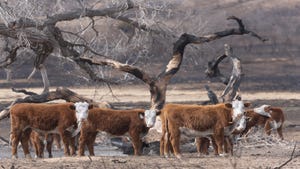
Just south of Los Banos two orchards bring that into stark reality. The trees are tall, nice scaffolding and lined up perfectly ... and all dead as a doornail. The small orchards have been abandoned and not irrigated for several years. They looked like tombstones. It’s what the Central Valley would look like without the imported water.

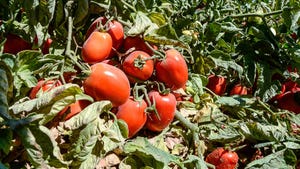
I passed several sets of doubles lumbering under loads of lettuce boxes and other produce. They were headed to coolers and eventually to a hungry America. Those trucks would be parked and boxes empty without imported water.

Unfortunately, most of the folks in cars speeding down the interstate are from cities and do not make the connection between those dead orchards and the water flowing down the canals and the greenery of the valley.

However for now, springtime journeys through California’s great Central Valley are still invigorating. It only makes me appreciate that much more where I call home and how much harder I want to work to preserve an irreplaceable bounty.

email: hcline@farmpress.com

Get Copyright ClearanceWant to use this article? Click here for options!
© 2008 Penton Media, Inc.


Latest Jobs

resources

events icon events

product info icon tradeshows

tradeshow icon digests

research icon photos

Continuing Education

Accredited in California, Arizona, Idaho, Oregon and Washington and for Certified Crop Advisers:


(New Course)
Organic/Sustainable Agricultural Production in the West

Organic/sustainable agriculture is expanding rapidly in the U.S. with an average annual increase of 20% during the last 15 years. This course covers a wide range of pests and organic control strategies. It is accredited for up to 4 continuing education hours for PCAs and Applicator Licensees in California, Arizona, Idaho, Oregon and Washington. It is also approved for Certified Crop Adviser credit.

ACCREDITED IN OREGON AND WASHINGTON:


(New Course)
Managing Spray Drift to Minimize Problems

This online spray drift management course has been certified by the Oregon Department of Agriculture and the Washington Department of Agriculture for 2 hours of credit for licensed Applicators and Consultants in Oregon and Washington.

ACCREDITED IN CALIFORNIA ONLY:


Almond Pest Management

Get the latest info on almond insect pest management and earn 2 hrs. CE DPR and CCA credit in California.

California Groundwater Protection Regulations

Earn 2 hrs. in California laws and regs CE and learn how to protect California groundwater supplies.


Disease Management in California Almonds

Managing diseases in California almond production is a year-long process. This course provides the latest information on controlling these diseases with management practices and fungicides. The course is approved for 2 CEUs by DPR for PCAs and all applicator categories and California CCAs.

Powdery Mildew Control in California Grapevines

Learn about the No. 1 grape disease in California; earn 2 California CE hours.

ACCREDITED IN CALIFORNIA AND ARIZONA:


The Role of Copper in Disease Control

Copper has long been a key tool in disease control in a many crops. This 2-CEU course accredited California PCAs and all DPR applicator categories and Arizona applicators details how best to use copper to maximize its potential.

Insecticide Resistance Management in Agronomic and Row Crops

A 3-hr. CE approved for California and Arizona licensees and CCAs in both states.

Agronomic Weed Resistance Management in Row Crops, Trees Nuts and Vines

Weeds Resistance Management is approved for 3 hours of CE credit for all California and Arizona licensees and Certified Crop Advisers.

Lepidopterous Pest Management/ Pesticide Safety

This course is approved for 2 hours in Arizona and California (1 hr. of laws/regs; 1 hour Other) and for CCAs.

Managing Spray Drift to Minimize Problems

2-hrs laws and regs for California licensees; 2 hours in Arizona and for CCAs.

Back to Top

Browse Print Issues

Additional Resources

subscribe to Farm Press Daily Southeast Farm Press Southwest Farm Press Delta Farm Press