Proposition 2 anti-agriculture, would be harmful to California

Sep 22, 2008 10:43 AM, By Cary Blake
Farm Press Editorial Staff

On Nov. 4, California voters will consider Proposition 2, “Standards for Confining Farm Animals.”

Specifically the proposal requires that certain farm animals be allowed (for the majority of every day) to fully extend their limbs and wings, lie down, stand up, and turn around.

Voter approval of this ballot initiative could lead to the rapid demise of California’s egg industry.

According to the 2007 California Agricultural Resource Directory, 10 million layers produced 4.9 billion eggs which added $212 million to California’s economy.

Results from a University of California-funded study conducted by the University of California Agricultural Issues Center explored the potential economic effects on California egg farmers and consumers if Proposition 2 passes.

The study found that the state’s egg industry would be severely hobbled. Costs of production would rise and more eggs shipped in from other states, which would not be required to meet the regulations set for California production.

“The most likely outcome, therefore, is the elimination of almost all of the California egg industry over a very few years,” said the study’s lead author Daniel Sumner, director, Agricultural Issues Center, and Frank H. Buck, jr. professor, UC Davis Department of Agricultural and Resource Economics.

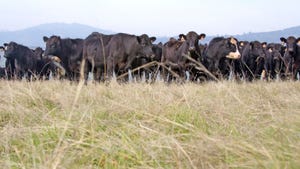
Proposition 2 is not really about cage size and humane animal treatment. In reality, many use such campaigns to convince others to support the vegetarian diet, oppose what they call “factory farms,” and endorse cows roaming freely in pastures while mooing the song “Kumbaya.”

What is a factory or corporate farm?

I recall an article where the headline inaccurately announced the opening of Arizona’s first ethanol “factory,” i.e. plant. The latest figures I noted on “corporate farms” said 2 percent of the nation’s farms are owned by corporations; in other words 98 percent of all U.S. farms are owned by families. Many corporate-owned farms are family owned and operated, and incorporated for tax reasons.

It’s not difficult to track the noisy environmental wacko groups like the Humane Society of the United States (HSUS) that use emotional messaging to tug at consumers’ heartstrings with a total disregard of scientific agricultural facts.

Ed Ableser and David Lujan, Arizona state representatives, sponsored a bill last year mandating more cage space for laying hens. At the invitation of Clint Hickman, Hickman’s Family Farms, Buckeye, the lawmakers toured Hickman’s egg ranch with an open mind. In addition to the tour, Hickman showed the lawmakers a cage-free farm video. Ableser withdrew the legislation.

No one cares more about the humane treatment of farm animals than the farmer or rancher. It’s the right thing to do, and animal health is directly tied to the farm’s fiscal viability.

Unfortunately small scale agriculture is a way of the past. Larger farms, especially in the West, are better able to survive skyrocketing input costs for diesel and fertilizer while also competing for markets with farmers worldwide.

The world’s population is expected to swell from 6.7 billion to 8 billion by 2025. To meet global demand, Western farmers are challenged to grow more food and fiber, not less as advocated under Proposition 2.

email: cblake@farmpress.com

Get Copyright ClearanceWant to use this article? Click here for options!
© 2009 Penton Media, Inc.


Latest Jobs

resources

events icon events

product info icon tradeshows

tradeshow icon digests

research icon photos

Continuing Education

Accredited for California, Arizona and CCA hours:


(New Course)
Biopesticides -- Effective Use in Pest Management Programs

Biopesticides are increasingly being recommended as components of Integrated Pest Management (IPM) programs in the production of non-organic high-value specialty crops such as fruit, nut, vegetable, vine, ornamental and turf. This online, accredited course, sponsored by Marrone Bio Innovations, details some of the 245 registered biopesticide active ingredients used in a wide array pest management products.

Accredited in California and Arizona:


(New Course)
Agronomic Principles and Efficient Chemigation and Fertigation Using Center Pivot/Linear Sprinkler Systems

This online CE course details sound mechanical irrigation design and management practices to allow efficient chemigation and fertigation. It is accredited for Certified Crop Adviser CE units and is approved for credit hours in California and Arizona.


(New Course)
Pome, Stone Fruit Pest Management Using New Mode of Action Chemistry

New chemistry Rynaxypyr has proven effective against a wide range of economically important Lepidoptera species. Marketed under the trade name Altacor for use in grapes, pome and stone fruit, details on how to use this new chemistry are in this online Continuing Education course that is accredited in California, Pennsylvania, and New Jersey with CE applications pending in Oregon and Washington.


(New Course)
Vegetable Pest Management Using New Mode of Action

Integration of a new mode of action compound like Coragen into IPM and IRM programs to control Lepidoptera in leafy greens, fruiting vegetables, peppers and brassica or cole crops is always welcome. This online CE accredited details how best to use this new mode of action in intensive vegetable production. It is accredited in California, Arizona, Texas, Georgia, New Jersey and Pennsylvania. Application for credit is pending in Florida and Washington.

Accredited by Accredited in California and Washington:


(New Course)
Utilizing Calcium as Nutrient That Protects Against Disease Organisms

This online accredited course focus on Calcium, an important plant nutrient in fertilizer management for maximum, healthy plant development as well as disease and pest prevention. It is accredited in California, Georgia,: Pennsylvania and New Jersey. Credit pending in Florida, South Carolina, Tennessee, Virginia, West Virginia and Washington.


Accredited by California DPR and California and Arizona Certified Crop Advisers:


(New Course)

Nutrient Management in Key California Crops


This online CEU course offers a detailed look at the nutrient management in key California crops. It is sponsored online by Western Plant Health Association and funded by a grant from the California Department of Food and Agriculture Fertilizer Research and Education Program (FREP). It is accredited for one (1)-hour of credit by the California Department of Pesticide Regulation for California Pest Control Advisers (PCA), Private Applicators, Qualified Applicators and Aerial Applicators. The course is also accredited for 3 units in Nutrient Management (NM) for California and Arizona Certified Crop Advisers (CCAs).

Accredited in California, Arizona, Idaho, Oregon and Washington and for Certified Crop Advisers:


(New Course)
Organic/Sustainable Agricultural Production in the West

Organic/sustainable agriculture is expanding rapidly in the U.S. with an average annual increase of 20% during the last 15 years. This course covers a wide range of pests and organic control strategies. It is accredited for up to 4 continuing education hours for PCAs and Applicator Licensees in California, Arizona, Idaho, Oregon and Washington. It is also approved for Certified Crop Adviser credit.


ACCREDITED IN CALIFORNIA ONLY:


Almond Pest Management

Get the latest info on almond insect pest management and earn 2 hrs. CE DPR and CCA credit in California.

California Groundwater Protection Regulations

Earn 2 hrs. in California laws and regs CE and learn how to protect California groundwater supplies.


Disease Management in California Almonds

Managing diseases in California almond production is a year-long process. This course provides the latest information on controlling these diseases with management practices and fungicides. The course is approved for 2 CEUs by DPR for PCAs and all applicator categories and California CCAs.

Powdery Mildew Control in California Grapevines

Learn about the No. 1 grape disease in California; earn 2 California CE hours.

ACCREDITED IN CALIFORNIA AND ARIZONA:


The Role of Copper in Disease Control

Copper has long been a key tool in disease control in a many crops. This 2-CEU course accredited California PCAs and all DPR applicator categories and Arizona applicators details how best to use copper to maximize its potential.

Insecticide Resistance Management in Agronomic and Row Crops

A 3-hr. CE approved for California and Arizona licensees and CCAs in both states.

Agronomic Weed Resistance Management in Row Crops, Trees Nuts and Vines

Weeds Resistance Management is approved for 3 hours of CE credit for all California and Arizona licensees and Certified Crop Advisers.

Lepidopterous Pest Management/ Pesticide Safety

This course is approved for 2 hours in Arizona and California (1 hr. of laws/regs; 1 hour Other) and for CCAs.

ACCREDITED IN CALIFORNIA, ARIZONA, OREGON, AND WASHINGTON:

Managing Spray Drift to Minimize Problems

This online CEU on managing spray drift to minimize problems is accredited for 2-hours in California (Laws and Regs); Arizona, Oregon and Washington.

Back to Top

Browse Print Issues

Additional Resources

subscribe to Farm Press Daily Southeast Farm Press Southwest Farm Press Delta Farm Press