Biocontrol for a wide-ranging thrips

May 11, 2009 12:15 PM

A pest with a voracious appetite may have met its match in a predatory mite being evaluated as a biocontrol agent by Agricultural Research Service (ARS) scientists in Fort Pierce, Fla., in collaboration with University of Florida researchers.

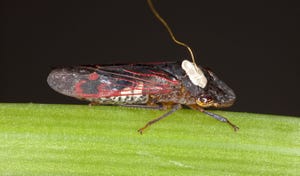
The chilli thrips is an invasive pest that feeds on leaves, turns them brown, kills new growth and attacks up to 150 crops, including peppers, strawberries, tomatoes, peanuts, cotton and a variety of ornamentals.

Detected in Palm Beach County, Fla., in 2005, it has spread to 24 Florida counties and parts of Texas, damaging roses and other ornamentals in both states. Left unchecked, it could reach west to California and north along the Pacific Coast to Canada, causing losses of up to $3.8 billion annually.

Pesticides are effective, but the chilli thrips may develop resistance with repeated treatments, and pesticides are not an option for organic nurseries and gardeners, according to entomologist Cindy L. McKenzie, at the ARS U.S. Horticultural Research Laboratory in Fort Pierce.

Researchers at Fort Pierce and the University of Florida have turned to two mites, Neoseiulus cucumeris and Amblyseius swirskii, which have been used commercially to combat other pests since at least 2005. The researchers put 30 adult chilli thrips on ornamental pepper plants in greenhouse and outdoor settings, waited a week for thrips larvae to hatch and, in separate treatments, released 30 mites of each species on the plants. They checked the plants weekly for four weeks.

Their results, published in Biological Control, showed that the mites — particularly A. swirskii — significantly reduced the number of thrips. A. swirskii left no more than one thrips insect per leaf. That compared with up to 60 thrips larva found on leaves of untreated pepper plants. The work was funded in part by the American Floral Endowment and the Floriculture and Nursery Research Initiative.

The researchers have set up a chilli thrips Web site for gardeners and commercial growers at http://www.mrec.ifas.ufl.edu/lso/thripslinks.htm.

ARS is the principal intramural scientific research agency of the U.S. Department of Agriculture.

Get Copyright ClearanceWant to use this article? Click here for options!
© 2009 Penton Media, Inc.


Latest Jobs

Subscribe to RSS headline updates from:
Powered by FeedBurner

Continuing Education


*View the entire list of courses offered.


Accredited for California, Arizona and CCA hours:


New Course
Using Organic Acids to Improve Plant Production

Healthy plants have a greater ability to resist soil pathogens and insect damage. This course details how organic acids can enhance plant health. It is accredited for 1 unit in nutrients for CCAs and .5 hours for Arizona licensees. Credit is pending at California Department of Pesticide Regulation


New Course

The ABCs of MRLs

American agriculture exports 20 to 30 percent of its production annually. For specific commodities, the percentage is much higher. When recommending and applying pest management products for crops, license Pest Control Advisers (PCAs)  and applicators and farmers must be aware of which products applied are in compliance with Maximum Residue Limits (MRLs) established by foreign customers. This CE course details the MRL issue and why compliance is critical to marketing into world trade.

Back to Top

Browse Print Issues

Additional Resources

subscribe to Farm Press Daily Southeast Farm Press Southwest Farm Press Delta Farm Press