Agricultural curriculum expansion a cornerstone of Hartnell College plans

Jun 24, 2008 11:10 AM, By Cary Blake
Farm Press Editorial Staff


Hartnell College, Salinas, Calif., is putting down deeper roots to support the agricultural industry through expanded agricultural facilities and curriculums.

The college broke ground in May on the new Center for Applied Technology as part of its growing commitment to provide students with the education for careers in agriculture and construction.

The new 40,000-square-foot, $23 million facility will house Hartnell’s career and technical education programs including the Agricultural Business and Technology Institute, new sustainable construction programs, plus other service programs.

“We need to make sure that in addition to the world’s biggest fresh garden that we are the world’s freshest laboratory,” said Dennis Donohue, Salinas mayor, at the groundbreaking. “That will take place here.”

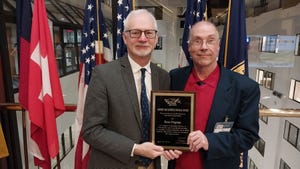
The new facility illustrates Hartnell’s commitment to the fact that agriculture is the economic backbone of the community, said Jim Bogart, co-chair of Hartnell College’s ag steering committee.

“We are committing resources and industry expertise into the facility and its agricultural curriculum because there’s a future in agriculture,” Bogart said.

Bogart also serves as president of the Grower-Shipper Association of Central California, Salinas.

Hartnell’s current agricultural curriculum includes certificate and degree programs in agricultural business, agricultural production, plus diesel technology and welding. Additional agricultural curriculums are planned.

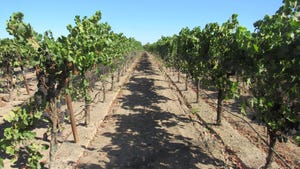
“We’ll roll out programs next year in precision agriculture. Other future programs will focus on food safety and post-harvest technology,” said Neil Ledford, program director of the ag business and technology institute. Also planned are programs in viticulture and pest management.

The new building will include space for diesel and post-harvest mechanics, welding, plus a food safety laboratory, Ledford said.

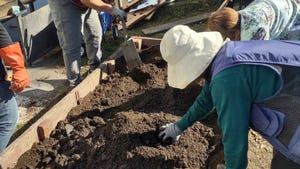
Some classroom studies will focus on soils and plants. A meeting room with a capacity of 100 people will be available for industry meetings and short-term training. The building is scheduled to open in 2010.

About 340 of Hartnell’s 7,500 students currently study agriculture-based curriculums. “We’re looking to increase the number to 800 students within the next five years,” Ledford said. “There is a big need in the produce industry for students with important entry level skills to get positions in salad companies and related shops.”

Bogart said, “I believe fervently in educating, developing, and training our young people. They are the future of the agricultural industry.”

email: cblake@farmpress.com

Get Copyright ClearanceWant to use this article? Click here for options!
© 2008 Penton Media, Inc.


Latest Jobs

resources

events icon events

product info icon tradeshows

tradeshow icon digests

research icon photos

Continuing Education

Accredited in California, Arizona, Idaho, Oregon and Washington and for Certified Crop Advisers:


(New Course)
Organic/Sustainable Agricultural Production in the West

Organic/sustainable agriculture is expanding rapidly in the U.S. with an average annual increase of 20% during the last 15 years. This course covers a wide range of pests and organic control strategies. It is accredited for up to 4 continuing education hours for PCAs and Applicator Licensees in California, Arizona, Idaho, Oregon and Washington. It is also approved for Certified Crop Adviser credit.

ACCREDITED IN OREGON AND WASHINGTON:


(New Course)
Managing Spray Drift to Minimize Problems

This online spray drift management course has been certified by the Oregon Department of Agriculture and the Washington Department of Agriculture for 2 hours of credit for licensed Applicators and Consultants in Oregon and Washington.

ACCREDITED IN CALIFORNIA ONLY:


Almond Pest Management

Get the latest info on almond insect pest management and earn 2 hrs. CE DPR and CCA credit in California.

California Groundwater Protection Regulations

Earn 2 hrs. in California laws and regs CE and learn how to protect California groundwater supplies.


Disease Management in California Almonds

Managing diseases in California almond production is a year-long process. This course provides the latest information on controlling these diseases with management practices and fungicides. The course is approved for 2 CEUs by DPR for PCAs and all applicator categories and California CCAs.

Powdery Mildew Control in California Grapevines

Learn about the No. 1 grape disease in California; earn 2 California CE hours.

ACCREDITED IN CALIFORNIA AND ARIZONA:


The Role of Copper in Disease Control

Copper has long been a key tool in disease control in a many crops. This 2-CEU course accredited California PCAs and all DPR applicator categories and Arizona applicators details how best to use copper to maximize its potential.

Insecticide Resistance Management in Agronomic and Row Crops

A 3-hr. CE approved for California and Arizona licensees and CCAs in both states.

Agronomic Weed Resistance Management in Row Crops, Trees Nuts and Vines

Weeds Resistance Management is approved for 3 hours of CE credit for all California and Arizona licensees and Certified Crop Advisers.

Lepidopterous Pest Management/ Pesticide Safety

This course is approved for 2 hours in Arizona and California (1 hr. of laws/regs; 1 hour Other) and for CCAs.

Managing Spray Drift to Minimize Problems

2-hrs laws and regs for California licensees; 2 hours in Arizona and for CCAs.

Back to Top

Browse Print Issues

Additional Resources

subscribe to Farm Press Daily Southeast Farm Press Southwest Farm Press Delta Farm Press