New University of California ag vice president promising big changes

Nov 24, 2008 10:20 AM, By Harry Cline
Farm Press Editorial Staff
Putting a deadline-driven advocate attorney in charge of 1,100 University of California academicians and scientists could be like mixing gasoline and fire.

Or it could be fit like peanut butter and jelly, two opposites that go well together.

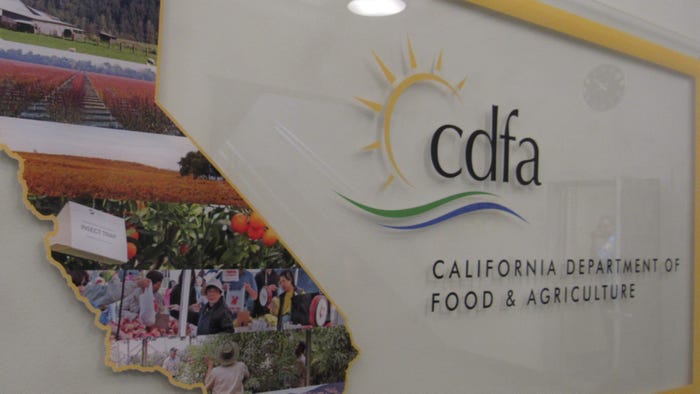
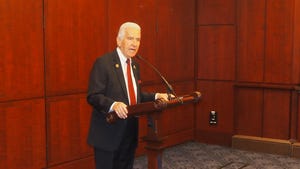
It makes no difference to Dan Dooley, former chief deputy director of the California Department of Food and Agriculture. Regardless of how you view his appointment as vice president of the University of California Ag and Natural Resources Division, he is out to make a difference in the way one of the largest UC divisions is run.

A graduate of the California Ag Leaderhip program and a water/agricultural issues attorney for 20 years in Visalia, Calif., where his family farms, Dooley is the first non-scientist to lead the Ag and Natural Resources Division. A graduate of UC Davis with a degree in agricultural economics, Dooley says he wants to run the division like a business.

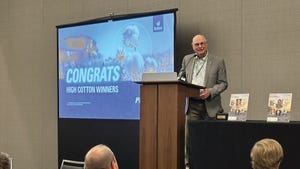
Businesses assess demand for products and services they provide and then make investments to meet those demands. Academia engages in ongoing internal battles and plans for future battles, Dooley told the annual conference of the California Association of Pest Control Advisers (CAPCA).

The agricultural community, he says, believes the university in many ways has lost its connection to the industry and that is why he agreed to take the job. He says UC needs to “invigorate that relationship and aggressively engage the people we are to be serving.”

One way he wants to do that is strengthen University of California Cooperative Extension county and regional experiment stations where the number of farm advisors has been reduced from a high of 440 in 1989 to just 225 today, through draconian budget cuts far greater than the campus academic level cuts.

Dooley added that the cooperative Extension structure may change. Nevertheless, his goal is to tie the university back to its ag constituents via the county and experiment station offices.

The former Visalia attorney took over in January and quickly initiated a planning process involving stakeholders as well as university personnel to look at the division’s structure and anticipate future demands. He is to present the findings from this process to the board of regents in May. From his tone at CAPCA, that report will be a distant departure from the way the division is operated now.

Dooley has set firm deadlines for the work he wants done in his department that has a $350 million annual budget. “The joke around the system is that people are drinking from the Dooley fire hose” because he sets unreasonable deadlines. However, to his surprise his deadlines are being met.

The brother of former California Congressman Calvin Dooley is making waves, demanding accountability and expecting change not just for the sake of change. He sees California and its agricultural community facing massive changes in the future and wants his division to be ready to respond.

He says the world food crisis, fueled by worldwide demand for higher protein food, is an opportunity for the UC division to aggressively move its research agenda forward “like it has not been able to do in the past three or four decades.”

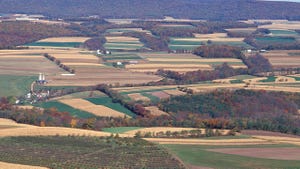
His division’s role will most assuredly change its focus as California’s population continues to grow to an estimated 59 million by 2050, up from the current 38 million. Eleven of California’s 25 fastest growing counties are in major agricultural areas, further challenging the urban-agriculture interface.

California’s burgeoning population has already consumed 750,000 acres of farmland. Another 2 million acres is expected to be taken out of production by 2050.

Some of the other issues facing the ag community are the dwindling California water supply and the related climate change.

Dooley says the research community is too focused on finding out the causes for climate change. It should be focused on the consequences of the changes and its interaction with the ecological system of pests, weeds and other factors affecting agriculture.

Internally, Dooley faces a challenge many segments of the industry are facing; the loss of people.

Twice as many academicians will retire within 10 years than are there are people with 10 years or less experience in the university.

Eighty percent of the county directors will retire in 10 years.

“Maintaining consistency within the division will be a real challenge moving forward,” he adds.

Acknowledging that maneuvering within the UC system is like trying to steer a battleship with a canoe, he admits that years as a legal advocate have helped him develop “sharp elbows” to muscle UC administrators into acknowledging the importance of his division and why it is relevant.

“I think I have convinced people in large part that cooperative Extension is the face of the University of California and to whack away at that does not bode well for the rest of the university,” he told the annual CAPCA conference.

To argue his point that investing in agriculture and natural resources is a good investment, he first cited a University of Minnesota study that noted investing in agriculture results in a thirtyfold return.

He says it is even higher in California for investing in agriculture with returns greater than investing in intellectual technology like that coming from California’s Silicon Valley.

Although Dooley is a strong advocate for cooperative Extension, he also says he expects changes there to come from the advisory panels. He does not expect to close county offices, but he does envision changes in the farm advisor structure to more regional advisors.

“We have to look closely at how to optimize our resources. Hanging on to the historic structure is eating us alive. We cannot continue that,” he admits.

“I am not here to rearrange chairs on the deck. I am here to move aggressively forward” to meet the future needs of California through the Ag and Natural Resources Division he heads. He recently turned down merit review promotions, something he says has not been done in a couple of decades. He promises to make those in his division accountable.

He also admits he is not pleasing everyone. “Some people say I am the best thing since sliced bread. Others say I am exactly what they thought I was when I showed up,” he laughs.

email: hcline@farmpress.com

Get Copyright ClearanceWant to use this article? Click here for options!
© 2009 Penton Media, Inc.


Latest Jobs

resources

events icon events

product info icon tradeshows

tradeshow icon digests

research icon photos

Continuing Education


*View the entire list of courses offered.


Accredited for California, Arizona and CCA hours:


New Course
Using Organic Acids to Improve Plant Production

Healthy plants have a greater ability to resist soil pathogens and insect damage. This course details how organic acids can enhance plant health. It is accredited for 1 unit in nutrients for CCAs and .5 hours for Arizona licensees. Credit is pending at California Department of Pesticide Regulation


New Course

The ABCs of MRLs

American agriculture exports 20 to 30 percent of its production annually. For specific commodities, the percentage is much higher. When recommending and applying pest management products for crops, license Pest Control Advisers (PCAs)  and applicators and farmers must be aware of which products applied are in compliance with Maximum Residue Limits (MRLs) established by foreign customers. This CE course details the MRL issue and why compliance is critical to marketing into world trade.

Back to Top

Browse Print Issues

Additional Resources

subscribe to Farm Press Daily Southeast Farm Press Southwest Farm Press Delta Farm Press