Column: Please, please buckle up!

Sep 15, 2005 9:13 AM, By Harry Cline, Farm Press Editorial Staff

Unfortunately, death is a revealing time. More often than not, memorial services and obituaries are where you learn neat things about people you did not know before.

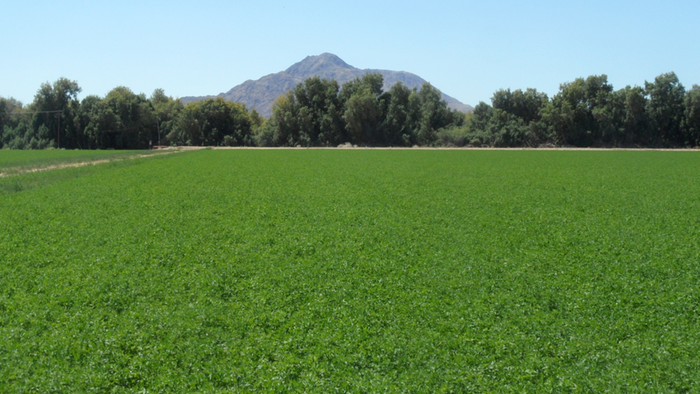
I did not know Jim Kuhn well. I had met the 41-year-old farmer as editor of Western Farm Press, through his involvement in the California Alfalfa and Forage Association. I also interviewed him several years ago for a story on Imperial Valley; California alfalfa production; his hay exporting operation; his dairy and his unique cheese factory.

He was not real comfortable being interviewed and photographed. Like many farmers, he liked to keep his business as private as possible, yet he was proud of being a farmer and proud — yet not boastful — of the success he had enjoyed. Some volunteer a lot in an interview. Others simply answer questions posed to them. Jim was the latter.

He wanted other farmers to be successful. He built his dairy not only to be a successful business, but to show others that the Imperial Valley was a good place for dairy cows. He wanted to see many dairies in Imperial County because he knew it would help the valley’s economy.

In most interviews, you gather facts that stick linger long after the story has been printed. The one from the Jim Kuhn story was that he was a graduate of Stanford University with a degree in Slavic languages and literature. I could not help but think; why in the world would anyone with the desire and the curiosity to get a degree in Slavic languages and literature want to come back to Imperial Valley to farm?

Don’t get me wrong. Imperial Valley is wonderfully productive farming valley. However, it also is a tough place to farm and live in the summer. Farming in the Imperial Valley is not for the faint of heart. I have written about more agricultural crises in Imperial Valley and the Southern California and Arizona desert than any place else.

Jim was born in Holtville, yet was educated in Indiana, New Hampshire and Palo Alto. He traveled the world, but returned to Imperial Valley to raise his family and to farm where his grandfather first began farming 90 years ago.

There was another reason I wanted to interview Jim. He was the son of Fritz Kuhn, and I was curious what the son of Fritz Kuhn was like. I did not tell Jim of my curiosity. When I began reporting on California and Arizona agriculture 30 years ago, I spent a lot of time in Imperial Valley. One of the first people I recall meeting was Jim’s father. Fritz Kuhn definitely made an impression. Anyone who knew Fritz Kuhn knows what I am talking about. He was a distinguishable person. I have no idea how many photographs I snapped of Fritz. He was always at meetings and conferences; soaking in information; talking to people; listening to people. He was a leader, maybe not by choice, but by recognition from his peers, much like Jim was a leader.

Back to the point my opening paragraph. I learned from the obituary of Jim Kuhn that he was a nature photographer whose persistence created the Salton Sea International Bird Festival. He also published a book, Land of Contrasts, a photography book on Baja California, and a pamphlet titled Birds of the Imperial Valley. He did not tell me this when I interviewed and photographed him at his farm. Makes me very self-conscious now. He probably could have given me some needed photography pointers. Like I said, Jim did not volunteer too much. I regret not talking to him about his passion for photography and nature.

The purpose of this column is to send condolences to Jim’s family; to recognize the success of Jim’s business and his contribution to California and Imperial Valley agriculture -- and to plead with everyone, please buckle up. Apparently, Jim was not buckled in when his SUV flipped on the rural road near his farm.

No one dislikes being told what to do more than me. I don’t like big brother, the government or anyone else telling me what personal choices I must make. Buckling up is the law, but in reality it is a personal choice. Call me an old fogy, but I buckle up. Unfortunately, I climb into too many farmer pickups and SUVs where the seat belt dangles from the door post. I have long buckled up and made everyone who rides with me do the same, regardless of how uncomfortable or confining or anything else it may be.

Why?

I have a longtime friend who is a pediatric neurologist. He has told more than one parent they had to make a decision to turn off life support of their child because the child was brain dead from being thrown through a windshield or out the window of a car rolling over. That and all the stories I have read about people who could have survived wrecks if they had been buckled in.

I know you are just going down the road to check this that or the other or you are only going 2 miles to the coffee shop for lunch and it is a hassle to buckle up. Regardless of where you are going, grab that seat belt and click it until that funny little red symbol on the dash goes out.

We only have a short time on this earth. Don’t cut it needlessly short.

e-mail:hcline@primediabusiness.com

Get Copyright ClearanceWant to use this article? Click here for options!
© 2009 Penton Media, Inc.


Latest Jobs

resources

events icon events

product info icon tradeshows

tradeshow icon digests

research icon photos

Continuing Education

Accredited for California, Arizona and CCA hours:


(New Course)
Biopesticides -- Effective Use in Pest Management Programs

Biopesticides are increasingly being recommended as components of Integrated Pest Management (IPM) programs in the production of non-organic high-value specialty crops such as fruit, nut, vegetable, vine, ornamental and turf. This online, accredited course, sponsored by Marrone Bio Innovations, details some of the 245 registered biopesticide active ingredients used in a wide array pest management products.

Accredited in California and Arizona:


(New Course)
Agronomic Principles and Efficient Chemigation and Fertigation Using Center Pivot/Linear Sprinkler Systems

This online CE course details sound mechanical irrigation design and management practices to allow efficient chemigation and fertigation. It is accredited for Certified Crop Adviser CE units and is approved for credit hours in California and Arizona.


(New Course)
Pome, Stone Fruit Pest Management Using New Mode of Action Chemistry

New chemistry Rynaxypyr has proven effective against a wide range of economically important Lepidoptera species. Marketed under the trade name Altacor for use in grapes, pome and stone fruit, details on how to use this new chemistry are in this online Continuing Education course that is accredited in California, Pennsylvania, and New Jersey with CE applications pending in Oregon and Washington.


(New Course)
Vegetable Pest Management Using New Mode of Action

Integration of a new mode of action compound like Coragen into IPM and IRM programs to control Lepidoptera in leafy greens, fruiting vegetables, peppers and brassica or cole crops is always welcome. This online CE accredited details how best to use this new mode of action in intensive vegetable production. It is accredited in California, Arizona, Texas, Georgia, New Jersey and Pennsylvania. Application for credit is pending in Florida and Washington.

Accredited by Accredited in California and Washington:


(New Course)
Utilizing Calcium as Nutrient That Protects Against Disease Organisms

This online accredited course focus on Calcium, an important plant nutrient in fertilizer management for maximum, healthy plant development as well as disease and pest prevention. It is accredited in California, Georgia,: Pennsylvania and New Jersey. Credit pending in Florida, South Carolina, Tennessee, Virginia, West Virginia and Washington.


Accredited by California DPR and California and Arizona Certified Crop Advisers:


(New Course)

Nutrient Management in Key California Crops


This online CEU course offers a detailed look at the nutrient management in key California crops. It is sponsored online by Western Plant Health Association and funded by a grant from the California Department of Food and Agriculture Fertilizer Research and Education Program (FREP). It is accredited for one (1)-hour of credit by the California Department of Pesticide Regulation for California Pest Control Advisers (PCA), Private Applicators, Qualified Applicators and Aerial Applicators. The course is also accredited for 3 units in Nutrient Management (NM) for California and Arizona Certified Crop Advisers (CCAs).

Accredited in California, Arizona, Idaho, Oregon and Washington and for Certified Crop Advisers:


(New Course)
Organic/Sustainable Agricultural Production in the West

Organic/sustainable agriculture is expanding rapidly in the U.S. with an average annual increase of 20% during the last 15 years. This course covers a wide range of pests and organic control strategies. It is accredited for up to 4 continuing education hours for PCAs and Applicator Licensees in California, Arizona, Idaho, Oregon and Washington. It is also approved for Certified Crop Adviser credit.


ACCREDITED IN CALIFORNIA ONLY:


Almond Pest Management

Get the latest info on almond insect pest management and earn 2 hrs. CE DPR and CCA credit in California.

California Groundwater Protection Regulations

Earn 2 hrs. in California laws and regs CE and learn how to protect California groundwater supplies.


Disease Management in California Almonds

Managing diseases in California almond production is a year-long process. This course provides the latest information on controlling these diseases with management practices and fungicides. The course is approved for 2 CEUs by DPR for PCAs and all applicator categories and California CCAs.

Powdery Mildew Control in California Grapevines

Learn about the No. 1 grape disease in California; earn 2 California CE hours.

ACCREDITED IN CALIFORNIA AND ARIZONA:


The Role of Copper in Disease Control

Copper has long been a key tool in disease control in a many crops. This 2-CEU course accredited California PCAs and all DPR applicator categories and Arizona applicators details how best to use copper to maximize its potential.

Insecticide Resistance Management in Agronomic and Row Crops

A 3-hr. CE approved for California and Arizona licensees and CCAs in both states.

Agronomic Weed Resistance Management in Row Crops, Trees Nuts and Vines

Weeds Resistance Management is approved for 3 hours of CE credit for all California and Arizona licensees and Certified Crop Advisers.

Lepidopterous Pest Management/ Pesticide Safety

This course is approved for 2 hours in Arizona and California (1 hr. of laws/regs; 1 hour Other) and for CCAs.

ACCREDITED IN CALIFORNIA, ARIZONA, OREGON, AND WASHINGTON:

Managing Spray Drift to Minimize Problems

This online CEU on managing spray drift to minimize problems is accredited for 2-hours in California (Laws and Regs); Arizona, Oregon and Washington.

Back to Top

Browse Print Issues

Additional Resources

subscribe to Farm Press Daily Southeast Farm Press Southwest Farm Press Delta Farm Press