Lure helps keep Medfly out of U.S.

Aug 16, 2005 9:37 AM

A lure developed by the Agricultural Research Service and Suterra LLC is helping keep the Mediterranean fruit fly out of the United States and giving other countries an effective, environmentally friendly control method.

The product, BioLure 3-Component Fruit Fly Lure, is being commercialized by Suterra, which holds the exclusive license for the ARS patents. Suterra is marketing it in the United States, Spain, South Africa, Guatemala, Mexico and Peru.

Growers and government agencies in these countries are now using BioLure 3-Component Fruit Fly Lure as an effective tool to monitor for Medfly presence as well as reducing Medfly populations by mass trapping.

Each year in Spain, for example, mass trapping is done on thousands of acres of citrus groves using BioLure 3-Component Fruit Fly Lure. Spanish plant health agencies have found mass-trapping with the lure is as effective as insecticides at controlling Medfly damage without leaving pesticide residues on fruit or harming beneficial insects.

BioLure 3-Component Fruit Fly Lure is a combination of three compounds: ammonium acetate, putrescine and trimethylamine. It captures more Medflies and fewer nontarget insects, is more consistent between batches and lasts four to eight times as long, compared to protein baits.

Also, BioLure 3-Component Fruit Fly Lure attracts mostly female Medflies, which is important in areas where sterile male insect control programs are being used.

Chemist Robert R. Heath and entomologist Nancy D. Epsky, at the ARS Subtropical Horticultural Research Laboratory in Miami, Fla., are experts in semiochemicals -- chemical signals for insect communication. Heath and Epsky worked with scientists at Suterra, who are experts at long-term controlled release of volatile chemicals, to develop the new lure.

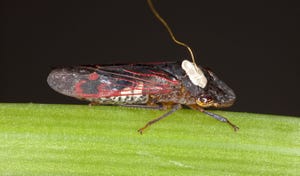
The Medfly is one of the most destructive agricultural insects in the world. The United States is eager to see Medfly populations reduced in other countries because if they become established here, it could cost as much as $1.5 billion a year due to export sanctions, lost markets, treatment costs and crop losses.

Get Copyright ClearanceWant to use this article? Click here for options!
© 2008 Penton Media, Inc.


Latest Jobs

resources

events icon events

product info icon tradeshows

tradeshow icon digests

research icon photos

Continuing Education

Accredited by California DPR and California and Arizona Certified Crop Advisers:


(New Course)

Nutrient Management in Key California Crops


This online CEU course offers a detailed look at the nutrient management in key California crops. It is sponsored online by Western Plant Health Association and funded by a grant from the California Department of Food and Agriculture Fertilizer Research and Protection Program (FREP). It is accredited for one (1)-hour of credit by the California Department of Pesticide Regulation for California Pest Control Advisers (PCA), Private Applicators, Qualified Applicators and Aerial Applicators. The course is also accredited for 3 units in Nutrient Management (NM) for California and Arizona Certified Crop Advisers (CCAs).

Accredited in California, Arizona, Idaho, Oregon and Washington and for Certified Crop Advisers:


(New Course)
Organic/Sustainable Agricultural Production in the West

Organic/sustainable agriculture is expanding rapidly in the U.S. with an average annual increase of 20% during the last 15 years. This course covers a wide range of pests and organic control strategies. It is accredited for up to 4 continuing education hours for PCAs and Applicator Licensees in California, Arizona, Idaho, Oregon and Washington. It is also approved for Certified Crop Adviser credit.

ACCREDITED IN OREGON AND WASHINGTON:


(New Course)
Managing Spray Drift to Minimize Problems

This online spray drift management course has been certified by the Oregon Department of Agriculture and the Washington Department of Agriculture for 2 hours of credit for licensed Applicators and Consultants in Oregon and Washington.

ACCREDITED IN CALIFORNIA ONLY:


Almond Pest Management

Get the latest info on almond insect pest management and earn 2 hrs. CE DPR and CCA credit in California.

California Groundwater Protection Regulations

Earn 2 hrs. in California laws and regs CE and learn how to protect California groundwater supplies.


Disease Management in California Almonds

Managing diseases in California almond production is a year-long process. This course provides the latest information on controlling these diseases with management practices and fungicides. The course is approved for 2 CEUs by DPR for PCAs and all applicator categories and California CCAs.

Powdery Mildew Control in California Grapevines

Learn about the No. 1 grape disease in California; earn 2 California CE hours.

ACCREDITED IN CALIFORNIA AND ARIZONA:


The Role of Copper in Disease Control

Copper has long been a key tool in disease control in a many crops. This 2-CEU course accredited California PCAs and all DPR applicator categories and Arizona applicators details how best to use copper to maximize its potential.

Insecticide Resistance Management in Agronomic and Row Crops

A 3-hr. CE approved for California and Arizona licensees and CCAs in both states.

Agronomic Weed Resistance Management in Row Crops, Trees Nuts and Vines

Weeds Resistance Management is approved for 3 hours of CE credit for all California and Arizona licensees and Certified Crop Advisers.

Lepidopterous Pest Management/ Pesticide Safety

This course is approved for 2 hours in Arizona and California (1 hr. of laws/regs; 1 hour Other) and for CCAs.

Managing Spray Drift to Minimize Problems

2-hrs laws and regs for California licensees; 2 hours in Arizona and for CCAs.

Back to Top

Browse Print Issues

Additional Resources

subscribe to Farm Press Daily Southeast Farm Press Southwest Farm Press Delta Farm Press