USDA funds to protect agricultural land

Jul 21, 2005 9:37 AM

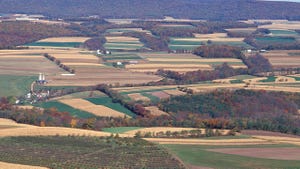
Agriculture Deputy Secretary Chuck Conner has announced the reallocation of nearly $12 million to help agricultural producers in 22 states protect their working lands through the Farm and Ranch Lands Protection Program (FRPP).

"This change is part of the president's and USDA's commitment to conserving our natural resources, specifically farm and ranch lands," Conner said. "This reallocation ensures that states with the greatest need for this program get additional financial and technical assistance to meet their goals."

FRPP provides financial and technical assistance in the purchasing of conservation easements to limit conversion of farm and ranch lands to non-agricultural uses. To participate in this voluntary program, landowners agree to use their land for agricultural purposes and to develop and implement a conservation plan. In addition, the privately owned farmland must contain productive soils or historic or archaeological sites listed on a national or state register of historic places. USDA's Natural Resources Conservation Service (NRCS) administers FRPP.

The reallocation resulted from unused funds previously distributed to NRCS state offices earlier in fiscal year 2005. NRCS provides up to 50 percent of the appraised fair market value of the conservation easement. State and local entities provide the remaining matching funds. When the state and local entities are unable to accumulate the matching funds, NRCS state offices must return the federal funds to NRCS' national headquarters. Those funds are reallocated to NRCS state offices based on need, financial commitment of the state and local entities, and the ability of states to obligate the funds that fiscal year.

This redistribution will allow additional producers to get the conservation benefits from protecting their farm and rangeland with conservation easements.

The 22 states and their reallocated financial assistance funds designated to purchase easements for fiscal year 2005 are listed below:

Alabama $67,488; California $1,397,359; Colorado $405,074; Florida $991,896; and Georgia $146,000.

Iowa $57,775; Kentucky $323,683; Maryland $2,143,113; Michigan $918,810; Minnesota $304,921; and New Mexico $125,039.

New York $1,308,731; North Carolina $521,935; Ohio $217,983; Oregon $17,000; Pennsylvania $1,519,455; and South Dakota $4,275.

Utah $205,246; Virginia $32,953; Washington $68,641; Wisconsin $834,412; and Wyoming $221,410.

Total $11,833,198.

Get Copyright ClearanceWant to use this article? Click here for options!
© 2009 Penton Media, Inc.


Latest Jobs

resources

events icon events

product info icon tradeshows

tradeshow icon digests

research icon photos

Continuing Education


*View the entire list of courses offered.


Accredited for California, Arizona and CCA hours:


New Course
Using Organic Acids to Improve Plant Production

Healthy plants have a greater ability to resist soil pathogens and insect damage. This course details how organic acids can enhance plant health. It is accredited for 1 unit in nutrients for CCAs and .5 hours for Arizona licensees. Credit is pending at California Department of Pesticide Regulation


New Course

The ABCs of MRLs

American agriculture exports 20 to 30 percent of its production annually. For specific commodities, the percentage is much higher. When recommending and applying pest management products for crops, license Pest Control Advisers (PCAs)  and applicators and farmers must be aware of which products applied are in compliance with Maximum Residue Limits (MRLs) established by foreign customers. This CE course details the MRL issue and why compliance is critical to marketing into world trade.

Back to Top

Browse Print Issues

Additional Resources

subscribe to Farm Press Daily Southeast Farm Press Southwest Farm Press Delta Farm Press