U.S. soldiers plant Amber Waves in Iraq

Jul 1, 2005 9:29 AM, By Jennifer Farish, Northeast Mississippi Daily Journal

Editor’s Note: In January 2005, more than 3,500 members of the 155th Brigade Combat Team, a National Guard unit based in Tupelo, Miss., were deployed to Iraq. The brigade is stationed across five bases just south of Baghdad. Members of the 115th BCT have been tasked with both establishing peace and restoring the Iraqi economy through grassroots projects like building schools and assisting Iraqi farmers.

In April, the Northeast Mississippi Daily Journal in Tupelo sent reporter Jennifer Farish and photographer Thomas Wells to Iraq to report on the lives and jobs of the 155th BCT. The following story by Farish was a result of that assignment.

Despite the obvious cultural differences between life in the United States and here at Forward Operations Base Kalsu, Iraq, it seems some things are universal.

Soldiers with the 155th Brigade Combat Team who work in civilian life as farmers are using those common bonds both to communicate with Iraqi tribes and to offer new ideas to improve the small farming community.

"I try to show them that other than being soldiers, we are just like they are. We just speak a different language," said Sgt. Charles Smith of Holly Springs, Miss.

Smith, who works in a guard tower just yards from one of those farms, has shared homemade tomato juice, pickled okra and other Southern delicacies with farmers who grow many of the same vegetables.

"I like to show them that we grow the same things in America, we just use different spices," he said during a visit to a farm.

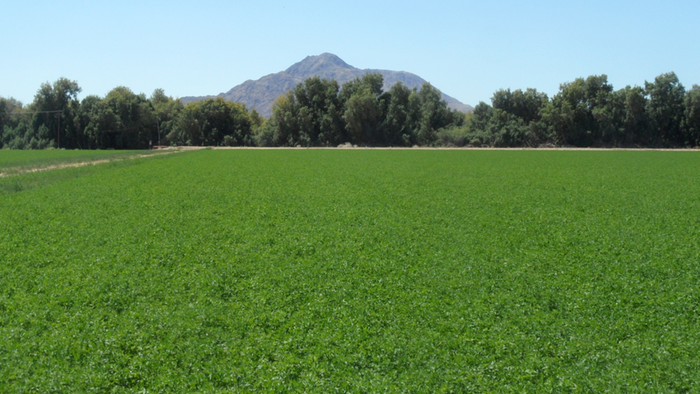
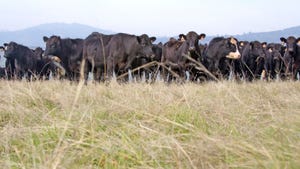
As you survey the flat, lush fields surrounding the dry, rocky Army base, it is easy to see the similarities between this area and parts of northeast Mississippi. Rows of wheat, corn and vegetables are offset by fields in which the farmers watch over herds of goats, sheep and cows. The animals are herded much as they were in Biblical times, watched by children holding staffs.

The Iraqi women play an important role in farm work, spending most of their days harvesting feed for the animals. The grass is harvested in blocks from one end to the other, so that by the time they reach the opposite side, they can start over.

Sunup to sundown

"I’ve watched the women work from the tower," Smith said, "and they will work in the field from sunup to sundown and then go home and take care of the house and their families."

The 155th agriculture project, dubbed Amber Waves, is aimed at introducing new farming and animal care methods to the area, which relies heavily on their crops as a source of income.

Two pounds of squash will yield a mere 15 cents at the market in Basrah, while male cattle will sell for more than $100.

Growing season is just beginning here, explained Capt. Jesse Cornelius of Palmetto, Miss., head of the project. "What we would consider spring is still winter here," he said. "The temperatures have been in the 80s for weeks, and things are just now turning green."

Speaking to farmers through a translator, Cornelius told a group of six men that the 155th BCT will help them replace aid provided by the former Iraqi government.

"The farmers are going to have to organize and do some of these things themselves," he said. "We are going to try and help you do that."

To which one of the Iraqi farmers responded, "Your ideas are much appreciated. It is very good for my animals and my tribe’s animals."

The soldiers plan to help in other ways, such as building a bridge so farmers can herd their animals across the deep canal; offering a dip tank for the herds of animals to remove lice and insects; and clearing the banks of the canal to allow better water flow.

But the American farmers might learn from the Iraqis as well. They recycle everything, using animal waste for compost and brush and trash for heating their outdoor ovens.

"If it is something they can use, they are going to use it," said Sgt. Jacob Alexander of New Albany, Miss. "Nothing in this country goes to waste."

How to help

Editor’s Note: The following e-mail from Capt. Jesse J. Cornelius is a response to an inquiry about how American farmers and agribusinesses might help U.S. soldiers as they try to improve farming in Iraq, a part of their mission in establishing peace and getting the Iraqi economy back on its feet. Anyone interested in provided needed supplies and information can contact Cornelius by e-mail at corneliusjj@155bct.mnf-wiraq.usmc.mil.

Things have been really hectic here and I have been on the road a lot. I have been in contact with the (Iraqi) minister of agriculture office and they are excited about your offer to help.

They are looking for seed corn for variety trials. They don’t start planting corn for another month or so here and plant through the middle of August. They have asked our assistance in securing 1 ton of seed for 10 to 20 varieties of hybrid corn. This seed will be used to plant test plots throughout the country. This would be a great opportunity for seed companies there to get a foothold into Iraqi agriculture. If the varieties do well they will be looking to buy seed in the future. Do you have any contacts in the seed industry who might be interested in helping in this area? I know that is a lot of seed but most planting is complete in the states and they may have some seed left over.

We are also looking for companies who would like to provide vegetable seed for the same purpose. If we can prove they produce well here, it will open a very large market for American companies.

We have the clearance to get seed shipped in here so that should not be a problem.

Also any educational materials you might have on raising corn, soybeans, rice, wheat and barley. Vegetables are also big here.

Do you have any contacts in the poultry industry? I recently met with a representative of the Iraqi poultry producers association. He is interested in talking with some American companies. The poultry industry has a lot of potential here in Iraq.

Do you have any contacts in the vegetable processing business? I am looking for portable food processing units that can be moved by tractor trailer.

Also anyone you know who works with cooperatives. We are trying to start up cooperatives and any info you could get us on how to operate them would be great.

All of these areas need our help.

JESSE J. CORNELIUS

CPT, IN

Commanding

HHC 155 BCT

Agriculture Officer, 155 BCT

corneliusjj@155bct.mnf-wiraq.usmc.mil

Get Copyright ClearanceWant to use this article? Click here for options!
© 2008 Penton Media, Inc.


Latest Jobs

resources

events icon events

product info icon tradeshows

tradeshow icon digests

research icon photos

Continuing Education

Accredited by California DPR and California and Arizona Certified Crop Advisers:


(New Course)

Nutrient Management in Key California Crops


This online CEU course offers a detailed look at the nutrient management in key California crops. It is sponsored online by Western Plant Health Association and funded by a grant from the California Department of Food and Agriculture Fertilizer Research and Protection Program (FREP). It is accredited for one (1)-hour of credit by the California Department of Pesticide Regulation for California Pest Control Advisers (PCA), Private Applicators, Qualified Applicators and Aerial Applicators. The course is also accredited for 3 units in Nutrient Management (NM) for California and Arizona Certified Crop Advisers (CCAs).

Accredited in California, Arizona, Idaho, Oregon and Washington and for Certified Crop Advisers:


(New Course)
Organic/Sustainable Agricultural Production in the West

Organic/sustainable agriculture is expanding rapidly in the U.S. with an average annual increase of 20% during the last 15 years. This course covers a wide range of pests and organic control strategies. It is accredited for up to 4 continuing education hours for PCAs and Applicator Licensees in California, Arizona, Idaho, Oregon and Washington. It is also approved for Certified Crop Adviser credit.

ACCREDITED IN OREGON AND WASHINGTON:


(New Course)
Managing Spray Drift to Minimize Problems

This online spray drift management course has been certified by the Oregon Department of Agriculture and the Washington Department of Agriculture for 2 hours of credit for licensed Applicators and Consultants in Oregon and Washington.

ACCREDITED IN CALIFORNIA ONLY:


Almond Pest Management

Get the latest info on almond insect pest management and earn 2 hrs. CE DPR and CCA credit in California.

California Groundwater Protection Regulations

Earn 2 hrs. in California laws and regs CE and learn how to protect California groundwater supplies.


Disease Management in California Almonds

Managing diseases in California almond production is a year-long process. This course provides the latest information on controlling these diseases with management practices and fungicides. The course is approved for 2 CEUs by DPR for PCAs and all applicator categories and California CCAs.

Powdery Mildew Control in California Grapevines

Learn about the No. 1 grape disease in California; earn 2 California CE hours.

ACCREDITED IN CALIFORNIA AND ARIZONA:


The Role of Copper in Disease Control

Copper has long been a key tool in disease control in a many crops. This 2-CEU course accredited California PCAs and all DPR applicator categories and Arizona applicators details how best to use copper to maximize its potential.

Insecticide Resistance Management in Agronomic and Row Crops

A 3-hr. CE approved for California and Arizona licensees and CCAs in both states.

Agronomic Weed Resistance Management in Row Crops, Trees Nuts and Vines

Weeds Resistance Management is approved for 3 hours of CE credit for all California and Arizona licensees and Certified Crop Advisers.

Lepidopterous Pest Management/ Pesticide Safety

This course is approved for 2 hours in Arizona and California (1 hr. of laws/regs; 1 hour Other) and for CCAs.

Managing Spray Drift to Minimize Problems

2-hrs laws and regs for California licensees; 2 hours in Arizona and for CCAs.

Back to Top

Browse Print Issues

Additional Resources

subscribe to Farm Press Daily Southeast Farm Press Southwest Farm Press Delta Farm Press