Differentiate your product for enhanced returns

Jun 30, 2005 9:58 AM, By Dan Bryant

What can farmers do to give their commodity products a competitive edge and reap improved returns?

Make them somehow stand out from the competition, suggests Bruce A. Babcock, professor of economics and director of the Center for Agricultural and Rural Development at Iowa State University at Ames.

"Basically, you can make money by one of two ways: you can be the low-cost producer of whatever commodity you deal with, or you can create a differentiated product, have some control over quality and quantity, and try to behave like consumer-oriented firms worldwide," said Babcock.

A native Californian with a Ph.D. from the University of California, Berkeley, Babcock returned to familiar ground to address the Spring Outlook Conference of the California Chapter of the American Society of Farm Managers and Rural Appraisers (ASFM&RA) held recently in Sacramento. He was part of a panel dealing with valuing product attributes.

So just what is a differentiated product? From an economist’s view, he said, consider what happens if a product’s price is increased.

"If sales of the product fall to zero, there is no product differentiation." Consumers refuse to pay a penny more when they can buy the same product next door.

"But, if, in fact, you can raise your price a bit and sales don’t fall to zero, then there is some perceived difference in the product that some part of the population is willing to pay extra for," he explained.

The complete opposite is a commodity product sold for the same price from producer to producer, such as No. 2 yellow corn, hogs, soybeans, or gasoline, for which there are substitutes from other sources.

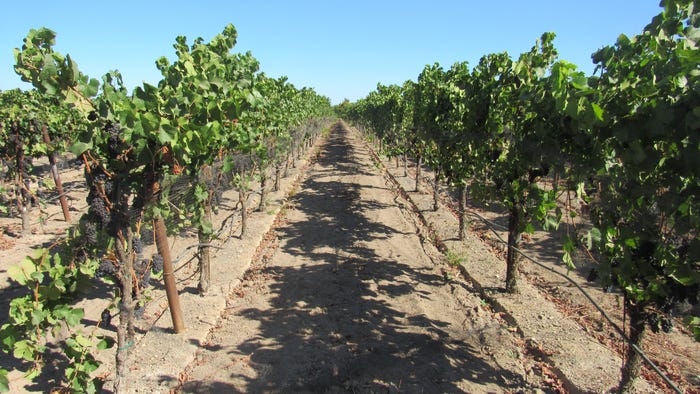
Examples of differentiated products are Frito-Lay’s Tostitos snacks chips labeled with "Zero Grams Trans Fat," catsup products made with low-fat formulations or packaged in inverted bottles, and wine appellations or sub-appellations based on microclimates. Another is Home Depot’s commitment to sell wood products from environmentally sustainable forests and flooring made from recycled materials.

Price takers

"Commodity producers are price takers. If your price is greater than the cost, you can make a profit. If your price is lower than the cost, you lose money.

"But with a differentiated product, you can gain a competitive edge by entering a new market sector that has differentiated standards, such as new animal-welfare standards adopted by the fast-food industry."

Consumers may be prepared to pay more for a product if they perceive it has superior or unique taste, has superior appearance, is healthy, or is good for the environment.

Keys to achieving acceptance for such products include creating a better product, investing in adequate marketing, controlling production costs, and maintaining superior quality.

But, he added, it is also important to develop credence among consumers willing to pay a premium for a dependable supply and quality or convincing certification, all the while keeping production costs in check.

Producers also must be vigilant to sustain the value they achieve with differentiated products. "Whenever you make money, imitators will come in to eat that margin away and drive profits to zero. So you have to create some kind of barrier to keep competitors away."

Barriers may be regulatory, such as the U.S. sugar industry’s barrier to imported sugar, or they can be technological with products fully traceable back to their source, or they can be marketing with brand identities.

EU approach

The European Union uses geographical barriers for beef, cheese, beer, and other products by allowing those products to be produced only in certain regions. Parmigiano Reggiano cheese and Kalamara olives are examples of these barriers Babcock said are intended to eventually wean producers from government subsidies.

A common route to product differentiation in the U.S. is branding for consumer loyalty, examples being Sun-Maid raisins, Sunkist citrus, or Ocean Spray cranberry products. Babcock noted, however, that creation and maintenance of a successful brand is expensive.

For another perspective on valuing product attributes, Jim and Mary Rickert of Fall River have differentiated their Prather Ranch beef operation in at Macdoel in Siskiyou County with a system based on a closed herd and slaughter of about 1,100 animals per year.

Key in the attributes are high-quality cuts of beef from animals identified with tags from birth to through processing and complete records to ensure traceability.

They also meet rigid standards to provide alternative products such as organs and hides for pharmaceutical raw materials and bone materials for surgical devices.

Tell ranch’s story

To make their products attractive to consumers, Jim Rickert said they have told their story of a sustainable, humane, environmentally friendly system based on employment of personnel trained in food safety and compensated for retention. "We think it is really important to emphasize in our promotional pieces the families that work to produce the food we supply."

Mary Rickert said they also grow their own high-test hay on the 21,500-acre, vertically integrated ranch. She said the 15-year effort to refine the system has been rewarding but required great diligence. "It is not for the faint of heart."

Another panelist, Roger Hancock, corporate director of food safety sanitation and quality for Albertson’s, Boise, Idaho, said value in the highly competitive retail food industry is, from the consumer’s perspective, of broader appeal than price alone.

"Food safety is a big concern and goes all the way back to the farm," Hancock said. "I urge you to work with regulatory authorities promote food safety to create value for your products.

"We want to differentiate ourselves as a retailer, so we look for what the farmers can provide. Consumers tell us the first thing they want is a clean store, and we handle food as if it were going to feed our own families."

Albertson’s is also alert to food security issues in light of potential terrorist attacks on the food production and distribution chain. He said those who secure their segment of the production chain will benefit tremendously because consumers are willing to pay for a broad array of safeguards.

He said his company is also quite sensitive to its role as "the public face" of the food industry in the minds of its customers. Despite the several stages between the farm and the retail store, the public tends to bring to the retailer their complaints about nationally branded products.

Get Copyright ClearanceWant to use this article? Click here for options!
© 2009 Penton Media, Inc.


Latest Jobs

resources

events icon events

product info icon tradeshows

tradeshow icon digests

research icon photos

Continuing Education

Accredited for California, Arizona and CCA hours:


(New Course)
Biopesticides -- Effective Use in Pest Management Programs

Biopesticides are increasingly being recommended as components of Integrated Pest Management (IPM) programs in the production of non-organic high-value specialty crops such as fruit, nut, vegetable, vine, ornamental and turf. This online, accredited course, sponsored by Marrone Bio Innovations, details some of the 245 registered biopesticide active ingredients used in a wide array pest management products.

Accredited in California and Arizona:


(New Course)
Agronomic Principles and Efficient Chemigation and Fertigation Using Center Pivot/Linear Sprinkler Systems

This online CE course details sound mechanical irrigation design and management practices to allow efficient chemigation and fertigation. It is accredited for Certified Crop Adviser CE units and is approved for credit hours in California and Arizona.


(New Course)
Pome, Stone Fruit Pest Management Using New Mode of Action Chemistry

New chemistry Rynaxypyr has proven effective against a wide range of economically important Lepidoptera species. Marketed under the trade name Altacor for use in grapes, pome and stone fruit, details on how to use this new chemistry are in this online Continuing Education course that is accredited in California, Pennsylvania, and New Jersey with CE applications pending in Oregon and Washington.


(New Course)
Vegetable Pest Management Using New Mode of Action

Integration of a new mode of action compound like Coragen into IPM and IRM programs to control Lepidoptera in leafy greens, fruiting vegetables, peppers and brassica or cole crops is always welcome. This online CE accredited details how best to use this new mode of action in intensive vegetable production. It is accredited in California, Arizona, Texas, Georgia, New Jersey and Pennsylvania. Application for credit is pending in Florida and Washington.

Accredited by Accredited in California and Washington:


(New Course)
Utilizing Calcium as Nutrient That Protects Against Disease Organisms

This online accredited course focus on Calcium, an important plant nutrient in fertilizer management for maximum, healthy plant development as well as disease and pest prevention. It is accredited in California, Georgia,: Pennsylvania and New Jersey. Credit pending in Florida, South Carolina, Tennessee, Virginia, West Virginia and Washington.


Accredited by California DPR and California and Arizona Certified Crop Advisers:


(New Course)

Nutrient Management in Key California Crops


This online CEU course offers a detailed look at the nutrient management in key California crops. It is sponsored online by Western Plant Health Association and funded by a grant from the California Department of Food and Agriculture Fertilizer Research and Education Program (FREP). It is accredited for one (1)-hour of credit by the California Department of Pesticide Regulation for California Pest Control Advisers (PCA), Private Applicators, Qualified Applicators and Aerial Applicators. The course is also accredited for 3 units in Nutrient Management (NM) for California and Arizona Certified Crop Advisers (CCAs).

Accredited in California, Arizona, Idaho, Oregon and Washington and for Certified Crop Advisers:


(New Course)
Organic/Sustainable Agricultural Production in the West

Organic/sustainable agriculture is expanding rapidly in the U.S. with an average annual increase of 20% during the last 15 years. This course covers a wide range of pests and organic control strategies. It is accredited for up to 4 continuing education hours for PCAs and Applicator Licensees in California, Arizona, Idaho, Oregon and Washington. It is also approved for Certified Crop Adviser credit.


ACCREDITED IN CALIFORNIA ONLY:


Almond Pest Management

Get the latest info on almond insect pest management and earn 2 hrs. CE DPR and CCA credit in California.

California Groundwater Protection Regulations

Earn 2 hrs. in California laws and regs CE and learn how to protect California groundwater supplies.


Disease Management in California Almonds

Managing diseases in California almond production is a year-long process. This course provides the latest information on controlling these diseases with management practices and fungicides. The course is approved for 2 CEUs by DPR for PCAs and all applicator categories and California CCAs.

Powdery Mildew Control in California Grapevines

Learn about the No. 1 grape disease in California; earn 2 California CE hours.

ACCREDITED IN CALIFORNIA AND ARIZONA:


The Role of Copper in Disease Control

Copper has long been a key tool in disease control in a many crops. This 2-CEU course accredited California PCAs and all DPR applicator categories and Arizona applicators details how best to use copper to maximize its potential.

Insecticide Resistance Management in Agronomic and Row Crops

A 3-hr. CE approved for California and Arizona licensees and CCAs in both states.

Agronomic Weed Resistance Management in Row Crops, Trees Nuts and Vines

Weeds Resistance Management is approved for 3 hours of CE credit for all California and Arizona licensees and Certified Crop Advisers.

Lepidopterous Pest Management/ Pesticide Safety

This course is approved for 2 hours in Arizona and California (1 hr. of laws/regs; 1 hour Other) and for CCAs.

ACCREDITED IN CALIFORNIA, ARIZONA, OREGON, AND WASHINGTON:

Managing Spray Drift to Minimize Problems

This online CEU on managing spray drift to minimize problems is accredited for 2-hours in California (Laws and Regs); Arizona, Oregon and Washington.

Back to Top

Browse Print Issues

Additional Resources

subscribe to Farm Press Daily Southeast Farm Press Southwest Farm Press Delta Farm Press