Biotech revolution will continue to produce big changes

May 31, 2005 10:08 AM, By Harry Cline

The 1 billionth acre of genetically modified crop was planted this year, marking a remarkable decade of change since biotechnology was introduced into world agriculture.

As dramatic a change as that represents, speakers at a special biotech session the Western Society of Weed Science annual conference recently in Vancouver, B.C., made the last decade sound like just the beginning of the biotech impact on American agriculture.

Tom Peeper, weed science professor at Oklahoma State University; Jim Bone, Valdosta, Ga., U.S. field development manager for DuPont; Stott Howard, Des Moines, Iowa global technical manager for Syngenta; Al Scoggan of Kansas City, Mo., northwest regional development manager for Bayer CropScience and Doug Rushing, director of technical development for Monsanto all said changes are coming faster than anyone could have imagined when Rushing held the first "magic" herbicide resistant soybean in his hand just a few years ago.

Perhaps the most dramatic change coming was outlined by Peeper who predicted that wheat, rice, corn and other exportable U.S. "calorie" crops will soon be replaced by energy-producing crops in the U.S. to reduce America’s dependence on foreign energy supplies.

"Wheat will become economically obsolete," predicted Peeper, who added U.S. agriculture must focus in the future what can be grown and sold at home.

When introduced, biotechnology was heralded as the tool that would make low value wheat and similar crops more competitive in the world market. However, the controversy over biotechnology that has been largely centered outside the U.S. has effectively prevented the use of the technology in these crops.

Jeopardize markets

Peeper said if biotechnology is introduced into U.S. wheat, rice or other low income crop, world export markets for all U.S. wheat or rice would be in jeopardy. Farmers and marketers have not been willing to chance that.

Peeper predicted U.S. farmers will switch from calorie crops for export to higher value crops more in demand for this country. He says that demand will come for energy-producing crops like canola, soybeans, sunflowers and corn for ethanol.

He said there will be a big push for crops that will produce biodiesel and other fuel to lessen American dependence for oil from the Middle East where lasting peace will continue to be elusive. Biotechnology is more accepted in the U.S.; therefore, biotech traits will continue to play a key role in enhancing production from these energy-producing crops.

Although biotechnology is in the forefront of American agriculture, Peeper and the others continue to search for new crop protection chemistry.

Scoggan said it has been more than 20 years since a truly new herbicidal mode of action has been discovered. Today, he said, 75 percent of the world herbicide market is covered by just six different modes of action.

Resistance is surfacing to several of the molecules and "a new mode of action is out there somewhere and we have to find it. It’s overdue."

Companies like Syngenta are continuing research and development of new chemistry to complement biotechnology, said Howard.

Registration of new chemistry is more complicated that every before with a wide array of factors involved in getting them to market from environmental constraints to application technology to cost factors, according to the speakers.

Speaking to the group of weed scientists, all the presenters said many more disciplines are involved in vegetation management that simply weed science.

Systems approach

It requires a systems approach or landscape ecology problem solving involving not only weed control, but agronomy, plant breeding, soils and water and most the other disciplines involved in producing a crop, said Peeper.

From a weed control perspective, Peeper said vegetation management in the future will focus on not annual herbicide use, but a system approach to get weeds off the farm permanently using alternative cropping patterns, tillage and other factors.

Bone called the systems approach "Intelligent Pest Management."

Generic products are playing a major role in the ag chemicals industry with about half the pesticides used today off patent. Eighty percent of herbicides used today are off patent. This, according to the speakers, is having positive impact on cost containment for farmers. However, the flip side of this is that there is less revenue for major chemical companies for research and development.

And, the speakers indicated the consolidation in the industry which has resulted in but a handful of major chemical manufacturers will continue.

The cost of R&D will continue to rise and the loser in that will be so-called minor crops. Questioned about that, there was mention that a government-funded IR-4 program similar to what is now used to register chemistry is being developed for biotechnology development in minor crops.

Exciting changes

The leader in biotechnology development in the last decade has been Monsanto, and Rushing said the next way of technology offers more exciting possibilities than the past.

This includes modifying crops to withstand cold and to thrive under low water conditions; crops that produce less desirable transfatty acids or more Omega 3 fatty acid, which contributes to a healthier diet. He expects 200,000 acres of low transfatty acid soybeans to be planted this year. Drought tolerant corn has already been successfully tested in California’s San Joaquin Valley.

Rushing said analysts predict that there will be a doubling of ethanol use by 2010. He said there are 81 ethanol plants now in the U.S. and 14 under construction. Monsanto is screening corn germplasm for high extractable starch for ethanol production.

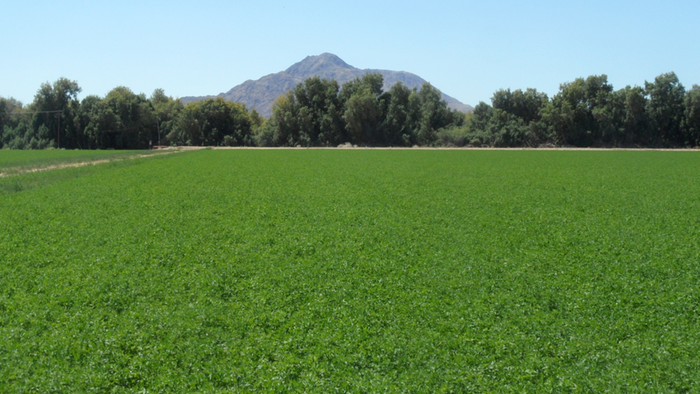
On the immediate horizon is the second generation of Roundup Ready cotton which opens a wider window for glyphosate application and the anticipated introduction later this year of Roundup-tolerant alfalfa. There are 25 million acres of alfalfa grown in the U.S.

Monsanto has licensed 200 different seed companies to use its technology and has purchased numerous seed companies to transform itself into a global leader in germplasm development.

"We learned the hard way that no matter what trait you have in a variety, if the germplasm is not accepted by the farmer it will not be accepted," he added.

He said of late there as been significant yield increases in most of the major crops in recent years and he expects even greater increases in the new future.

e-mail:hcline@primediabusiness.com

Get Copyright ClearanceWant to use this article? Click here for options!
© 2009 Penton Media, Inc.


Latest Jobs

resources

events icon events

product info icon tradeshows

tradeshow icon digests

research icon photos

Continuing Education

Accredited for California, Arizona and CCA hours:


(New Course)
Biopesticides -- Effective Use in Pest Management Programs

Biopesticides are increasingly being recommended as components of Integrated Pest Management (IPM) programs in the production of non-organic high-value specialty crops such as fruit, nut, vegetable, vine, ornamental and turf. This online, accredited course, sponsored by Marrone Bio Innovations, details some of the 245 registered biopesticide active ingredients used in a wide array pest management products.

Accredited in California and Arizona:


(New Course)
Agronomic Principles and Efficient Chemigation and Fertigation Using Center Pivot/Linear Sprinkler Systems

This online CE course details sound mechanical irrigation design and management practices to allow efficient chemigation and fertigation. It is accredited for Certified Crop Adviser CE units and is approved for credit hours in California and Arizona.


(New Course)
Pome, Stone Fruit Pest Management Using New Mode of Action Chemistry

New chemistry Rynaxypyr has proven effective against a wide range of economically important Lepidoptera species. Marketed under the trade name Altacor for use in grapes, pome and stone fruit, details on how to use this new chemistry are in this online Continuing Education course that is accredited in California, Pennsylvania, and New Jersey with CE applications pending in Oregon and Washington.


(New Course)
Vegetable Pest Management Using New Mode of Action

Integration of a new mode of action compound like Coragen into IPM and IRM programs to control Lepidoptera in leafy greens, fruiting vegetables, peppers and brassica or cole crops is always welcome. This online CE accredited details how best to use this new mode of action in intensive vegetable production. It is accredited in California, Arizona, Texas, Georgia, New Jersey and Pennsylvania. Application for credit is pending in Florida and Washington.

Accredited by Accredited in California and Washington:


(New Course)
Utilizing Calcium as Nutrient That Protects Against Disease Organisms

This online accredited course focus on Calcium, an important plant nutrient in fertilizer management for maximum, healthy plant development as well as disease and pest prevention. It is accredited in California, Georgia,: Pennsylvania and New Jersey. Credit pending in Florida, South Carolina, Tennessee, Virginia, West Virginia and Washington.


Accredited by California DPR and California and Arizona Certified Crop Advisers:


(New Course)

Nutrient Management in Key California Crops


This online CEU course offers a detailed look at the nutrient management in key California crops. It is sponsored online by Western Plant Health Association and funded by a grant from the California Department of Food and Agriculture Fertilizer Research and Education Program (FREP). It is accredited for one (1)-hour of credit by the California Department of Pesticide Regulation for California Pest Control Advisers (PCA), Private Applicators, Qualified Applicators and Aerial Applicators. The course is also accredited for 3 units in Nutrient Management (NM) for California and Arizona Certified Crop Advisers (CCAs).

Accredited in California, Arizona, Idaho, Oregon and Washington and for Certified Crop Advisers:


(New Course)
Organic/Sustainable Agricultural Production in the West

Organic/sustainable agriculture is expanding rapidly in the U.S. with an average annual increase of 20% during the last 15 years. This course covers a wide range of pests and organic control strategies. It is accredited for up to 4 continuing education hours for PCAs and Applicator Licensees in California, Arizona, Idaho, Oregon and Washington. It is also approved for Certified Crop Adviser credit.


ACCREDITED IN CALIFORNIA ONLY:


Almond Pest Management

Get the latest info on almond insect pest management and earn 2 hrs. CE DPR and CCA credit in California.

California Groundwater Protection Regulations

Earn 2 hrs. in California laws and regs CE and learn how to protect California groundwater supplies.


Disease Management in California Almonds

Managing diseases in California almond production is a year-long process. This course provides the latest information on controlling these diseases with management practices and fungicides. The course is approved for 2 CEUs by DPR for PCAs and all applicator categories and California CCAs.

Powdery Mildew Control in California Grapevines

Learn about the No. 1 grape disease in California; earn 2 California CE hours.

ACCREDITED IN CALIFORNIA AND ARIZONA:


The Role of Copper in Disease Control

Copper has long been a key tool in disease control in a many crops. This 2-CEU course accredited California PCAs and all DPR applicator categories and Arizona applicators details how best to use copper to maximize its potential.

Insecticide Resistance Management in Agronomic and Row Crops

A 3-hr. CE approved for California and Arizona licensees and CCAs in both states.

Agronomic Weed Resistance Management in Row Crops, Trees Nuts and Vines

Weeds Resistance Management is approved for 3 hours of CE credit for all California and Arizona licensees and Certified Crop Advisers.

Lepidopterous Pest Management/ Pesticide Safety

This course is approved for 2 hours in Arizona and California (1 hr. of laws/regs; 1 hour Other) and for CCAs.

ACCREDITED IN CALIFORNIA, ARIZONA, OREGON, AND WASHINGTON:

Managing Spray Drift to Minimize Problems

This online CEU on managing spray drift to minimize problems is accredited for 2-hours in California (Laws and Regs); Arizona, Oregon and Washington.

Back to Top

Browse Print Issues

Additional Resources

subscribe to Farm Press Daily Southeast Farm Press Southwest Farm Press Delta Farm Press