Domestic farm policy driving agricultural investments offshore

May 2, 2005 9:29 AM, By Harry Cline

Well-intended, but poorly executed public policy seems more inclined to limit California and U.S. agriculture growth and efficiency with conflicting environmental and social agendas than to encourage investment in American farming.

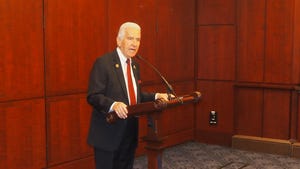
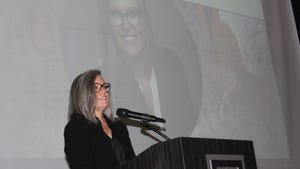
If that continues, according to Stuart Woolf, president of Woolf Enterprises, a family-owned diversified Fresno County, Calif., farming and processing operation, America will lose its place as an agricultural world leader.

Woolf told the California Agriculture Symposium in Sacramento, Calif., recently that if domestic farm policy does not change, it will drive agricultural investments to China, India, Turkey, Brazil and others wanting to become "incubators" for agricultural growth.

"If I wanted to be a cotton farmer today, I would go to Brazil," said Woolf. Brazil has strong governmental agricultural support and 200 million acres for agricultural development. Some of the largest farming operations in the world are in Brazil."

While that is going on in Brazil and elsewhere, U.S. farm policy "favors notions of sustainable (small organic growers) over sustainable growth (diversification and scale)," noted Woolf in remarks prepared for the symposium.

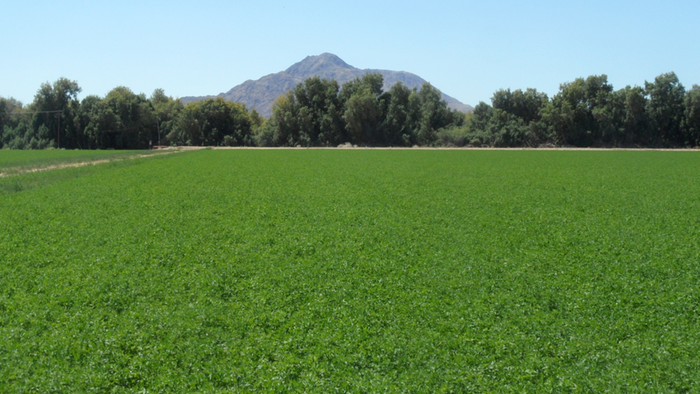
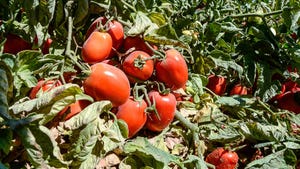
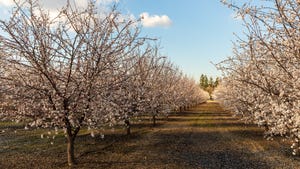
Woolf’s parents, Jack and Bernice Woolf founded the family farm in 1974 with 2,500 acres, primarily as a cotton operation. It has gone away from cotton and now produces non-farm program crops, including processing tomatoes, garlic, onions, almonds, pistachios and wine grapes. The Woolf family also is partners in a tomato processing plant, almond processor, ginning company and an irrigation related business.

Drip investment

It has invested in more than 10,000 acres of drip irrigation for both permanent and row crop land. Woolf said that will increase.

Woolf identifies the family farm as "early adopters and developers of new farm implements and technology" to improve efficiencies and quality.

He remains optimistic in the short term, looking to advances in information systems, electronics, seed varieties, and materials to better manage resources.

Longer term prospects for Woolf Farming "is a bit more uncertain."

Although the California and the U.S. enjoy some of the best natural resources, weather, land-grant colleges and Extension services, marketing orders and a sound infrastructure, "policy makers appear to be less committed to agriculture’s future." Basic ag research and ag Extension seem to be the first casualties in budget cuts.

"It seems as though agriculture no longer enjoys a strong public commitment, in great part, because industry leaders have not provided a clear, long-term vision that the public finds of value. That hasn’t always been the case."

Woolf called on agriculture to craft a long-term vision and stop fighting "never-ending series of short-term battles over resources and regulations."

Public sentiment has turned against agriculture with attacks by organizations like the Environmental Working Group, which has publicly and loudly singled out Woolf Enterprises as examples of excess federal farm program payments and water subsidies.

"Personally, I don’t begrudge EWG or the press for raising issues impacting taxpayers," said Woolf, who added he would like to see continued progress in future farm bills that would "encourage greater farm efficiencies while ensuring fair trade."

‘True accounting’

He would also like to see a "true accounting" of the "subsidies" farmers receive from the federal government.

For example, Woolf estimates the federal water subsidy on his family’s farm amounts to $500,000 per year while Woolf Enterprises pays $4 million in taxes; has a $13 million annual payroll and pays out assessments and fees totaling $1 million.

"I would say that is a heck of a return to the taxpayers," said Woolf.

"California and the U.S. now enjoy the strongest ag economy in the world yet we run the risk of losing this position to others more keenly interested in sustainable development," he concluded.

e-mail:hcline@primediabusiness.com

Get Copyright ClearanceWant to use this article? Click here for options!
© 2008 Penton Media, Inc.


Latest Jobs

resources

events icon events

product info icon tradeshows

tradeshow icon digests

research icon photos

Continuing Education

Accredited by California DPR and California and Arizona Certified Crop Advisers:


(New Course)

Nutrient Management in Key California Crops


This online CEU course offers a detailed look at the nutrient management in key California crops. It is sponsored online by Western Plant Health Association and funded by a grant from the California Department of Food and Agriculture Fertilizer Research and Protection Program (FREP). It is accredited for one (1)-hour of credit by the California Department of Pesticide Regulation for California Pest Control Advisers (PCA), Private Applicators, Qualified Applicators and Aerial Applicators. The course is also accredited for 3 units in Nutrient Management (NM) for California and Arizona Certified Crop Advisers (CCAs).

Accredited in California, Arizona, Idaho, Oregon and Washington and for Certified Crop Advisers:


(New Course)
Organic/Sustainable Agricultural Production in the West

Organic/sustainable agriculture is expanding rapidly in the U.S. with an average annual increase of 20% during the last 15 years. This course covers a wide range of pests and organic control strategies. It is accredited for up to 4 continuing education hours for PCAs and Applicator Licensees in California, Arizona, Idaho, Oregon and Washington. It is also approved for Certified Crop Adviser credit.

ACCREDITED IN OREGON AND WASHINGTON:


(New Course)
Managing Spray Drift to Minimize Problems

This online spray drift management course has been certified by the Oregon Department of Agriculture and the Washington Department of Agriculture for 2 hours of credit for licensed Applicators and Consultants in Oregon and Washington.

ACCREDITED IN CALIFORNIA ONLY:


Almond Pest Management

Get the latest info on almond insect pest management and earn 2 hrs. CE DPR and CCA credit in California.

California Groundwater Protection Regulations

Earn 2 hrs. in California laws and regs CE and learn how to protect California groundwater supplies.


Disease Management in California Almonds

Managing diseases in California almond production is a year-long process. This course provides the latest information on controlling these diseases with management practices and fungicides. The course is approved for 2 CEUs by DPR for PCAs and all applicator categories and California CCAs.

Powdery Mildew Control in California Grapevines

Learn about the No. 1 grape disease in California; earn 2 California CE hours.

ACCREDITED IN CALIFORNIA AND ARIZONA:


The Role of Copper in Disease Control

Copper has long been a key tool in disease control in a many crops. This 2-CEU course accredited California PCAs and all DPR applicator categories and Arizona applicators details how best to use copper to maximize its potential.

Insecticide Resistance Management in Agronomic and Row Crops

A 3-hr. CE approved for California and Arizona licensees and CCAs in both states.

Agronomic Weed Resistance Management in Row Crops, Trees Nuts and Vines

Weeds Resistance Management is approved for 3 hours of CE credit for all California and Arizona licensees and Certified Crop Advisers.

Lepidopterous Pest Management/ Pesticide Safety

This course is approved for 2 hours in Arizona and California (1 hr. of laws/regs; 1 hour Other) and for CCAs.

Managing Spray Drift to Minimize Problems

2-hrs laws and regs for California licensees; 2 hours in Arizona and for CCAs.

Back to Top

Browse Print Issues

Additional Resources

subscribe to Farm Press Daily Southeast Farm Press Southwest Farm Press Delta Farm Press