California grape acreage estimated at 861,000

Apr 13, 2006 9:14 AM, By Harry Cline, Farm Press Editorial Staff

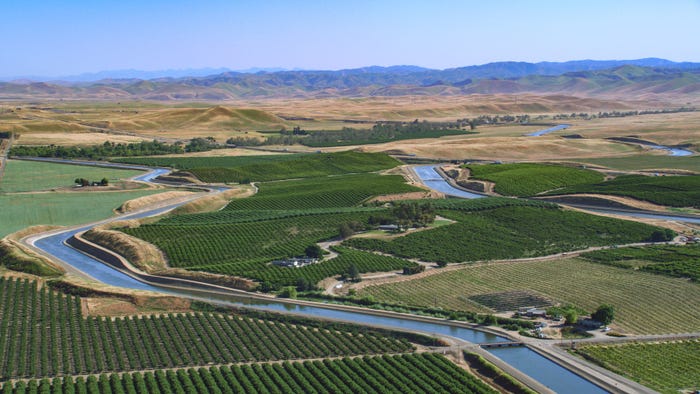
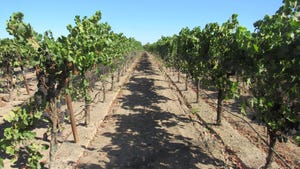
There are at least 794,000 acres of wine, raisin and table grapes in California, but more likely the acreage is 861,000, according to USDA/NASS.

Estimating California vineyard acreage is one of the most nettlesome tasks the crop reporting service takes on. The numbers are a combination of what 9,000 California grape growers provide or do not provide in a voluntary survey and pesticide use reports compiled by county agriculture commissioners.

Growers say there are a little less than 800,000 acres. Pesticide use reports say it’s more than 860,000.

Here is what NASS’ best estimate is:

-- 522,000 acres of wine grapes; 45,000 non-bearing. This compares to 513,000 total in 2004 and 529,000 the year before.

-- 246,000 raisin type; 6,000 non-bearing. This compares to 248,000 the year before and 260,000 in 2003.

-- Table grape acreage has not changed for 3 years. It’s 93,000 with 10,000 non-bearing.

Thompson seedless continues to be the dominant grape variety in the state with 221,000 acres, down only about 7,000 acres from 2004. This grape is primarily a raisin producer, but can be used to produce wine grapes and table grapes.

Despite estimates of 100,000 acres of all grapes — half of them Thompsons -- being been pulled out over the past five years primarily in Central California, there are still 7,000 acres more Thompson vineyards in the ground in 2005 than there were in 1997 when the crop reporting service says there were 214,000 acres planted. There are almost 5,000 acres classified as non-bearing raisin types.

Flame Seedless, Crimson Seedless and Rd Globe are the dominant table grape varieties.

Chardonnay is still the largest acreage wine grape with almost 95,000 acres followed by Cabernet Sauvignon at almost 77,000 acres.

Red wine grapes

There are 290,000 acres of red wine grape vineyards in the state with 14,000 non-bearing. White wine grapes total almost 181,000 with about 12,000 non-bearing.

The largest non-bearing acreage is in Chardonnay (almost 3,000 acres) followed by the 2,500 acres of non-bearing Zinfandel, which is the second largest wine varietal in California followed by Merlot at 53,500.

French Colombard is making a comeback. It was one of the first to go during the last wine glut, but too much apparently came out and growers are replanting it based on winery demand. Almost 2,300 acres of the 29,000 acres of Colombards planted are non-bearing. Pinot Gris is No. 3 in the non-bearing category with 2,200 acres out of a total of 7,245 planted just within the past three years.

e-mail:hcline@farmpress.com

Get Copyright ClearanceWant to use this article? Click here for options!
© 2009 Penton Media, Inc.


Latest Jobs

resources

events icon events

product info icon tradeshows

tradeshow icon digests

research icon photos

Continuing Education

Accredited for California, Arizona and CCA hours:


(New Course)
Biopesticides -- Effective Use in Pest Management Programs

Biopesticides are increasingly being recommended as components of Integrated Pest Management (IPM) programs in the production of non-organic high-value specialty crops such as fruit, nut, vegetable, vine, ornamental and turf. This online, accredited course, sponsored by Marrone Bio Innovations, details some of the 245 registered biopesticide active ingredients used in a wide array pest management products.

Accredited in California and Arizona:


(New Course)
Agronomic Principles and Efficient Chemigation and Fertigation Using Center Pivot/Linear Sprinkler Systems

This online CE course details sound mechanical irrigation design and management practices to allow efficient chemigation and fertigation. It is accredited for Certified Crop Adviser CE units and is approved for credit hours in California and Arizona.


(New Course)
Pome, Stone Fruit Pest Management Using New Mode of Action Chemistry

New chemistry Rynaxypyr has proven effective against a wide range of economically important Lepidoptera species. Marketed under the trade name Altacor for use in grapes, pome and stone fruit, details on how to use this new chemistry are in this online Continuing Education course that is accredited in California, Pennsylvania, and New Jersey with CE applications pending in Oregon and Washington.


(New Course)
Vegetable Pest Management Using New Mode of Action

Integration of a new mode of action compound like Coragen into IPM and IRM programs to control Lepidoptera in leafy greens, fruiting vegetables, peppers and brassica or cole crops is always welcome. This online CE accredited details how best to use this new mode of action in intensive vegetable production. It is accredited in California, Arizona, Texas, Georgia, New Jersey and Pennsylvania. Application for credit is pending in Florida and Washington.

Accredited by Accredited in California and Washington:


(New Course)
Utilizing Calcium as Nutrient That Protects Against Disease Organisms

This online accredited course focus on Calcium, an important plant nutrient in fertilizer management for maximum, healthy plant development as well as disease and pest prevention. It is accredited in California, Georgia,: Pennsylvania and New Jersey. Credit pending in Florida, South Carolina, Tennessee, Virginia, West Virginia and Washington.


Accredited by California DPR and California and Arizona Certified Crop Advisers:


(New Course)

Nutrient Management in Key California Crops


This online CEU course offers a detailed look at the nutrient management in key California crops. It is sponsored online by Western Plant Health Association and funded by a grant from the California Department of Food and Agriculture Fertilizer Research and Education Program (FREP). It is accredited for one (1)-hour of credit by the California Department of Pesticide Regulation for California Pest Control Advisers (PCA), Private Applicators, Qualified Applicators and Aerial Applicators. The course is also accredited for 3 units in Nutrient Management (NM) for California and Arizona Certified Crop Advisers (CCAs).

Accredited in California, Arizona, Idaho, Oregon and Washington and for Certified Crop Advisers:


(New Course)
Organic/Sustainable Agricultural Production in the West

Organic/sustainable agriculture is expanding rapidly in the U.S. with an average annual increase of 20% during the last 15 years. This course covers a wide range of pests and organic control strategies. It is accredited for up to 4 continuing education hours for PCAs and Applicator Licensees in California, Arizona, Idaho, Oregon and Washington. It is also approved for Certified Crop Adviser credit.


ACCREDITED IN CALIFORNIA ONLY:


Almond Pest Management

Get the latest info on almond insect pest management and earn 2 hrs. CE DPR and CCA credit in California.

California Groundwater Protection Regulations

Earn 2 hrs. in California laws and regs CE and learn how to protect California groundwater supplies.


Disease Management in California Almonds

Managing diseases in California almond production is a year-long process. This course provides the latest information on controlling these diseases with management practices and fungicides. The course is approved for 2 CEUs by DPR for PCAs and all applicator categories and California CCAs.

Powdery Mildew Control in California Grapevines

Learn about the No. 1 grape disease in California; earn 2 California CE hours.

ACCREDITED IN CALIFORNIA AND ARIZONA:


The Role of Copper in Disease Control

Copper has long been a key tool in disease control in a many crops. This 2-CEU course accredited California PCAs and all DPR applicator categories and Arizona applicators details how best to use copper to maximize its potential.

Insecticide Resistance Management in Agronomic and Row Crops

A 3-hr. CE approved for California and Arizona licensees and CCAs in both states.

Agronomic Weed Resistance Management in Row Crops, Trees Nuts and Vines

Weeds Resistance Management is approved for 3 hours of CE credit for all California and Arizona licensees and Certified Crop Advisers.

Lepidopterous Pest Management/ Pesticide Safety

This course is approved for 2 hours in Arizona and California (1 hr. of laws/regs; 1 hour Other) and for CCAs.

ACCREDITED IN CALIFORNIA, ARIZONA, OREGON, AND WASHINGTON:

Managing Spray Drift to Minimize Problems

This online CEU on managing spray drift to minimize problems is accredited for 2-hours in California (Laws and Regs); Arizona, Oregon and Washington.

Back to Top

Browse Print Issues

Additional Resources

subscribe to Farm Press Daily Southeast Farm Press Southwest Farm Press Delta Farm Press