California better place to ward off glyphosate resistance

Mar 9, 2005 10:53 AM, By Harry Cline

Whether it is farming or fashions, California is often viewed as the place where it starts.

The latest "trend" in agriculture is weed resistance to herbicides. However, California cannot be blamed for starting this emerging crisis.

Herbicide resistance is nothing new. Resistance to ALS herbicides is not uncommon. What makes the current controversy alarming is that the resistance is being documented in the most widely used herbicide in the U.S., glyphosate.

It is not just widely used, according to University of California farm advisor in Tulare County, Steve Wright, it is the only major herbicide that continues to log increased usage. Wright says use has grown by 700 percent with the introduction of herbicide resistant crops. Contributing to this growth is the falling price of the product as it comes off patent.

Although glyphosate has been around for three decades, it has been only in the past few years with the introduction of Roundup resistant crops that resistance has been an issue.

The list of weeds reported resistant or suspected resistant to glyphosate nationwide is growing from ryegrass to marestail to lambsquarter to Palmer amaranth to ragweed to goosegrass to barnyardgrass and others.

Monsanto, the maker of Roundup, says part of the resistance problem is farmers using less than the recommended rate of the product. Researchers differ on that, citing incidences where repeated, high rates of glyphosate have had no effect on resistant weeds.

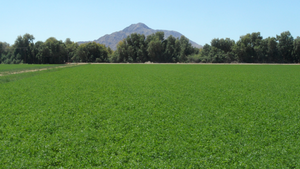
Wright told a UCCE grower meeting in Visalia, Calif., recently that 42 percent of the San Joaquin Valley cotton crop was planted to herbicide-resistant varieties. About 30 percent of the state’s corn crop is in RR varieties. And Roundup-resistant alfalfa is expected to be available soon.

Percentages grow

These percentages are expected to continue to grow because herbicide-tolerant crops reduce hand-hoeing and mechanical cultivation. Both are cost factors, but the second is also an environmental issue with the growing regulatory air quality environment.

Roundup Ready crops are more widely planted in the southern U.S. and along with rapid conversion to conservation tillage, glyphosate-resistance is growing. "You can hardly find a cultivator running in the South," Wright said.

Wright said Roundup may be getting a least a partial bad rap in the weed-resistance debate because it is not the herbicide alone that is leading to weed resistance to the herbicide.

Reduced tillage and relying too heavily on glyphosate when other herbicides are available are also factors in spawning resistance.

"It is the change in the weed control system that is causing the problem," believes Wright. "It is not just Roundup. When you take cultivation out of the system; when you take other herbicides out of the system, you get weed shifts and resistance.

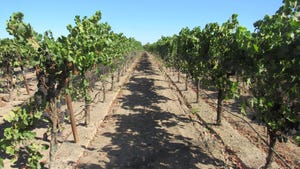
"California is in better shape to ward off resistance than any place else," Wright said. Although California farmers have reduced tillage operations, tillage is still part of most farming operations," Wright added herbicides other than glyphosate are used in the many rotation crops in California. These factors contribute to better resistance management, Wright said.

Recommendations

However, that does not mean resistance will not continue to be a concern in California. Wright suggested growers use 2,4-D and Dicamba on broadleaf weed between crops to mitigate resistance to glyphosate.

"Use the Roundup technology on your nastiest fields and when they are cleaned up, go back to conventional weed control systems," he suggested.

The emerging era of Roundup Flex which will allow growers to use the herbicide over the top of cotton until seven days before harvest will also help ward off resistance.

Ignite and Liberty Link cotton also will steer farmers away from Roundup Ready crops and the threat of resistance.

Also, growers who abandoned pre-plant herbicides are returning to these products. "For $6 per acre, growers figure it is worth it to go back for improved weed control and resistance management," he said.

e-mail:hcline@primediabusiness.com

Get Copyright ClearanceWant to use this article? Click here for options!
© 2009 Penton Media, Inc.


Latest Jobs

resources

events icon events

product info icon tradeshows

tradeshow icon digests

research icon photos

Continuing Education

Accredited for California, Arizona and CCA hours:


(New Course)
Biopesticides -- Effective Use in Pest Management Programs

Biopesticides are increasingly being recommended as components of Integrated Pest Management (IPM) programs in the production of non-organic high-value specialty crops such as fruit, nut, vegetable, vine, ornamental and turf. This online, accredited course, sponsored by Marrone Bio Innovations, details some of the 245 registered biopesticide active ingredients used in a wide array pest management products.

Accredited in California and Arizona:


(New Course)
Agronomic Principles and Efficient Chemigation and Fertigation Using Center Pivot/Linear Sprinkler Systems

This online CE course details sound mechanical irrigation design and management practices to allow efficient chemigation and fertigation. It is accredited for Certified Crop Adviser CE units and is approved for credit hours in California and Arizona.


(New Course)
Pome, Stone Fruit Pest Management Using New Mode of Action Chemistry

New chemistry Rynaxypyr has proven effective against a wide range of economically important Lepidoptera species. Marketed under the trade name Altacor for use in grapes, pome and stone fruit, details on how to use this new chemistry are in this online Continuing Education course that is accredited in California, Pennsylvania, and New Jersey with CE applications pending in Oregon and Washington.


(New Course)
Vegetable Pest Management Using New Mode of Action

Integration of a new mode of action compound like Coragen into IPM and IRM programs to control Lepidoptera in leafy greens, fruiting vegetables, peppers and brassica or cole crops is always welcome. This online CE accredited details how best to use this new mode of action in intensive vegetable production. It is accredited in California, Arizona, Texas, Georgia, New Jersey and Pennsylvania. Application for credit is pending in Florida and Washington.

Accredited by Accredited in California and Washington:


(New Course)
Utilizing Calcium as Nutrient That Protects Against Disease Organisms

This online accredited course focus on Calcium, an important plant nutrient in fertilizer management for maximum, healthy plant development as well as disease and pest prevention. It is accredited in California, Georgia,: Pennsylvania and New Jersey. Credit pending in Florida, South Carolina, Tennessee, Virginia, West Virginia and Washington.


Accredited by California DPR and California and Arizona Certified Crop Advisers:


(New Course)

Nutrient Management in Key California Crops


This online CEU course offers a detailed look at the nutrient management in key California crops. It is sponsored online by Western Plant Health Association and funded by a grant from the California Department of Food and Agriculture Fertilizer Research and Education Program (FREP). It is accredited for one (1)-hour of credit by the California Department of Pesticide Regulation for California Pest Control Advisers (PCA), Private Applicators, Qualified Applicators and Aerial Applicators. The course is also accredited for 3 units in Nutrient Management (NM) for California and Arizona Certified Crop Advisers (CCAs).

Accredited in California, Arizona, Idaho, Oregon and Washington and for Certified Crop Advisers:


(New Course)
Organic/Sustainable Agricultural Production in the West

Organic/sustainable agriculture is expanding rapidly in the U.S. with an average annual increase of 20% during the last 15 years. This course covers a wide range of pests and organic control strategies. It is accredited for up to 4 continuing education hours for PCAs and Applicator Licensees in California, Arizona, Idaho, Oregon and Washington. It is also approved for Certified Crop Adviser credit.


ACCREDITED IN CALIFORNIA ONLY:


Almond Pest Management

Get the latest info on almond insect pest management and earn 2 hrs. CE DPR and CCA credit in California.

California Groundwater Protection Regulations

Earn 2 hrs. in California laws and regs CE and learn how to protect California groundwater supplies.


Disease Management in California Almonds

Managing diseases in California almond production is a year-long process. This course provides the latest information on controlling these diseases with management practices and fungicides. The course is approved for 2 CEUs by DPR for PCAs and all applicator categories and California CCAs.

Powdery Mildew Control in California Grapevines

Learn about the No. 1 grape disease in California; earn 2 California CE hours.

ACCREDITED IN CALIFORNIA AND ARIZONA:


The Role of Copper in Disease Control

Copper has long been a key tool in disease control in a many crops. This 2-CEU course accredited California PCAs and all DPR applicator categories and Arizona applicators details how best to use copper to maximize its potential.

Insecticide Resistance Management in Agronomic and Row Crops

A 3-hr. CE approved for California and Arizona licensees and CCAs in both states.

Agronomic Weed Resistance Management in Row Crops, Trees Nuts and Vines

Weeds Resistance Management is approved for 3 hours of CE credit for all California and Arizona licensees and Certified Crop Advisers.

Lepidopterous Pest Management/ Pesticide Safety

This course is approved for 2 hours in Arizona and California (1 hr. of laws/regs; 1 hour Other) and for CCAs.

ACCREDITED IN CALIFORNIA, ARIZONA, OREGON, AND WASHINGTON:

Managing Spray Drift to Minimize Problems

This online CEU on managing spray drift to minimize problems is accredited for 2-hours in California (Laws and Regs); Arizona, Oregon and Washington.

Back to Top

Browse Print Issues

Additional Resources

subscribe to Farm Press Daily Southeast Farm Press Southwest Farm Press Delta Farm Press