California grape growers protest mixing foreign wine

Dec 6, 2006 10:35 AM, By Harry Cline
Farm Press Editorial Staff
California wine grape growers are growing increasingly frustrated and angry at each market percentage point gain of foreign wine in the U.S. wine market.

By the end of the year, burgeoning wine imports are expected to account for 30 percent of the U.S. market.

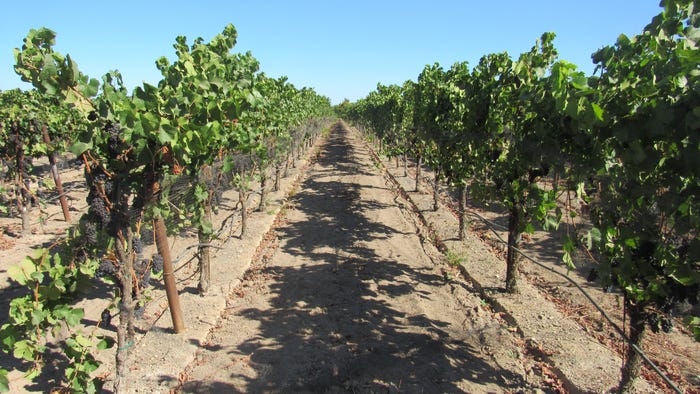
As the overall wine market in the U.S. grows at a healthy 2 percent to 5 percent annual clip, California grape growers continue to rip out vineyards. More than 100,000 acres in the Central Valley have been destroyed in the past five years. Growers are beyond weary of prices offered less than production costs.

Grapes have been left on the vine over the past few seasons because there were no winery buyers. Some coastal growers have resorted to custom crushing their own grapes and hope to sell the wine to the wineries that would not buy the grapes.

Rubbing salt into the open economic sore this season includes record bulk, inexpensive wine imports that are being blended with California wines and sold by California wineries as “American” appellation wine. Much of this imported bulk wine is coming from Australia, which is burdened by excessive grape and wine production.

This flood of cheap imports is happening when California grape growers leave grapes hanging due to a lack of winery buyers.

The California Association Wine Grape Growers (CAWG) believes California wineries may be bending a law that permits blending of two wine appellations and calling it American wine.

Karen Ross, CAWG president, said shipment of bulk California wine to other areas of the United States for blending into other states’ wines is common.

“We ship a lot of California to the East Coast and to places like Michigan and Ohio where they grow wine grapes, but do not produce enough wine to meet growing demand for wine. This is good for California wine because it ultimately helps increase wine consumption of American wine,” Ross said.

The law states that 25 percent of one appellation can be blended with 75 percent of another.

What CAWG is questioning is whether the law actually allows the blending of foreign wine with domestic wine and calling it American.

“No other country allows blending of foreign wine with domestic wine,” Ross said.

“California grape growers made a significant investment in wine grape vineyards on the signals from wineries that there was a bright future in California wine.” Those same growers are seeing at least some of that bright future being taken by imports.

“We are definitely looking into the blending of foreign wine with California wine and calling it American wine, but are not sure what actions we will ultimately take,” she said.

This surge in foreign wine exports as California growers are without viable markets for wine grapes is particularly frustrating, since growers recently supported a Wine Institute proposal to blend vintages/years to help sell and improve the quality of California wine.

CAWG grower members also believe they are being short changed in the PR department with “critter wines” such as Yellow Tail from Australia getting all the U.S. press.

“CAWG Chairman Rodney Schatz (Lockeford, Calif.) believes California wine grape growers have a good story to tell about California wine growing,” Ross said.

“There is added value for consumers to purchase California wine because of the sustainable grape growing practices in the state,” she said.

CAWG has committed to raising about $700,000 over the next two years to fund a PR campaign extolling the virtues of California wine It will target the wine trade and media.

“The real competition in this foreign versus domestic market is in the $5 to $10 price points. This is where the greatest volume of wine is sold, and I don’t think growers are going to roll over and give this to someone else,” she said.

The goal of the PR campaign is maintaining and growing California’s market share in a growing U.S. wine market by telling California grape growers’ story, she said.

e-mail: hcline@farmpress.com

Get Copyright ClearanceWant to use this article? Click here for options!
© 2008 Penton Media, Inc.


Latest Jobs

resources

events icon events

product info icon tradeshows

tradeshow icon digests

research icon photos

Continuing Education

Accredited by California DPR and California and Arizona Certified Crop Advisers:


(New Course)

Nutrient Management in Key California Crops


This online CEU course offers a detailed look at the nutrient management in key California crops. It is sponsored online by Western Plant Health Association and funded by a grant from the California Department of Food and Agriculture Fertilizer Research and Protection Program (FREP). It is accredited for one (1)-hour of credit by the California Department of Pesticide Regulation for California Pest Control Advisers (PCA), Private Applicators, Qualified Applicators and Aerial Applicators. The course is also accredited for 3 units in Nutrient Management (NM) for California and Arizona Certified Crop Advisers (CCAs).

Accredited in California, Arizona, Idaho, Oregon and Washington and for Certified Crop Advisers:


(New Course)
Organic/Sustainable Agricultural Production in the West

Organic/sustainable agriculture is expanding rapidly in the U.S. with an average annual increase of 20% during the last 15 years. This course covers a wide range of pests and organic control strategies. It is accredited for up to 4 continuing education hours for PCAs and Applicator Licensees in California, Arizona, Idaho, Oregon and Washington. It is also approved for Certified Crop Adviser credit.

ACCREDITED IN OREGON AND WASHINGTON:


(New Course)
Managing Spray Drift to Minimize Problems

This online spray drift management course has been certified by the Oregon Department of Agriculture and the Washington Department of Agriculture for 2 hours of credit for licensed Applicators and Consultants in Oregon and Washington.

ACCREDITED IN CALIFORNIA ONLY:


Almond Pest Management

Get the latest info on almond insect pest management and earn 2 hrs. CE DPR and CCA credit in California.

California Groundwater Protection Regulations

Earn 2 hrs. in California laws and regs CE and learn how to protect California groundwater supplies.


Disease Management in California Almonds

Managing diseases in California almond production is a year-long process. This course provides the latest information on controlling these diseases with management practices and fungicides. The course is approved for 2 CEUs by DPR for PCAs and all applicator categories and California CCAs.

Powdery Mildew Control in California Grapevines

Learn about the No. 1 grape disease in California; earn 2 California CE hours.

ACCREDITED IN CALIFORNIA AND ARIZONA:


The Role of Copper in Disease Control

Copper has long been a key tool in disease control in a many crops. This 2-CEU course accredited California PCAs and all DPR applicator categories and Arizona applicators details how best to use copper to maximize its potential.

Insecticide Resistance Management in Agronomic and Row Crops

A 3-hr. CE approved for California and Arizona licensees and CCAs in both states.

Agronomic Weed Resistance Management in Row Crops, Trees Nuts and Vines

Weeds Resistance Management is approved for 3 hours of CE credit for all California and Arizona licensees and Certified Crop Advisers.

Lepidopterous Pest Management/ Pesticide Safety

This course is approved for 2 hours in Arizona and California (1 hr. of laws/regs; 1 hour Other) and for CCAs.

Managing Spray Drift to Minimize Problems

2-hrs laws and regs for California licensees; 2 hours in Arizona and for CCAs.

Back to Top

Browse Print Issues

Additional Resources

subscribe to Farm Press Daily Southeast Farm Press Southwest Farm Press Delta Farm Press