Campbell Soup gives $250,000 to UC sustainable ag programs

Oct 10, 2007 11:25 AM


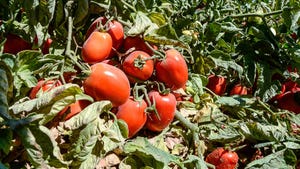
The UC Davis Agricultural Sustainability Institute has received $250,000 from Campbell Soup Company to support ASI's sustainable agriculture research, education and outreach. Reducing childhood obesity with school gardens, using subsurface drip irrigation to reduce greenhouse gas emissions, and using nitrogen-rich cover crops to improve soils are among the benefits to Californians of ASI research projects. The contribution from Campbell's, known for its iconic tomato soup can, will help fund a new generation of research on healthy soil, pest management, and water management.

"We are thrilled to receive this donation, and ready to work with Campbell's on education and outreach projects that can address child nutrition issues, as well as research projects on crop rotations, cover crops and nitrogen uptake," said Tom Tomich, ASI director and director of the statewide UC Sustainable Agriculture Research and Education Program (SAREP).

"Our programs range from the UC Davis Children's Garden Program to a long-term farming practices project with decades of data on carbon sequestration and nitrogen runoff. We know Campbell's wants to make a significant contribution to the future of food and farming and the health of future generations in our state and country, which makes it a perfect fit with our own mission and goals."

Campbell Soup Company, which began producing canned tomatoes, vegetables, jellies and soups in 1869, has evolved into a worldwide manufacturer and marketer of food products, many of which include vegetables and fruits. In recognition of its agricultural roots, the company is focusing on the support of sustainable agriculture research, education and outreach with the establishment of an endowed fund at the UC Davis College of Agricultural and Environmental Sciences' ASI.

Carl Johnson, Campbell Soup Company senior vice president and chief strategy officer, said the company has always worked closely with farmers and university researchers to ensure that it was supplied with the highest quality ingredients.

"By expanding our long-standing partnership with UC Davis, we hope to create a healthier environment that produces healthier foods, not only for today's consumers, but for future generations," he said. "Our endowment will promote the preservation of the world's precious farmland and advance the practice of integrated pest management. We are very pleased to make this commitment to further the excellence of agricultural sustainability research and outreach at UC Davis."

Johnson said Campbell's has a long history in the Davis community, where it operates an agricultural research facility that serves as the headquarters for the Campbell Seed Company. The company also operates tomato processing plants in Dixon and Stockton, as well as a major West Coast production facility in Sacramento that produces the company's soups, sauces, and beverages.

In addition to ASI, which was established in 2006, and SAREP, which is celebrating its 20th anniversary, UC's sustainable agriculture resources include the UC Davis Student Farm, UC Davis Long-Term Research on Agricultural Systems project, and Sustainable Agriculture Farming Systems project. For more information, visit the ASI Web site at http://asi.ucdavis.edu.

Get Copyright ClearanceWant to use this article? Click here for options!
© 2008 Penton Media, Inc.


Latest Jobs

resources

events icon events

product info icon tradeshows

tradeshow icon digests

research icon photos

Continuing Education

Accredited in California, Arizona, Idaho, Oregon and Washington and for Certified Crop Advisers:


(New Course)
Organic/Sustainable Agricultural Production in the West

Organic/sustainable agriculture is expanding rapidly in the U.S. with an average annual increase of 20% during the last 15 years. This course covers a wide range of pests and organic control strategies. It is accredited for up to 4 continuing education hours for PCAs and Applicator Licensees in California, Arizona, Idaho, Oregon and Washington. It is also approved for Certified Crop Adviser credit.

ACCREDITED IN OREGON AND WASHINGTON:


(New Course)
Managing Spray Drift to Minimize Problems

This online spray drift management course has been certified by the Oregon Department of Agriculture and the Washington Department of Agriculture for 2 hours of credit for licensed Applicators and Consultants in Oregon and Washington.

ACCREDITED IN CALIFORNIA ONLY:


Almond Pest Management

Get the latest info on almond insect pest management and earn 2 hrs. CE DPR and CCA credit in California.

California Groundwater Protection Regulations

Earn 2 hrs. in California laws and regs CE and learn how to protect California groundwater supplies.


Disease Management in California Almonds

Managing diseases in California almond production is a year-long process. This course provides the latest information on controlling these diseases with management practices and fungicides. The course is approved for 2 CEUs by DPR for PCAs and all applicator categories and California CCAs.

Powdery Mildew Control in California Grapevines

Learn about the No. 1 grape disease in California; earn 2 California CE hours.

ACCREDITED IN CALIFORNIA AND ARIZONA:


The Role of Copper in Disease Control

Copper has long been a key tool in disease control in a many crops. This 2-CEU course accredited California PCAs and all DPR applicator categories and Arizona applicators details how best to use copper to maximize its potential.

Insecticide Resistance Management in Agronomic and Row Crops

A 3-hr. CE approved for California and Arizona licensees and CCAs in both states.

Agronomic Weed Resistance Management in Row Crops, Trees Nuts and Vines

Weeds Resistance Management is approved for 3 hours of CE credit for all California and Arizona licensees and Certified Crop Advisers.

Lepidopterous Pest Management/ Pesticide Safety

This course is approved for 2 hours in Arizona and California (1 hr. of laws/regs; 1 hour Other) and for CCAs.

Managing Spray Drift to Minimize Problems

2-hrs laws and regs for California licensees; 2 hours in Arizona and for CCAs.

Back to Top

Browse Print Issues

Additional Resources

subscribe to Farm Press Daily Southeast Farm Press Southwest Farm Press Delta Farm Press