State notes small increase in pesticide use

Jan 31, 2006 9:22 AM

The California Department of Pesticide Regulation reports a small increase in pounds of pesticides applied in 2004, but that included a dramatic rise in the use of some nature-friendly chemicals.

Commercial pesticide use increased from 175 million pounds in 2003 to 180 million pounds in 2004, an increase of less than 3 percent.

More than half of the five million pound increase in 2004 could be linked to two chemicals that qualify for organic agriculture -- sulfur and mineral oils. In addition, "A dramatic increase occurred in the use of some newer, reduced-risk pesticides," said DPR analysts. Meanwhile, use of several classes of highly toxic chemicals declined, both in pounds applied and acres treated.

DPR Director Mary Ann Warmerdam said the statistics were timely. "They coincide with DPR policy initiatives to emphasize more sustainable, less toxic pest management for agriculture and industry, and in homes and gardens," said Warmerdam. "This is just another indication that we are moving in the right direction."

Last year, Warmerdam directed DPR's Pest Management Advisory Committee to begin developing a statewide blueprint for integrated pest management (IPM), a least-toxic approach that stresses more prevention and less reliance on chemicals. A diverse workgroup made recommendations to the committee late last year. DPR expects to move forward on its IPM blueprint after the pest management committee meets in February, said Warmerdam.

"The recommendations include more IPM research, as well as public-private cooperative efforts that offer strong and positive incentives to industry," said Warmerdam. She also welcomed a recommendation for renewed support of IPM grant programs. DPR produced dozens of successful IPM projects around the state, until budget cuts suspended the IPM grants in 2003.

Some details from the 2004 DPR pesticide use summary:

Pesticide use varies from year to year based on many factors, including types of crops, economics, acreage planted, and other factors – most notably weather. A wet winter in 2004 promoted weed growth; then a hot, dry summer encouraged mites and other pests. In addition, acreage increased for some major crops, and high-value crops often justify more intensive pest management.

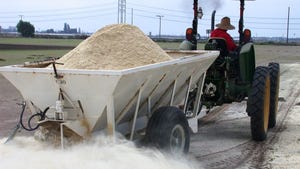
As measured by pounds, sulfur was the most-used chemical with 54 million pounds, or about 30 percent of all pounds applied. Sulfur -- favored by both conventional and organic farmers -- saw use increase by nearly 800,000 pounds (1.5 percent) in 2004. Use of mineral oil, another chemical that qualifies for organic production, increased by 2.8 million pounds (44 percent).

Meanwhile, "A dramatic increase occurred in the use of some newer, reduced-risk pesticides such as spinosad, acetamiprid, pyraclostrobin, methoxyfenozide, carfentrazone-ethyl, and boscalid," DPR analysts reported.

Spinosad is a relatively new chemical class of insecticides derived from a natural soil bacterium. It was first discovered by a vacationing scientist in an abandoned rum distillery in the Caribbean. Spinosad use increased by 4,400 pounds and 52,000 acres -- to a total of more than 858,000 cumulative acres -- in 2004.

Use of insecticide organophosphate and carbamate chemicals – compounds of high regulatory concern -- continued to decline. Use declined by 130,000 pounds (1.6 percent) and by 360,000 acres treated (5.7 percent) in 2004, compared to the prior year.

Use of chemicals classified as reproductive toxins declined by 600,000 pounds (2.5 percent), and by cumulative acres treated, 180,000 acres (7.7 percent). The fumigant methyl bromide showed the largest decline in pounds -- 295,000 -- or 4 percent.

Another major fumigant, metam-sodium, decreased by 132,000 pounds (1 percent) and about 14,000 cumulative acres (10 percent). Use of the fumigant 1,3-D increased by 1.9 million pounds (28 percent) and about 7,700 acres (16 percent).

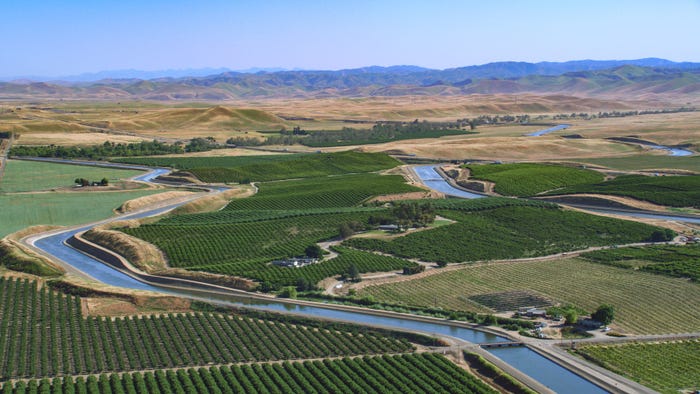
As in previous years, the most pesticide use occurred in the San Joaquin Valley, the nation's No. 1 agricultural area. Fresno, Kern, Tulare, and San Joaquin counties had the highest poundage use.

Pesticide use is reported as the number of pounds of active ingredient and the total number of acres treated. Data for pounds includes both agricultural and nonagricultural applications; data for acres treated are primarily agricultural applications. The number of acres treated is cumulative; one acre treated three times is counted as three acres.

Get Copyright ClearanceWant to use this article? Click here for options!
© 2008 Penton Media, Inc.


Latest Jobs

resources

events icon events

product info icon tradeshows

tradeshow icon digests

research icon photos

Continuing Education

Accredited by California DPR and California and Arizona Certified Crop Advisers:


(New Course)

Nutrient Management in Key California Crops


This online CEU course offers a detailed look at the nutrient management in key California crops. It is sponsored online by Western Plant Health Association and funded by a grant from the California Department of Food and Agriculture Fertilizer Research and Protection Program (FREP). It is accredited for one (1)-hour of credit by the California Department of Pesticide Regulation for California Pest Control Advisers (PCA), Private Applicators, Qualified Applicators and Aerial Applicators. The course is also accredited for 3 units in Nutrient Management (NM) for California and Arizona Certified Crop Advisers (CCAs).

Accredited in California, Arizona, Idaho, Oregon and Washington and for Certified Crop Advisers:


(New Course)
Organic/Sustainable Agricultural Production in the West

Organic/sustainable agriculture is expanding rapidly in the U.S. with an average annual increase of 20% during the last 15 years. This course covers a wide range of pests and organic control strategies. It is accredited for up to 4 continuing education hours for PCAs and Applicator Licensees in California, Arizona, Idaho, Oregon and Washington. It is also approved for Certified Crop Adviser credit.

ACCREDITED IN OREGON AND WASHINGTON:


(New Course)
Managing Spray Drift to Minimize Problems

This online spray drift management course has been certified by the Oregon Department of Agriculture and the Washington Department of Agriculture for 2 hours of credit for licensed Applicators and Consultants in Oregon and Washington.

ACCREDITED IN CALIFORNIA ONLY:


Almond Pest Management

Get the latest info on almond insect pest management and earn 2 hrs. CE DPR and CCA credit in California.

California Groundwater Protection Regulations

Earn 2 hrs. in California laws and regs CE and learn how to protect California groundwater supplies.


Disease Management in California Almonds

Managing diseases in California almond production is a year-long process. This course provides the latest information on controlling these diseases with management practices and fungicides. The course is approved for 2 CEUs by DPR for PCAs and all applicator categories and California CCAs.

Powdery Mildew Control in California Grapevines

Learn about the No. 1 grape disease in California; earn 2 California CE hours.

ACCREDITED IN CALIFORNIA AND ARIZONA:


The Role of Copper in Disease Control

Copper has long been a key tool in disease control in a many crops. This 2-CEU course accredited California PCAs and all DPR applicator categories and Arizona applicators details how best to use copper to maximize its potential.

Insecticide Resistance Management in Agronomic and Row Crops

A 3-hr. CE approved for California and Arizona licensees and CCAs in both states.

Agronomic Weed Resistance Management in Row Crops, Trees Nuts and Vines

Weeds Resistance Management is approved for 3 hours of CE credit for all California and Arizona licensees and Certified Crop Advisers.

Lepidopterous Pest Management/ Pesticide Safety

This course is approved for 2 hours in Arizona and California (1 hr. of laws/regs; 1 hour Other) and for CCAs.

Managing Spray Drift to Minimize Problems

2-hrs laws and regs for California licensees; 2 hours in Arizona and for CCAs.

Back to Top

Browse Print Issues

Additional Resources

subscribe to Farm Press Daily Southeast Farm Press Southwest Farm Press Delta Farm Press