Growing, marketing herbicide-resistant alfalfa will be challenging, worthwhile

Jan 11, 2005 9:08 AM, By Harry Cline


So far it has not spawned an anti-biotech attack, but that does not mean there are no challenges associated with the herbicide resistant forage crop.

Herbicide-resistant (Roundup Ready) alfalfa is expected to be offered for sale commercially this year.

However, none seem insurmountable and researchers at the recent National Alfalfa Symposium in San Diego say the path seems clear for what one called the "landmark" movement into a new biotech crop that offers great potential to reduce weed control costs; produce cleaner alfalfa and be a possible solution to new water quality regulations facing western producers.

Roundup Ready alfalfa has not run into the opposition like herbicide-resistant wheat, a factor in Monsanto shelving Roundup Ready wheat. While Monsanto claimed officially that declining wheat acreage was the primary factor in pulling the plug on biotech wheat, it was actually opposition from countries importing U.S. wheat that postponed the introduction of herbicide-resistant wheat. Growers were concerned that world markets would be eroded for any country permitting herbicide-resistant wheat to be grown.

Japan, one of America’s biggest agricultural trading partners, said it would not buy wheat — biotech or conventional -- from any country that allowed biotech wheat to be grown. However, according to one of the speakers at the alfalfa symposium Japan is expected to approve the importation of biotech alfalfa. Japan is the biggest importer of U.S alfalfa, taking 75 percent of the alfalfa exported by the U.S. with a value of almost $500 million annually.

The difference is that wheat is imported primarily for human consumption and alfalfa is imported for livestock rations. Scientists said no one has documented a risk to humans consuming milk, meat or eggs from animals fed genetically modified hay.

Asked to certify

Nevertheless, Western alfalfa growers have already been asked by some foreign customers to certify that hay shipped to them is non-biotech. Easy-to-use protein-based test strips are being developed to detect the presence of the Roundup Ready gene in alfalfa hay and forage.

If herbicide resistant alfalfa is introduced commercially in 2005, it will be the fourth major U.S. biotech crop. Eighty-five percent of the 74 million acres of soybeans grown in the U.S. are herbicide-resistant; 13 percent of the 80 million acres of corn are biotech varieties; 60 percent of the 14 million acres of cotton are biotech varieties. About 60 million acres of wheat are grown in the U.S. annually, and U.S. farmers produce alfalfa from 22 million acres annually. Unlike the other crops, alfalfa is a perennial that once planted can have a harvestable lifespan from 3 to 10 years or more, depending on how often it is harvested each year.

Forage Genetics International will "likely" introduce Roundup Ready alfalfa varieties this year, according to its president Mark McCaslin.

Food and Drug Administration approval of the herbicide-resistant crop is expected to coincide with Japanese approval to import the hay, said McCaslin. Canada, Mexico, South Korea and Taiwan are expected to follow suit.

McCaslin acknowledges that some buyers of American hay will require testing to ensure that they are not getting biotech hay.

Forage Genetics, Monsanto, scientists from the University of California and the University of Washington and key alfalfa exporters are developing protein-based test strips to detect the Roundup Ready gene in hay.

First trait

McCaslin said herbicide-resistance should be the first of many biotech traits in alfalfa. Others traits under development include traits to enhance yields, tolerance to other herbicides, insect resistance and stress tolerance. Output traits likely will be improved fiber digestibility and increased efficiency in protein utilization that will result in "significant increases" in milk and beef production, according to McCaslin.

This new biotech era for alfalfa could even reverse a nationwide alfalfa acreage decline trend by keeping the crop competitive, McCaslin said. "Genetic engineering offers potential breakthroughs in improving the efficiency of alfalfa forage and seed production and improving forage quality in a way not possible through conventional plant breeding," said McCaslin, adding that Forage Genetics surveying has indicated a "strong demand" for new biotech alfalfa hay products that improve animal performance.

The hay export market is primarily a concern for Western forage producers who export virtually 100 percent of the 2.9 million metric tons of U.S. hay exported to Pacific Rim countries.

According to William T. W. Woodward of Washington State University, Japan is expected to set a low tolerance level for GMO alfalfa, however, the export hay customer may want zero tolerance.

Contamination

This will pose a challenge from pollinator bees which can fly several miles. However, Woodward said the most likely contamination could be in purchased seed because seed production practices that may not allow adequate isolation distances.

"Although contamination is expected to be low, tests may unexpectedly detect the Roundup Ready gene. It is difficult to certify that a non-GMO will not be contaminated if grown in an area where GMO alfalfa cultivars are produced," said Woodward.

Isolation will be critical in managing pollen flow in California as well, agreed Ron Vargas, weed control specialist and farm advisor in Madera and Merced counties in the San Joaquin Valley.

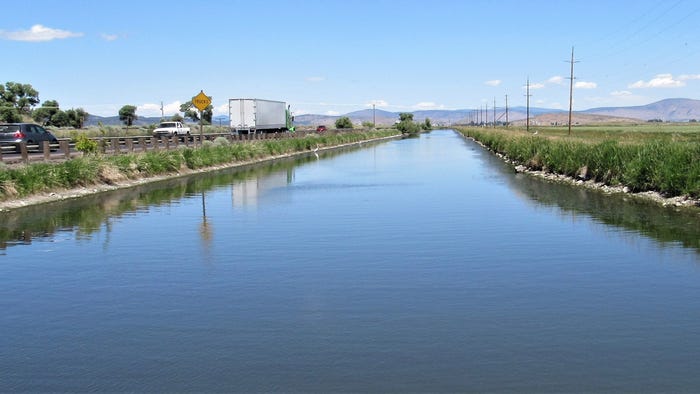
Since there are no sexually compatible food crops or weeds to alfalfa, outcross is of minimal concern. However, Vargas once again sounded the alarm about feral and volunteer herbicide-resistant plants. Volunteer alfalfa must be effectively controlled in rotational crops like cotton and corn with a herbicide other than glyphosate. Roadside and ditch bank feral alfalfa also will be a concern since Roundup has traditionally been used for weed control in those areas. Other herbicides will have to be used in those situations.

"Cutting schedules in hay also will have to be diligently adhered to so that the hay is cut at early bloom stage before pollen is produced," added Vargas.

Herbicide substitutes

Vargas said 2,4-D and dicamba were the most effective herbicides to replace Roundup in taking out old alfalfa stands. He added control was 100 percent with all non-glyphosate herbicides evaluated when followed by cultivation.

As with any widely used herbicide, resistance is an issue. With the Roundup Ready technology in several crops, it is a growing concern with glyphosate. Glyphosate-resistance has already been identified in ryegrass and horseweed and reduced control has been validated in lambsquarter and barnyardgrass. Continued use of glyphosate on hard to control weeds such as stinging nettle, cheeseweed and hairy fleabane can be the cause of weed shifts.

Vargas said development of resistance to glyphosate is "thought to be less likely" than other herbicide because it has no soil residual activity and controls weeds with a unique mode of action. Nevertheless, Vargas and other researchers said rotating herbicides to manage resistance is good stewardship. This includes rotating with herbicides with different modes of action; using recommended glyphosate rates; monitoring and controlling escape weeds; using only certified planting seed; cleaning equipment and rotating crops to prevent resistance.

Vargas said it is "probably not" a good idea to rotate Roundup Ready cotton or corn with Roundup Ready alfalfa.

"Following Roundup Ready corn with Roundup Ready cotton has (already) caused problems with the control of corn in the cotton crop. Using Roundup Ready technology in the same field too frequently may result in weed species shifts or resistance."

Still good option

Even with the challenges, Vargas and his colleagues believe Roundup Ready alfalfa will give growers a simply, broad spectrum weed control option.

It could even help in complying with California’s new groundwater protection regulations which restricts the use of many herbicides. Roundup is not one of the products restricted in groundwater protection areas.

Of course, the bottom line for growers will be the economic benefits. Since no price structure or technology fee has been announced. That remains the biggest unanswered question about the new emerging biotech era for forage producers.

e-mail:hcline@primediabusiness.com

Get Copyright ClearanceWant to use this article? Click here for options!
© 2009 Penton Media, Inc.


resources

events icon events

product info icon tradeshows

tradeshow icon digests

research icon photos

Continuing Education

Accredited for California, Arizona and CCA hours:


(New Course)
Biopesticides -- Effective Use in Pest Management Programs

Biopesticides are increasingly being recommended as components of Integrated Pest Management (IPM) programs in the production of non-organic high-value specialty crops such as fruit, nut, vegetable, vine, ornamental and turf. This online, accredited course, sponsored by Marrone Bio Innovations, details some of the 245 registered biopesticide active ingredients used in a wide array pest management products.

Accredited in California and Arizona:


(New Course)
Agronomic Principles and Efficient Chemigation and Fertigation Using Center Pivot/Linear Sprinkler Systems

This online CE course details sound mechanical irrigation design and management practices to allow efficient chemigation and fertigation. It is accredited for Certified Crop Adviser CE units and is approved for credit hours in California and Arizona.


(New Course)
Pome, Stone Fruit Pest Management Using New Mode of Action Chemistry

New chemistry Rynaxypyr has proven effective against a wide range of economically important Lepidoptera species. Marketed under the trade name Altacor for use in grapes, pome and stone fruit, details on how to use this new chemistry are in this online Continuing Education course that is accredited in California, Pennsylvania, and New Jersey with CE applications pending in Oregon and Washington.


(New Course)
Vegetable Pest Management Using New Mode of Action

Integration of a new mode of action compound like Coragen into IPM and IRM programs to control Lepidoptera in leafy greens, fruiting vegetables, peppers and brassica or cole crops is always welcome. This online CE accredited details how best to use this new mode of action in intensive vegetable production. It is accredited in California, Arizona, Texas, Georgia, New Jersey and Pennsylvania. Application for credit is pending in Florida and Washington.

Accredited by Accredited in California and Washington:


(New Course)
Utilizing Calcium as Nutrient That Protects Against Disease Organisms

This online accredited course focus on Calcium, an important plant nutrient in fertilizer management for maximum, healthy plant development as well as disease and pest prevention. It is accredited in California, Georgia,: Pennsylvania and New Jersey. Credit pending in Florida, South Carolina, Tennessee, Virginia, West Virginia and Washington.


Accredited by California DPR and California and Arizona Certified Crop Advisers:


(New Course)

Nutrient Management in Key California Crops


This online CEU course offers a detailed look at the nutrient management in key California crops. It is sponsored online by Western Plant Health Association and funded by a grant from the California Department of Food and Agriculture Fertilizer Research and Education Program (FREP). It is accredited for one (1)-hour of credit by the California Department of Pesticide Regulation for California Pest Control Advisers (PCA), Private Applicators, Qualified Applicators and Aerial Applicators. The course is also accredited for 3 units in Nutrient Management (NM) for California and Arizona Certified Crop Advisers (CCAs).

Accredited in California, Arizona, Idaho, Oregon and Washington and for Certified Crop Advisers:


(New Course)
Organic/Sustainable Agricultural Production in the West

Organic/sustainable agriculture is expanding rapidly in the U.S. with an average annual increase of 20% during the last 15 years. This course covers a wide range of pests and organic control strategies. It is accredited for up to 4 continuing education hours for PCAs and Applicator Licensees in California, Arizona, Idaho, Oregon and Washington. It is also approved for Certified Crop Adviser credit.


ACCREDITED IN CALIFORNIA ONLY:


Almond Pest Management

Get the latest info on almond insect pest management and earn 2 hrs. CE DPR and CCA credit in California.

California Groundwater Protection Regulations

Earn 2 hrs. in California laws and regs CE and learn how to protect California groundwater supplies.


Disease Management in California Almonds

Managing diseases in California almond production is a year-long process. This course provides the latest information on controlling these diseases with management practices and fungicides. The course is approved for 2 CEUs by DPR for PCAs and all applicator categories and California CCAs.

Powdery Mildew Control in California Grapevines

Learn about the No. 1 grape disease in California; earn 2 California CE hours.

ACCREDITED IN CALIFORNIA AND ARIZONA:


The Role of Copper in Disease Control

Copper has long been a key tool in disease control in a many crops. This 2-CEU course accredited California PCAs and all DPR applicator categories and Arizona applicators details how best to use copper to maximize its potential.

Insecticide Resistance Management in Agronomic and Row Crops

A 3-hr. CE approved for California and Arizona licensees and CCAs in both states.

Agronomic Weed Resistance Management in Row Crops, Trees Nuts and Vines

Weeds Resistance Management is approved for 3 hours of CE credit for all California and Arizona licensees and Certified Crop Advisers.

Lepidopterous Pest Management/ Pesticide Safety

This course is approved for 2 hours in Arizona and California (1 hr. of laws/regs; 1 hour Other) and for CCAs.

ACCREDITED IN CALIFORNIA, ARIZONA, OREGON, AND WASHINGTON:

Managing Spray Drift to Minimize Problems

This online CEU on managing spray drift to minimize problems is accredited for 2-hours in California (Laws and Regs); Arizona, Oregon and Washington.

Back to Top

Browse Print Issues

Additional Resources

subscribe to Farm Press Daily Southeast Farm Press Southwest Farm Press Delta Farm Press