Water conservation, efficiency conference focus

Jan 10, 2006 9:26 AM, By Blake Sanden, Irrigation, Agronomy Farm Advisor, UCCE, Kern County, Calif.


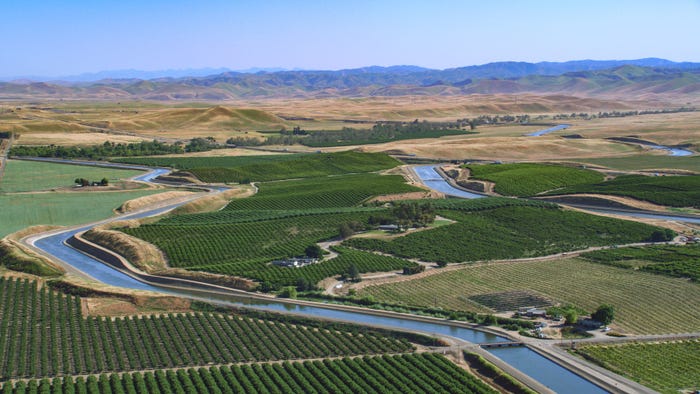
California water planners and the environmental community would like to meet increasing urban water demand by efficiency improvements in ag irrigation. A 75 percent to 80 percent irrigation efficiency has been considered good to excellent in the past. However, Kern water districts and growers have said for more than 20 years that they are operating at a higher efficiency due to increasing water costs and continued low commodity prices.

New innovations in microelectronics now provide cost-effective opportunities for growers to monitor soil moisture to document and, in some cases, improve the precision of irrigation to increase crop yield. Starting in the winter of 2001 Kern UCCE worked together with the local Resource Conservation District Irrigation Mobile lab to instrument grower’s fields with neutron probe access tubes, tensiometers, electrical resistance blocks (Watermarks) and a continuously recording data logger (Hanson AM400) with a visual display that does not require downloading to a computer.

Growers were faxed one page weekly irrigation scheduling recommendations also containing a seasonal summary of CIMIS ET estimates, soil moisture and applied water history to optimize crop performance and irrigation water use efficiency (WUE). Additional fields on the Westside of Kern County were added to this program in 2002 as part of a two-year CalFed Ag Water Use Efficiency project. Additional grower fields (from 8 to 18) have been instrumented every year since 2003 with a low-cost logger/sensor combination for a total of 138 fields covering 11,491 acres farmed by 27 different producers in 14 different crops, 11 soil textures and 9 different irrigation system types have been set up by the end of 2005.

Visual display

Loggers provide growers with a visual display of soil water content change at the side of the field without having to download data to a computer. The cost of this logger/sensor system is about $800 per field.

The average measured water use efficiency for all CalFed study fields was 95 percent. Significant water savings were realized in furrow irrigated cotton and some Buttonwillow pistachios. Yields in almonds, cotton and wine grapes were improved. Data generated during this project has provided the field evidence to substantiate the claim that irrigated agriculture in Kern County is operating at 90 to 95 percent water use efficiency. This is an unparalleled level of irrigation efficiency for regional production agriculture that is much higher than previously thought possible.

The take home message is that there may not be the assumed “conservation savings” that planners hope to squeeze out of California ag.

Presentations on this project, water policy, water conservation in the urban sector and some of the technology available for managing water efficiently will be made at the upcoming California Irrigation Institute (CII) annual meeting: “Water Conservation: Truth and Consequences” at the Radisson Hotel in Sacramento.

Jan. 26 discussion

The conference opens on Jan. 26, with a panel discussion focusing on “Water Conservation Myths and Realities”. This panel represents environmental, urban, ag and policy perspectives presented by Peter Gleick, president of the Pacific Institute; Jerry Johns, deputy director of the California Department of Water Resources; Tim Quinn, vice president of the Metropolitan Water District of Southern California; Van Tenney, retired general manager of the Glenn-Colusa Irrigation District; and Wayne White, field supervisor for the U.S. Fish & Wildlife Service.

David Guy, executive director of the Northern California Water Association, will moderate the panel. It concludes Friday, Jan. 27, with a presentation by Pulitzer Prize winner Tom Philp, the Sacramento Bee reporter who won the journalism award for a series of articles about the potential removal of Hetch Hetchy dam to restore this once spectacular river valley.

CII is California's oldest running independent forum (since 1962) on water and irrigation, and has always been distinguished by a practical and cooperative approach among industry, university and agency personnel dedicated to meeting the real water needs of the state in all economic sectors. CII’s core objectives are to advance knowledge relating to irrigation, improve irrigation practices, increase the public’s appreciation for the importance of water to California's economy; strengthen cooperation among those interested in irrigation and water management issues, and to heighten professional and social interaction between the irrigation community and water policy leaders.

Further details about the conference, including online registration, are available on the institute’s Web site, www.caii.org. Information may also be obtained by phone at (916) 366-9376.

Get Copyright ClearanceWant to use this article? Click here for options!
© 2008 Penton Media, Inc.


Latest Jobs

resources

events icon events

product info icon tradeshows

tradeshow icon digests

research icon photos

Continuing Education

Accredited in California, Arizona, Idaho, Oregon and Washington and for Certified Crop Advisers:


(New Course)
Organic/Sustainable Agricultural Production in the West

Organic/sustainable agriculture is expanding rapidly in the U.S. with an average annual increase of 20% during the last 15 years. This course covers a wide range of pests and organic control strategies. It is accredited for up to 4 continuing education hours for PCAs and Applicator Licensees in California, Arizona, Idaho, Oregon and Washington. It is also approved for Certified Crop Adviser credit.

ACCREDITED IN OREGON AND WASHINGTON:


(New Course)
Managing Spray Drift to Minimize Problems

This online spray drift management course has been certified by the Oregon Department of Agriculture and the Washington Department of Agriculture for 2 hours of credit for licensed Applicators and Consultants in Oregon and Washington.

ACCREDITED IN CALIFORNIA ONLY:


Almond Pest Management

Get the latest info on almond insect pest management and earn 2 hrs. CE DPR and CCA credit in California.

California Groundwater Protection Regulations

Earn 2 hrs. in California laws and regs CE and learn how to protect California groundwater supplies.


Disease Management in California Almonds

Managing diseases in California almond production is a year-long process. This course provides the latest information on controlling these diseases with management practices and fungicides. The course is approved for 2 CEUs by DPR for PCAs and all applicator categories and California CCAs.

Powdery Mildew Control in California Grapevines

Learn about the No. 1 grape disease in California; earn 2 California CE hours.

ACCREDITED IN CALIFORNIA AND ARIZONA:


The Role of Copper in Disease Control

Copper has long been a key tool in disease control in a many crops. This 2-CEU course accredited California PCAs and all DPR applicator categories and Arizona applicators details how best to use copper to maximize its potential.

Insecticide Resistance Management in Agronomic and Row Crops

A 3-hr. CE approved for California and Arizona licensees and CCAs in both states.

Agronomic Weed Resistance Management in Row Crops, Trees Nuts and Vines

Weeds Resistance Management is approved for 3 hours of CE credit for all California and Arizona licensees and Certified Crop Advisers.

Lepidopterous Pest Management/ Pesticide Safety

This course is approved for 2 hours in Arizona and California (1 hr. of laws/regs; 1 hour Other) and for CCAs.

Managing Spray Drift to Minimize Problems

2-hrs laws and regs for California licensees; 2 hours in Arizona and for CCAs.

Back to Top

Browse Print Issues

Additional Resources

subscribe to Farm Press Daily Southeast Farm Press Southwest Farm Press Delta Farm Press