Noted entomologist to discuss disappearing bees at UC Davis on Oct. 9

Sep 28, 2007 10:24 AM

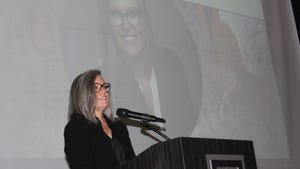
“BSI: The Case of the Disappearing Bees” will be discussed by noted entomologist May Berenbaum at a public lecture hosted by the University of California, Davis (UC Davis) Department of Entomology on Oct. 9 in the Activities Recreation Center, UC Davis, Davis, Calif.

A reception is scheduled at 5:00 p.m., with the lecture to follow at 5:30. Both events are in Ballroom A. Admission is free.

Berenbaum, professor and head of the Department of Entomology at the University of Illinois at Urbana-Champaign, said she will discuss the pollinator crisis, the plight of the honey bee, and advances in entomology that provide hope for the future of America's bees.

“The pollinator crisis - the widespread decline in the viability of animals that transport pollen and allow most of the planet's flowering plants to reproduce - may lack marquee appeal as a form of global change but it has real potential for profoundly altering the terrestrial world,” Berenbaum said.

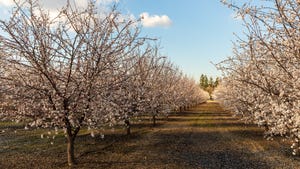
Close to 100 crop plants in the United States rely on the honey bee to survive and reproduce.

“Over the past year, the mysterious disappearance of one-third of America’s honey bees, due to what has become known as colony collapse disorder, has focused attention on how little is known about U.S. pollinators and how dependent we are upon them,” Berenbaum said.

Walter Leal, professor and chair of the Department of Entomology, said the honey bee colony collapse disorder “is one of the most intriguing problems in agricultural entomology. We at the Department of Entomology at UC Davis are very interested in finding a solution for this problem as California is bearing the biggest economic consequences of this crisis.”

He added, “We are in the process of filling a sustainable pollination biologist position as part of the revamping of our bee biology program.”

Leal said Berenbaum is also the first speaker in the department's fall Distinguished Seminar Series, set for Oct. 10 to Nov. 20. The series is designed for entomology faculty, emeriti, affiliates, professional researchers, and students.

More information is available on the UC Davis entomology Web site at http://entomology.ucdavis.edu/home.cfm.

Get Copyright ClearanceWant to use this article? Click here for options!
© 2009 Penton Media, Inc.


Latest Jobs

resources

events icon events

product info icon tradeshows

tradeshow icon digests

research icon photos

Continuing Education


*View the entire list of courses offered.


Accredited for California, Arizona and CCA hours:


New Course
Using Organic Acids to Improve Plant Production

Healthy plants have a greater ability to resist soil pathogens and insect damage. This course details how organic acids can enhance plant health. It is accredited for 1 unit in nutrients for CCAs and .5 hours for Arizona licensees. Credit is pending at California Department of Pesticide Regulation


New Course

The ABCs of MRLs

American agriculture exports 20 to 30 percent of its production annually. For specific commodities, the percentage is much higher. When recommending and applying pest management products for crops, license Pest Control Advisers (PCAs)  and applicators and farmers must be aware of which products applied are in compliance with Maximum Residue Limits (MRLs) established by foreign customers. This CE course details the MRL issue and why compliance is critical to marketing into world trade.

Back to Top

Browse Print Issues

Additional Resources

subscribe to Farm Press Daily Southeast Farm Press Southwest Farm Press Delta Farm Press