Imperial County is bull’s-eye for potential California ethanol boom

Sep 10, 2007 4:08 PM, By Cary Blake
Farm Press Editorial Staff

The California gold rush in the mid-1800s drew 300,000 people by covered wagons and sailing ships seeking financial prosperity. Today’s renewable fuels boom engulfing the nation resembles a modern day gold rush — one about to mesmerize California again.

The Golden State’s bull’s-eye for renewable fuels expansion is Imperial County, with a handfull of proposed plants in the concept, permit, or construction stage.

While the Midwest remains the nation’s epicenter of corn production and corn-based ethanol production, investors — including some California farmers — have aspirations to produce ethanol with locally grown crops like sugarcane.

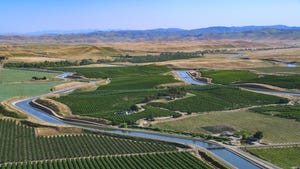
Imperial County agriculture is a $1.3 billion industry with livestock, vegetables, melons, hay and pasture as the leading commodities. Under some ethanol ventures, the face of Imperial County agriculture could forever change.

Sugarcane initiative

California Ethanol & Power, LLC (CE&P), Brawley, Calif., plans to develop, finance, build, and operate five sugarcane-to-ethanol plants in Imperial County. CE&P is owned by Batley Farms in Brawley, a management team, and third party investors. Batley Farms would supply the locally-grown cane.

The company has purchased land in an industrial area between El Centro and Brawley for the first plant, and eventually a possible second plant.

“Each plant will use sugarcane grown on 30,000 acres in Imperial County to produce 50 million gallons of fuel-grade ethanol and substantial amounts of commercial grade carbon dioxide annually,” said Nora Batley, who serves as CE&P vice-president of Imperial County matters.

At 30,000 cane acres per ethanol plant, that’s 150,000 sugarcane acres required for CE&P’s five plant build-out.

According to the Imperial County Agricultural Commissioner’s office in El Centro, Calif., Imperial has 450,000 acres of irrigated agricultural land, including less than 600 acres of sugarcane currently in the ground. Under CE&P’s plan, a third of the county’s irrigated land would move into cane production.

“Each CE&P plant would cost about $150 million and employ over 150 people. The first plant would start production in early 2010,” Batley told Western Farm Press.

Ethanol would represent just one end product of the plants. Burned field waste and begasse (sugarcane stalks left over after the juice extraction) could produce up to 50 megawatts of electricity per facility — six megawatts to power the plant and 44 megawatts sold wholesale as renewable energy into the California power grid system, Batley said.

With 50 years of farming experience, William Batley, Jr., Nora’s father, grew vegetables on 3,000 to 4,000 acres near Brawley and was the general manager of an alfalfa dehydrating and export sales business. The elder Batley is CE&P’s chairman.

“While there’s been lots of talk about plants in the Imperial Valley, I have personally invested close to $3 million in this plan so far,” the elder Batley said. “CE&P will produce the ethanol and Batley Farms will supply the sugarcane. Right now we are building one plant, one generating system, and we’re in the permit process.”

Batley Farms currently has about 10 farmers growing seed cane increases, and has signed five-year contracts with farmers to grow and supply 30,000 acres of cane for the first plant, Batley said.

What is the financial value of growing sugarcane for sugar versus for ethanol?

“It’s about twice as much if you grow it for sugar,” Batley said. “The world market for sugar is 7 or 8 cents and the federal government kicks in 14 cents to equal a U.S. base price of 21 cents. It’s a lot of hooey in my opinion. I don’t want any federal subsidy.

“We have figured out a way to produce 1,200 gallons of ethanol from an acre of sugarcane, plus electricity from the begasse to come out ahead financially. After all costs, the farmer has a $300 to $500 per acre profit.”

Each CE&P ethanol plant would require 60 to 70 cane growers. While some growers might grow several thousand acres, most would likely start with about 300 acres of production, Batley said.

“We will write a contract, fully finance the cane growing, and guarantee them a profit. We don’t ask them to risk any money whatever. It is fully financed and guaranteed. We’re not asking any farmer to promise his soul away.”

Other Imperial ventures

Several other biofuels ventures in the concept, permit, or construction stage in Imperial County include:

- Cilion, Goshen, Calif. — corn based, 55 million gallons, planning stage, Brawley area.

- Imperial Bioresources LLC — corn, sugar beet/cane based, 58 million gallons, planning stage, Brawley area.

- Imperial Valley Biodiesel — tallow, vegetable oil based, three million gallons, El Centro area.

- Pacific Ethanol, Sacramento, Calif. — corn based, 50 million gallons, under construction, Calipatria.

- USFarms Inc., San Diego, Calif. — corn, 50 million gallons, planning stage, Brawley area.

If the sugarcane ventures are successful, cane production would change the agricultural landscape in Imperial County by replacing other crops in the ground.

Alfalfa is one crop that could get squeezed out. In 2006, 71,663 acres of alfalfa were grown in Imperial County. For putting dollars faster into farmers’ pockets, cane could outdistance alfalfa.

“Alfalfa is a three-year crop in the Imperial Valley. About every six weeks a grower has to mow, rake, bale, and sell it. It’s a crop that requires a lot of diesel fuel. The farmer’s money is tied up until after the sale,” Batley said. “Sugarcane is a five-year crop. Once it’s harvested and hauled to the plant once a year, the farmer gets paid.”

Water concerns

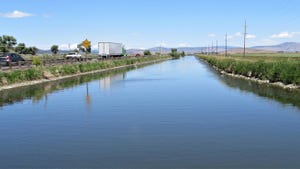
The Imperial Irrigation District (IDD) is the largest irrigation district in the nation with over 3,000 miles of canals and drains. The district delivers up to 3.1 million acre-feet of the IDD’s Colorado River entitlement to nearly one-half million irrigated acres. Agriculture utilizes about 97 percent of the water.

The IDD has announced plans to cut back available water to Imperial County in 2008. A water transfer agreement would send water to San Diego and Coachella.

The question is — how could water cutbacks impact large-scale sugarcane production?

If water reductions occurred, Batley said drip-irrigating sugarcane would be an option.

University of California Cooperative Extension Farm Advisor Juan Guerrero, an animal scientist who also conducts plant research in Imperial County, is concerned about the IDD’s announcement amid large sugarcane planting intentions.

“Water will be a limited commodity,” Guerrero said. “It hasn’t been before in Imperial County, but it will now, as it already is in many areas of California. We’re waiting on the IDD to announce who gets what. The issue is the availability of water to grow large amounts of sugarcane for ethanol. If you drip irrigate the cane, who is going to pay for the drip system?”

In addition to grain and sugarcane-based ethanol interests in the county, a company is exploring an ethanol operation utilizing cellulosic technology, Guerrero said.

“Can cellulosic be done? Yes, it can. Is it cost effective now? No — however, let the gene jockeys work to find the right enzyme cocktail. Cellulosic is so much more complex than starch. They’ll get it done.”

Early California ethanol

The first ethanol plant in California to open an ‘ethanol spigot’ went online in fall 2005 in Goshen. Started by Phoenix Bio Industries, the 30-million gallon a year plant was purchased by Los Angeles, Calif.-based AltraBiofuels Inc. in July 2006.

In fall 2006, Sacramento, Calif.-based Pacific Ethanol opened its first California plant in Madera, cooking up 40 million gallons annually from corn. The company also has a plant under construction at the Port of Stockton, San Joaquin County.

Other planned plants

AltraBiofuels plans to build a “cellulosic R&D” facility in Visalia, Calif. The company offered no further information.

Cilion is constructing a 55 million gallon, corn-based plant in Keyes, Calif., plus a proposed plant (corn) in the permit process in Famosa, Calif.

Under construction in Pixley, Calif., is a 55 million gallon corn-to-ethanol plant by Calgren Renewable Fuels.

e-mail: cblake@farmpress.com

Get Copyright ClearanceWant to use this article? Click here for options!
© 2009 Penton Media, Inc.


Latest Jobs

resources

events icon events

product info icon tradeshows

tradeshow icon digests

research icon photos

Continuing Education

Accredited for California, Arizona and CCA hours:


(New Course)
Biopesticides -- Effective Use in Pest Management Programs

Biopesticides are increasingly being recommended as components of Integrated Pest Management (IPM) programs in the production of non-organic high-value specialty crops such as fruit, nut, vegetable, vine, ornamental and turf. This online, accredited course, sponsored by Marrone Bio Innovations, details some of the 245 registered biopesticide active ingredients used in a wide array pest management products.

Accredited in California and Arizona:


(New Course)
Agronomic Principles and Efficient Chemigation and Fertigation Using Center Pivot/Linear Sprinkler Systems

This online CE course details sound mechanical irrigation design and management practices to allow efficient chemigation and fertigation. It is accredited for Certified Crop Adviser CE units and is approved for credit hours in California and Arizona.


(New Course)
Pome, Stone Fruit Pest Management Using New Mode of Action Chemistry

New chemistry Rynaxypyr has proven effective against a wide range of economically important Lepidoptera species. Marketed under the trade name Altacor for use in grapes, pome and stone fruit, details on how to use this new chemistry are in this online Continuing Education course that is accredited in California, Pennsylvania, and New Jersey with CE applications pending in Oregon and Washington.


(New Course)
Vegetable Pest Management Using New Mode of Action

Integration of a new mode of action compound like Coragen into IPM and IRM programs to control Lepidoptera in leafy greens, fruiting vegetables, peppers and brassica or cole crops is always welcome. This online CE accredited details how best to use this new mode of action in intensive vegetable production. It is accredited in California, Arizona, Texas, Georgia, New Jersey and Pennsylvania. Application for credit is pending in Florida and Washington.

Accredited by Accredited in California and Washington:


(New Course)
Utilizing Calcium as Nutrient That Protects Against Disease Organisms

This online accredited course focus on Calcium, an important plant nutrient in fertilizer management for maximum, healthy plant development as well as disease and pest prevention. It is accredited in California, Georgia,: Pennsylvania and New Jersey. Credit pending in Florida, South Carolina, Tennessee, Virginia, West Virginia and Washington.


Accredited by California DPR and California and Arizona Certified Crop Advisers:


(New Course)

Nutrient Management in Key California Crops


This online CEU course offers a detailed look at the nutrient management in key California crops. It is sponsored online by Western Plant Health Association and funded by a grant from the California Department of Food and Agriculture Fertilizer Research and Education Program (FREP). It is accredited for one (1)-hour of credit by the California Department of Pesticide Regulation for California Pest Control Advisers (PCA), Private Applicators, Qualified Applicators and Aerial Applicators. The course is also accredited for 3 units in Nutrient Management (NM) for California and Arizona Certified Crop Advisers (CCAs).

Accredited in California, Arizona, Idaho, Oregon and Washington and for Certified Crop Advisers:


(New Course)
Organic/Sustainable Agricultural Production in the West

Organic/sustainable agriculture is expanding rapidly in the U.S. with an average annual increase of 20% during the last 15 years. This course covers a wide range of pests and organic control strategies. It is accredited for up to 4 continuing education hours for PCAs and Applicator Licensees in California, Arizona, Idaho, Oregon and Washington. It is also approved for Certified Crop Adviser credit.


ACCREDITED IN CALIFORNIA ONLY:


Almond Pest Management

Get the latest info on almond insect pest management and earn 2 hrs. CE DPR and CCA credit in California.

California Groundwater Protection Regulations

Earn 2 hrs. in California laws and regs CE and learn how to protect California groundwater supplies.


Disease Management in California Almonds

Managing diseases in California almond production is a year-long process. This course provides the latest information on controlling these diseases with management practices and fungicides. The course is approved for 2 CEUs by DPR for PCAs and all applicator categories and California CCAs.

Powdery Mildew Control in California Grapevines

Learn about the No. 1 grape disease in California; earn 2 California CE hours.

ACCREDITED IN CALIFORNIA AND ARIZONA:


The Role of Copper in Disease Control

Copper has long been a key tool in disease control in a many crops. This 2-CEU course accredited California PCAs and all DPR applicator categories and Arizona applicators details how best to use copper to maximize its potential.

Insecticide Resistance Management in Agronomic and Row Crops

A 3-hr. CE approved for California and Arizona licensees and CCAs in both states.

Agronomic Weed Resistance Management in Row Crops, Trees Nuts and Vines

Weeds Resistance Management is approved for 3 hours of CE credit for all California and Arizona licensees and Certified Crop Advisers.

Lepidopterous Pest Management/ Pesticide Safety

This course is approved for 2 hours in Arizona and California (1 hr. of laws/regs; 1 hour Other) and for CCAs.

ACCREDITED IN CALIFORNIA, ARIZONA, OREGON, AND WASHINGTON:

Managing Spray Drift to Minimize Problems

This online CEU on managing spray drift to minimize problems is accredited for 2-hours in California (Laws and Regs); Arizona, Oregon and Washington.

Back to Top

Browse Print Issues

Additional Resources

subscribe to Farm Press Daily Southeast Farm Press Southwest Farm Press Delta Farm Press