DPR has little choice but to move ahead with fumigant reductions

Aug 24, 2007 4:16 PM, By Richard Cornett
WPHA Communications Director

The debate swirling around California’s plans to limit the amount of fumigants used on farm fields continues to gain momentum, with industry experts arguing that reductions will make little difference to the state’s air quality. State officials are countering that they are under court order to make it happen by the end of this year.

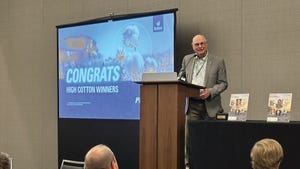
The latest round of talks on fumigant emissions took place recently during a day and a half regulatory conference hosted by Western Plant Health Association (WPHA). Speakers were featured from the California Department of Pesticide Regulation (DPR), industry and university experts, as well as keynote speaker George Gomes, undersecretary of the California Department of Food and Agriculture.

The conference included various panel discussions on everything from the pyrethroid reevaluation and groundwater issues, to the enforcement of pesticide laws and Proposition 65. However, the bulk of discussions continued to focus on proposed DPR rules that have the potential of removing thousands of acres of cropland from production, leading to scores of job losses — with millions of dollars in farming revenue hanging in the balance.

“Everybody had an idea of what somebody else should be doing to help solve air quality problems, but nobody wanted to impact themselves, so they said others should be dealing with it,” DPR’s assistant director Jerry Campbell told the crowd of 100. “There is still a lot of resistance and a lot of denial, but the fact is that it is a little late in the process to keep asking for better data or better science. We know some of the science we’re basing our VOC (volatile organic compound) regulations on is not the standard that we normally would operate on, and the standard we feel proud of in California, but we’ve got to move forward. It’s time we do our fair share; we all knew this day was coming.”

During his comments — in which Campbell honestly admitted “it is not the best work we (DPR) have ever done” because of the time constraints posed by the court order — industry representatives listened attentively as Campbell stated that caps will indeed be placed on the usage of pest-killing soil fumigants, which contribute to smog. These new rules require a 20 percent emissions reduction in three regions of California by Jan. 1, 2008: Ventura County, the San Joaquin Valley and the southeast desert.

July’s WPHA regulatory conference followed on the heels of two DPR public hearings in Ontario and Parlier to weigh the pros and cons of the new proposals. The feedback gathered from these meetings is now under DPR review and a final public comment period will be offered in the following weeks before the new rules go into effect.

No one seems happy with DPR’s proposals — not the farm workers, environmentalists, or fumigant manufacturers, and certainly not farmers.

“We’ve known for about 20 years that eventually agriculture was going to have to step up and do something in this state,” Campbell continued, noting that the San Joaquin Valley is so smoggy most of the year that its mountain ranges disappear from view. “Some blame it on cars and trucks. Well, basically, the car issue has been addressed and all the low hanging fruit has been picked.” He said that about 66 tons of emissions per day come from vehicles in the valley. Another 16 percent is due to petroleum production and livestock waste. He added that for decades agriculture has enjoyed “a free ride” in not dealing with air issues. “California is always on the leading edge — which is frequently the bleeding edge — particularly on air repair challenges, and we’re going to move forward whether we like it or not.”

CDFA Undersecretary Gomes, who spoke at the end of the conference, added that producing crops in California not only requires clean air, but a bountiful supply of water. He said he is actively involved with Gov. Arnold Schwarzenegger in promoting to state lawmakers and voters the governor’s $5.9 billion water works package, that includes $4.5 billion for two new reservoirs.

“Literally, 25 million people today, out of 36 million people living in California, depend on the water passing through the Sacramento-San Joaquin Delta. We are only an earthquake, or a storm, or flood away from having that lost. I am so pleased that the governor has taken the leadership in this regard,” Gomes said. “We have a unique opportunity now to get a fix on the Delta and get some additional water supplies.”

The undersecretary noted that with 60 million people projected to be living in California by 2050, the state is under enormous pressure to improve air quality and water supplies, and to keep on top of research that benefits agriculture and its farmers and consumers. He pointed to the farm bill that is currently under review by Congress. The far-reaching farm bill, agreed upon by the House, allocates some $1.6 billion to specialty crops over the next five years. The money would pay for research, block grants, federal purchases, and conservation.

“We know that California produces half of this nation’s fruits, nuts and vegetables,” he said. “What is important in specialty crops is the concern about public health over the early onset of childhood obesity and diabetes. The solution is more fruits and vegetables in the diet. And if California produces half of this supply, than that means California is integral to the health of this nation. If we didn’t have this domestic supply we would have to get this food from foreign countries like we do foreign oil. I hope this is not the public policy direction we want to go.”

A principal concern of Gomes’ is global warming, and he fears it’s a serious threat to California agriculture. “Climate change is a buzzword that has been around for a long time but it is a reality now, not only as it pertains to California, but the U.S. and worldwide. So are we going to ignore it or try to prepare to cope with it?”

He suggested that audience members request that their companies fund additional research into global warming so that agriculture nationwide can thrive, and California can maintain its title of being the breadbasket of America.

“I always remind my colleagues that the prevailing wind always blows from the West to the East. So, if you like the cool breezes that come across your states, keep in mind there are political factors, there’s science, there’s research and those things that are happening in California will reach your state at some point,” he said. “So, help us get the research funds that we need to do what has to be done.”

Get Copyright ClearanceWant to use this article? Click here for options!
© 2009 Penton Media, Inc.


Latest Jobs

resources

events icon events

product info icon tradeshows

tradeshow icon digests

research icon photos

Continuing Education

Accredited for California, Arizona and CCA hours:


(New Course)
Biopesticides -- Effective Use in Pest Management Programs

Biopesticides are increasingly being recommended as components of Integrated Pest Management (IPM) programs in the production of non-organic high-value specialty crops such as fruit, nut, vegetable, vine, ornamental and turf. This online, accredited course, sponsored by Marrone Bio Innovations, details some of the 245 registered biopesticide active ingredients used in a wide array pest management products.

Accredited in California and Arizona:


(New Course)
Agronomic Principles and Efficient Chemigation and Fertigation Using Center Pivot/Linear Sprinkler Systems

This online CE course details sound mechanical irrigation design and management practices to allow efficient chemigation and fertigation. It is accredited for Certified Crop Adviser CE units and is approved for credit hours in California and Arizona.


(New Course)
Pome, Stone Fruit Pest Management Using New Mode of Action Chemistry

New chemistry Rynaxypyr has proven effective against a wide range of economically important Lepidoptera species. Marketed under the trade name Altacor for use in grapes, pome and stone fruit, details on how to use this new chemistry are in this online Continuing Education course that is accredited in California, Pennsylvania, and New Jersey with CE applications pending in Oregon and Washington.


(New Course)
Vegetable Pest Management Using New Mode of Action

Integration of a new mode of action compound like Coragen into IPM and IRM programs to control Lepidoptera in leafy greens, fruiting vegetables, peppers and brassica or cole crops is always welcome. This online CE accredited details how best to use this new mode of action in intensive vegetable production. It is accredited in California, Arizona, Texas, Georgia, New Jersey and Pennsylvania. Application for credit is pending in Florida and Washington.

Accredited by Accredited in California and Washington:


(New Course)
Utilizing Calcium as Nutrient That Protects Against Disease Organisms

This online accredited course focus on Calcium, an important plant nutrient in fertilizer management for maximum, healthy plant development as well as disease and pest prevention. It is accredited in California, Georgia,: Pennsylvania and New Jersey. Credit pending in Florida, South Carolina, Tennessee, Virginia, West Virginia and Washington.


Accredited by California DPR and California and Arizona Certified Crop Advisers:


(New Course)

Nutrient Management in Key California Crops


This online CEU course offers a detailed look at the nutrient management in key California crops. It is sponsored online by Western Plant Health Association and funded by a grant from the California Department of Food and Agriculture Fertilizer Research and Education Program (FREP). It is accredited for one (1)-hour of credit by the California Department of Pesticide Regulation for California Pest Control Advisers (PCA), Private Applicators, Qualified Applicators and Aerial Applicators. The course is also accredited for 3 units in Nutrient Management (NM) for California and Arizona Certified Crop Advisers (CCAs).

Accredited in California, Arizona, Idaho, Oregon and Washington and for Certified Crop Advisers:


(New Course)
Organic/Sustainable Agricultural Production in the West

Organic/sustainable agriculture is expanding rapidly in the U.S. with an average annual increase of 20% during the last 15 years. This course covers a wide range of pests and organic control strategies. It is accredited for up to 4 continuing education hours for PCAs and Applicator Licensees in California, Arizona, Idaho, Oregon and Washington. It is also approved for Certified Crop Adviser credit.


ACCREDITED IN CALIFORNIA ONLY:


Almond Pest Management

Get the latest info on almond insect pest management and earn 2 hrs. CE DPR and CCA credit in California.

California Groundwater Protection Regulations

Earn 2 hrs. in California laws and regs CE and learn how to protect California groundwater supplies.


Disease Management in California Almonds

Managing diseases in California almond production is a year-long process. This course provides the latest information on controlling these diseases with management practices and fungicides. The course is approved for 2 CEUs by DPR for PCAs and all applicator categories and California CCAs.

Powdery Mildew Control in California Grapevines

Learn about the No. 1 grape disease in California; earn 2 California CE hours.

ACCREDITED IN CALIFORNIA AND ARIZONA:


The Role of Copper in Disease Control

Copper has long been a key tool in disease control in a many crops. This 2-CEU course accredited California PCAs and all DPR applicator categories and Arizona applicators details how best to use copper to maximize its potential.

Insecticide Resistance Management in Agronomic and Row Crops

A 3-hr. CE approved for California and Arizona licensees and CCAs in both states.

Agronomic Weed Resistance Management in Row Crops, Trees Nuts and Vines

Weeds Resistance Management is approved for 3 hours of CE credit for all California and Arizona licensees and Certified Crop Advisers.

Lepidopterous Pest Management/ Pesticide Safety

This course is approved for 2 hours in Arizona and California (1 hr. of laws/regs; 1 hour Other) and for CCAs.

ACCREDITED IN CALIFORNIA, ARIZONA, OREGON, AND WASHINGTON:

Managing Spray Drift to Minimize Problems

This online CEU on managing spray drift to minimize problems is accredited for 2-hours in California (Laws and Regs); Arizona, Oregon and Washington.

Back to Top

Browse Print Issues

Additional Resources

subscribe to Farm Press Daily Southeast Farm Press Southwest Farm Press Delta Farm Press