Pyrethroid reevaluation will reach far beyond California

Aug 23, 2007 6:20 PM, By Harry Cline
Farm Press Editorial Staff

Fair warning American agriculture: When California leads, the nation bleeds.

Golden State regulators are in the beginning stages of the most extensive pesticide reevaluation in the state’s history. It focuses on widely used pyrethroid pesticides. It will impact the use of the pesticide class — not only in California, but nationwide, where it has been used for more than three decades without any major biological/environmental impact until now.

The California Department of Pesticide Regulations placed 20 synthetic pyrethroids in 608 products from 123 registrants under review, after the active ingredient was discovered in sediments — not the water — of California urban and rural waterways.

It has been detected bound to sediments at levels toxic to a quarter-inch-long crustacean, Hyalella azteca, which is common in aquatic systems, and is used by scientists as an indicator of environmental health and water quality in streams and lakes.

The levels were very high in coastal sediment analysis, according to Parry Klassen, executive director of the Coalition for Urban/Rural Environmental Stewardship (CURES). In one sample, the level of permethrin was 159 times higher than the proposed sediment objective of 1 ppb, Klassen said at the recent Western Plant Health Association (WPHA) regulatory conference in Sacramento.

The reevaluation, that likely will lead to at least revised labels, includes some of the most commonly used agricultural pesticides: Capture, Brigade, Baythroid, Karate, Warrior, Ammo, Decis, Danitol, Asana, Pounce, Ambush, Scout, and Fury.

That is the bad news. The good news is that it may take five or six years to finish the required testing and come up with any mitigating labeling, according to Jim Wells, former DPR director who is now with Environmental Solutions Group, a Sacramento consulting service.

Wells is the point person on the West Coast for the Pyrethroid Working Group (PWG), a nationwide task force of pyrethroid registrants. PWG was formed eight years ago to track and evaluate pyrethroid use issues.

DPR placed the group of pyrethroids into reevaluation about a year ago. Pyrethroids are synthetic insecticides. Pyrethrins, which are natural insecticides, are found in Chrysanthemum cinerariaefolium, a perennial plant with a daisy-like appearance. DPR did not include pesticide products containing naturally occurring pyrethrins in this reevaluation because pyrethrins are known to break down rapidly in the environment.

While registrants agree that residues have been found, Wells said registrants said the relevance of those finds and the problem are not well defined.

“We know a lot about ag use of pyrethroids, but we do not know nearly as much about urban use,” said Wells. There is a wide array of non-agricultural labels.”

It also will be important to determine how the pyrethroids attached themselves to the sediments. Was it normal use or improper use and disposal, Wells questioned. This will be part of the reevaluation study process.

Bill Chase, an entomologist with McLaughlin Gormley King Company, basic manufacturer of pyrethrins, said he was surprised by the biological toxicity findings of a product that has been on the market for more than three decades.

“When we face challenges like this (reevaluation), we learn a lot more about a product than we already knew. We already know a lot about these products, but we could learn more,” Chase said.

John Sanders, chief of the DPR monitoring branch, told the WPHA conference that the focus of the reevaluation process will be to determine how the compounds move in the sediments, and what the best ways to mitigate this movement are.

Sanders admits the pyrethroid reevaluation is a “hot button issue.” However, he said it’s “not on any fast track. We want to give registrants plenty of time to get data in.” Sanders estimates it will take two to three years for data from studies to come in.

While the regulators and registrants work through the pyrethroid reevaluation, agriculture is being proactive in mitigating sediment movement off farms through programs like CURES.

The focus on pyrethroid stewardship is similar to other pesticide stewardship issues; minimizing off-target movement of pesticides through decreasing or eliminating sediment transport, and managing drift through setbacks and buffers between sensitive areas being treated.

Some other CURES management practices to reduce sediment deposition in waterways include:

•Improving irrigation scheduling.

•Using polyacrylamide (PAM) in irrigation water to reduce runoff.

•Creating basins for water and sediment runoff.

•Building tailwater return systems.

•Using low-pressure drip irrigation or micro sprinklers.

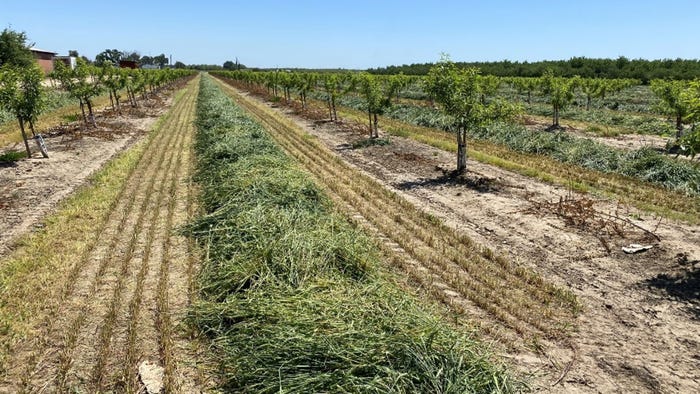
•Letting grasses grow in ditches to catch sediments before they get into waterways.

•Circulating drain water through vegetated ditches of field areas.

•Circulating drain water through constructed wetlands.

Klassen said failure to keep pyrethroids out of waterways could result in the loss of products in high-risk areas, creation of mandatory buffers, additional harsh restrictions, and even elimination of the use of these compounds.

It is an issue that will reach far beyond the agricultural fields in California.

e-mail: hcline@farmpress.com

Get Copyright ClearanceWant to use this article? Click here for options!
© 2009 Penton Media, Inc.


Latest Jobs

resources

events icon events

product info icon tradeshows

tradeshow icon digests

research icon photos

Continuing Education

Accredited for California, Arizona and CCA hours:


(New Course)
Biopesticides -- Effective Use in Pest Management Programs

Biopesticides are increasingly being recommended as components of Integrated Pest Management (IPM) programs in the production of non-organic high-value specialty crops such as fruit, nut, vegetable, vine, ornamental and turf. This online, accredited course, sponsored by Marrone Bio Innovations, details some of the 245 registered biopesticide active ingredients used in a wide array pest management products.

Accredited in California and Arizona:


(New Course)
Agronomic Principles and Efficient Chemigation and Fertigation Using Center Pivot/Linear Sprinkler Systems

This online CE course details sound mechanical irrigation design and management practices to allow efficient chemigation and fertigation. It is accredited for Certified Crop Adviser CE units and is approved for credit hours in California and Arizona.


(New Course)
Pome, Stone Fruit Pest Management Using New Mode of Action Chemistry

New chemistry Rynaxypyr has proven effective against a wide range of economically important Lepidoptera species. Marketed under the trade name Altacor for use in grapes, pome and stone fruit, details on how to use this new chemistry are in this online Continuing Education course that is accredited in California, Pennsylvania, and New Jersey with CE applications pending in Oregon and Washington.


(New Course)
Vegetable Pest Management Using New Mode of Action

Integration of a new mode of action compound like Coragen into IPM and IRM programs to control Lepidoptera in leafy greens, fruiting vegetables, peppers and brassica or cole crops is always welcome. This online CE accredited details how best to use this new mode of action in intensive vegetable production. It is accredited in California, Arizona, Texas, Georgia, New Jersey and Pennsylvania. Application for credit is pending in Florida and Washington.

Accredited by Accredited in California and Washington:


(New Course)
Utilizing Calcium as Nutrient That Protects Against Disease Organisms

This online accredited course focus on Calcium, an important plant nutrient in fertilizer management for maximum, healthy plant development as well as disease and pest prevention. It is accredited in California, Georgia,: Pennsylvania and New Jersey. Credit pending in Florida, South Carolina, Tennessee, Virginia, West Virginia and Washington.


Accredited by California DPR and California and Arizona Certified Crop Advisers:


(New Course)

Nutrient Management in Key California Crops


This online CEU course offers a detailed look at the nutrient management in key California crops. It is sponsored online by Western Plant Health Association and funded by a grant from the California Department of Food and Agriculture Fertilizer Research and Education Program (FREP). It is accredited for one (1)-hour of credit by the California Department of Pesticide Regulation for California Pest Control Advisers (PCA), Private Applicators, Qualified Applicators and Aerial Applicators. The course is also accredited for 3 units in Nutrient Management (NM) for California and Arizona Certified Crop Advisers (CCAs).

Accredited in California, Arizona, Idaho, Oregon and Washington and for Certified Crop Advisers:


(New Course)
Organic/Sustainable Agricultural Production in the West

Organic/sustainable agriculture is expanding rapidly in the U.S. with an average annual increase of 20% during the last 15 years. This course covers a wide range of pests and organic control strategies. It is accredited for up to 4 continuing education hours for PCAs and Applicator Licensees in California, Arizona, Idaho, Oregon and Washington. It is also approved for Certified Crop Adviser credit.


ACCREDITED IN CALIFORNIA ONLY:


Almond Pest Management

Get the latest info on almond insect pest management and earn 2 hrs. CE DPR and CCA credit in California.

California Groundwater Protection Regulations

Earn 2 hrs. in California laws and regs CE and learn how to protect California groundwater supplies.


Disease Management in California Almonds

Managing diseases in California almond production is a year-long process. This course provides the latest information on controlling these diseases with management practices and fungicides. The course is approved for 2 CEUs by DPR for PCAs and all applicator categories and California CCAs.

Powdery Mildew Control in California Grapevines

Learn about the No. 1 grape disease in California; earn 2 California CE hours.

ACCREDITED IN CALIFORNIA AND ARIZONA:


The Role of Copper in Disease Control

Copper has long been a key tool in disease control in a many crops. This 2-CEU course accredited California PCAs and all DPR applicator categories and Arizona applicators details how best to use copper to maximize its potential.

Insecticide Resistance Management in Agronomic and Row Crops

A 3-hr. CE approved for California and Arizona licensees and CCAs in both states.

Agronomic Weed Resistance Management in Row Crops, Trees Nuts and Vines

Weeds Resistance Management is approved for 3 hours of CE credit for all California and Arizona licensees and Certified Crop Advisers.

Lepidopterous Pest Management/ Pesticide Safety

This course is approved for 2 hours in Arizona and California (1 hr. of laws/regs; 1 hour Other) and for CCAs.

ACCREDITED IN CALIFORNIA, ARIZONA, OREGON, AND WASHINGTON:

Managing Spray Drift to Minimize Problems

This online CEU on managing spray drift to minimize problems is accredited for 2-hours in California (Laws and Regs); Arizona, Oregon and Washington.

Back to Top

Browse Print Issues

Additional Resources

subscribe to Farm Press Daily Southeast Farm Press Southwest Farm Press Delta Farm Press