Simple steps can reduce almond harvest dust

Aug 6, 2007 11:29 AM, By Gabriele Ludwig
Senior Manager, Global Technical & Regulatory Affairs Almond Board of California

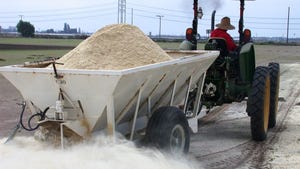
Mounting air quality regulations and pressure from urban neighbors in the San Joaquin Valley continue to place pressure on growers to find ways to reduce the amount of dust and fine particulates emitted from their farming operations.

The valley has been in narrow compliance with federal PM10 (particulates 10 microns or less in size) standards in recent years. While the ag industry can certainly feel good about the voluntary efforts they are making to help meet PM10 standards, growers still need to pay attention to dust, and find ways to further reduce their emissions at harvest.

For the past four years, the Almond Board of California and its Environmental Committee has been supporting research to help better understand and reduce PM10 dust emissions during almond harvest.

A careful look at the different stages of almond harvest by Dr. Robert Flocchini, professor of Meteorology and Resource Science and director of the Crocker Nuclear Lab, and Teresa Cassel, Crocker Nuclear Lab, both of University of California (UC), Davis, and more recently by Dr. Sergio Capareda, assistant professor, Biological and Agricultural Engineering Dept., Texas A&M University, reveals that pickup at harvesting emits the most PM10 dust, followed by sweeping and then shaking.

Pickup machines typically emit four times more dust than sweeping, which is about 10 times dustier than shaking. As a result, research efforts have focused more on reducing dust emissions from pickup and sweeping.

Two other UC Davis researchers, Dr. Dan Downey, assistant research engineer, and Dr. Ken Giles, professor, Dept. of Biological and Agricultural Engineering, have measured relative amounts of dust from sweepers and pickup machines with various setups.

As a result of these research efforts, insights and recommendations are now available that allow growers to reduce harvest dust, particularly in sweeping and harvest pickup, without having to purchase new equipment or significantly change their operations. Here are a few examples of what we have learned, and some of the practices growers have adopted:

· Set sweeper heads to optimum level. Research shows that sweeper heads set 0.5 inches below optimum levels substantially increased the dust released by the sweepers through contact with the soil surface. Heads set too low can also nearly double the dust released by the harvester.

· Reduce blower passes where possible. Making three blower passes doubled the amount of dust released from the orchard during harvest, compared to making a single blower pass.

· Use wire tines on sweeper heads. Sweepers with wire tines significantly reduce dust emitted compared to those with rubber sweeper head parts.

· Reduce pickup machine speed. Slower pickup speeds of 1.5 mph cut dust emissions by 50 percent compared to speeds of 3 mph.

· Lower separator fan speed. Reduce separator fan speeds to the extent possible.

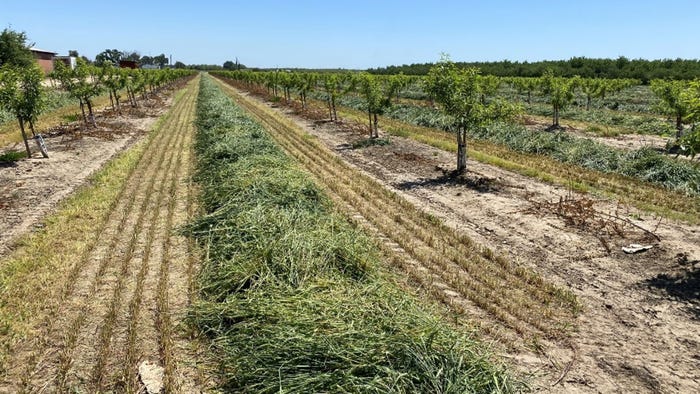
· Maintain a clean orchard floor. In almost all these cases, a well-prepared orchard floor prior to harvest will reduce dust produced, and provide an orchard more conducive to each of the previously mentioned steps.

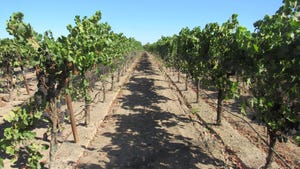
Keep in mind that orchard canopies often act as filters for dust. As a result, as with pesticide spray drift, dust emissions are more likely at the ends of rows during turnarounds and near the edges of orchards.

Paying attention to dust emissions at harvest not only helps promote good air quality, but can also impact food safety. If there does happen to be a pathogen in the orchard, reducing dust helps reduce the chances that pathogen will move around.

Get Copyright ClearanceWant to use this article? Click here for options!
© 2009 Penton Media, Inc.


Latest Jobs

resources

events icon events

product info icon tradeshows

tradeshow icon digests

research icon photos

Continuing Education

Accredited for California, Arizona and CCA hours:


(New Course)
Biopesticides -- Effective Use in Pest Management Programs

Biopesticides are increasingly being recommended as components of Integrated Pest Management (IPM) programs in the production of non-organic high-value specialty crops such as fruit, nut, vegetable, vine, ornamental and turf. This online, accredited course, sponsored by Marrone Bio Innovations, details some of the 245 registered biopesticide active ingredients used in a wide array pest management products.

Accredited in California and Arizona:


(New Course)
Agronomic Principles and Efficient Chemigation and Fertigation Using Center Pivot/Linear Sprinkler Systems

This online CE course details sound mechanical irrigation design and management practices to allow efficient chemigation and fertigation. It is accredited for Certified Crop Adviser CE units and is approved for credit hours in California and Arizona.


(New Course)
Pome, Stone Fruit Pest Management Using New Mode of Action Chemistry

New chemistry Rynaxypyr has proven effective against a wide range of economically important Lepidoptera species. Marketed under the trade name Altacor for use in grapes, pome and stone fruit, details on how to use this new chemistry are in this online Continuing Education course that is accredited in California, Pennsylvania, and New Jersey with CE applications pending in Oregon and Washington.


(New Course)
Vegetable Pest Management Using New Mode of Action

Integration of a new mode of action compound like Coragen into IPM and IRM programs to control Lepidoptera in leafy greens, fruiting vegetables, peppers and brassica or cole crops is always welcome. This online CE accredited details how best to use this new mode of action in intensive vegetable production. It is accredited in California, Arizona, Texas, Georgia, New Jersey and Pennsylvania. Application for credit is pending in Florida and Washington.

Accredited by Accredited in California and Washington:


(New Course)
Utilizing Calcium as Nutrient That Protects Against Disease Organisms

This online accredited course focus on Calcium, an important plant nutrient in fertilizer management for maximum, healthy plant development as well as disease and pest prevention. It is accredited in California, Georgia,: Pennsylvania and New Jersey. Credit pending in Florida, South Carolina, Tennessee, Virginia, West Virginia and Washington.


Accredited by California DPR and California and Arizona Certified Crop Advisers:


(New Course)

Nutrient Management in Key California Crops


This online CEU course offers a detailed look at the nutrient management in key California crops. It is sponsored online by Western Plant Health Association and funded by a grant from the California Department of Food and Agriculture Fertilizer Research and Education Program (FREP). It is accredited for one (1)-hour of credit by the California Department of Pesticide Regulation for California Pest Control Advisers (PCA), Private Applicators, Qualified Applicators and Aerial Applicators. The course is also accredited for 3 units in Nutrient Management (NM) for California and Arizona Certified Crop Advisers (CCAs).

Accredited in California, Arizona, Idaho, Oregon and Washington and for Certified Crop Advisers:


(New Course)
Organic/Sustainable Agricultural Production in the West

Organic/sustainable agriculture is expanding rapidly in the U.S. with an average annual increase of 20% during the last 15 years. This course covers a wide range of pests and organic control strategies. It is accredited for up to 4 continuing education hours for PCAs and Applicator Licensees in California, Arizona, Idaho, Oregon and Washington. It is also approved for Certified Crop Adviser credit.


ACCREDITED IN CALIFORNIA ONLY:


Almond Pest Management

Get the latest info on almond insect pest management and earn 2 hrs. CE DPR and CCA credit in California.

California Groundwater Protection Regulations

Earn 2 hrs. in California laws and regs CE and learn how to protect California groundwater supplies.


Disease Management in California Almonds

Managing diseases in California almond production is a year-long process. This course provides the latest information on controlling these diseases with management practices and fungicides. The course is approved for 2 CEUs by DPR for PCAs and all applicator categories and California CCAs.

Powdery Mildew Control in California Grapevines

Learn about the No. 1 grape disease in California; earn 2 California CE hours.

ACCREDITED IN CALIFORNIA AND ARIZONA:


The Role of Copper in Disease Control

Copper has long been a key tool in disease control in a many crops. This 2-CEU course accredited California PCAs and all DPR applicator categories and Arizona applicators details how best to use copper to maximize its potential.

Insecticide Resistance Management in Agronomic and Row Crops

A 3-hr. CE approved for California and Arizona licensees and CCAs in both states.

Agronomic Weed Resistance Management in Row Crops, Trees Nuts and Vines

Weeds Resistance Management is approved for 3 hours of CE credit for all California and Arizona licensees and Certified Crop Advisers.

Lepidopterous Pest Management/ Pesticide Safety

This course is approved for 2 hours in Arizona and California (1 hr. of laws/regs; 1 hour Other) and for CCAs.

ACCREDITED IN CALIFORNIA, ARIZONA, OREGON, AND WASHINGTON:

Managing Spray Drift to Minimize Problems

This online CEU on managing spray drift to minimize problems is accredited for 2-hours in California (Laws and Regs); Arizona, Oregon and Washington.

Back to Top

Browse Print Issues

Additional Resources

subscribe to Farm Press Daily Southeast Farm Press Southwest Farm Press Delta Farm Press