Methane digester converts dairy manure to electricity

Aug 7, 2006 9:12 AM, By Dan Bryant

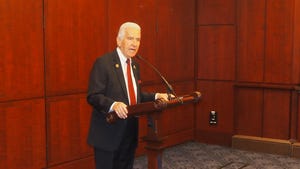
“Making electricity out of cow manure sure beats paying the utility,” says Carl Morris, general manager of Joseph Gallo Farms, a dairy and cheese processor in Atwater, Calif.

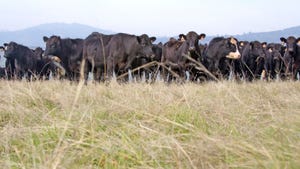
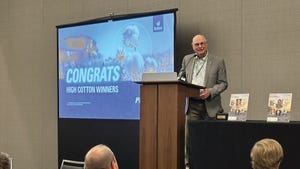
Morris explained how that can be done profitably with a methane digester in a talk before the recent forum of the California Chapter of the American Society of Farm Managers and Rural Appraisers (ASFMRA) in Visalia, Calif. The Merced County operation has 17,000 cows on five dairies and processes 900,000 pounds of milk daily. The methane digester at their 5,000-head, Cottonwood, Calif., dairy fuels an electric generator and heats steam for the cheese plant, and the wastewater from the plant enhances production of methane.

Morris said the company installed the digester system, which includes a 7-acre, 45-million-gallon lagoon, for several reasons, chiefly because of the environmental benefits of keeping greenhouse gases out of the atmosphere.

It means burning less propane and reducing emissions. Wastewater is eliminated as another environmental advantage. Joseph Gallo Farms has won several awards for its efforts in farming to preserve wildlife habitat.

But the decision was driven by economics also, and Morris predicted that methane generation will become more important in the future as dairies move into energy credits. Grants by the California Energy Commission and California Public Utilities Commission helped offset costs of the installation.

“Overall results of the project have been very good,” Morris said. “We are generating electricity and steam as planned, and with the combined savings in propane and electricity costs, we are saving about $2,000 a day in energy costs. This calculates to about a four- to five- year payback.”

Morris said the installation was challenging, and it was slowed due to a false start with some unproven technology. “There’s nothing high-tech about the system, but making it all work together in a real-world environment was quite a challenge.”

Permits from state and county air pollution authorities were required, and he said although the agencies were very cooperative, the regulations themselves are rigid.

Connecting with PG&E electrical transmission lines was a time-consuming part of the project. Some general cost estimates proved to be too low, and various delays were encountered.

Nevertheless, the obstacles were overcome, and they are planning a second digester at an adjacent dairy to provide methane as boiler fuel.

Morris advised other dairies considering methane generation to allow adequate time clearing regulatory and technical hurdles. “There are several good companies out there to help with these challenges.”

It is also important that dairies plan for using all the electricity they generate. His company consumes all it generates, but dairies that generate more than they use cannot recover the full retail cost, which includes transmission costs, of that power from a utility.

“Other uses of methane should be explored,” he said. “You could consider a methane digester as a steady cost source of a natural gas alternative.”

He recommended that any new dairy consider some sort of digester as a means of reducing energy costs.

The forum also heard from Mark Stout of Unlimited Energy in Fresno, who said renewable energy has become a priority in federal farm legislation.

He pointed to the announcement in February by Agriculture Secretary Mike Johanns of $176.5 million in loan guarantees and nearly $11.4 million in grants in support of renewable energy and related projects by farms and small businesses. But, he added, few in California seem to be aware of the funding.

Renewable energy currently provides about 10 percent of the electricity generated in the state, and about half the total amount comes from geothermal.

One renewable source with huge potential for growth, he said, is generation of electricity from biomass. “A lot of folks would like to see biomass electricity generation increased.”

A major reason is air quality legislation that increasingly restricts field burning of ag waste. Plants in the San Joaquin Valley can convert that waste into electricity with less than 5 percent of the emissions of field burning, he said.

“The existing plants are fueled largely by urban wood waste coming from highly populated regions of the state. That is crowding out the amount of agricultural waste biomass.”

There’s room for improvement, he added, brought about through new legislation to provide additional capacity to handle the wood waste plus ag waste.

Citing the Tehachapi Wind Resource Area as the largest wind energy producer in the world, Stout said landowners at higher elevation locations with plenty of wind have an opportunity to work with developers to have livestock and crops alongside wind turbines.

Under such agreements, farmers and ranchers have a 20-year payback for the equipment, but they are “basically taking the money they would have given Edison or PG&E and using it to pay an agricultural business loan for the turbines.”

On the subject of solar energy, Stout said “All that solar energy that fuels San Joaquin Valley crops can also fuel electricity generation.”

One example, he said, is the rooftop installation of solar panels to provide one megawatt of power at the packing shed of P-R Farms in Clovis. The operation received a $3.2 million rebate from PG&E.

Significant incentives for solar generation installations are available through the California Solar Initiative and federal tax credits.

The California Solar Initiative, created early this year by the Public Utilities Commission, provides $2.9 billion in rebates, on a declining scale, over a 10-year period.

Its goal is to increase the amount of installed solar capacity on rooftops in the state by 3,000 megawatts by 2017 and bring down costs of solar electricity for California consumers. The program, the largest of its kind in the United States, provides for new and existing residential, commercial and industrial properties.

Get Copyright ClearanceWant to use this article? Click here for options!
© 2008 Penton Media, Inc.


Latest Jobs

resources

events icon events

product info icon tradeshows

tradeshow icon digests

research icon photos

Continuing Education

Accredited by California DPR and California and Arizona Certified Crop Advisers:


(New Course)

Nutrient Management in Key California Crops


This online CEU course offers a detailed look at the nutrient management in key California crops. It is sponsored online by Western Plant Health Association and funded by a grant from the California Department of Food and Agriculture Fertilizer Research and Protection Program (FREP). It is accredited for one (1)-hour of credit by the California Department of Pesticide Regulation for California Pest Control Advisers (PCA), Private Applicators, Qualified Applicators and Aerial Applicators. The course is also accredited for 3 units in Nutrient Management (NM) for California and Arizona Certified Crop Advisers (CCAs).

Accredited in California, Arizona, Idaho, Oregon and Washington and for Certified Crop Advisers:


(New Course)
Organic/Sustainable Agricultural Production in the West

Organic/sustainable agriculture is expanding rapidly in the U.S. with an average annual increase of 20% during the last 15 years. This course covers a wide range of pests and organic control strategies. It is accredited for up to 4 continuing education hours for PCAs and Applicator Licensees in California, Arizona, Idaho, Oregon and Washington. It is also approved for Certified Crop Adviser credit.

ACCREDITED IN OREGON AND WASHINGTON:


(New Course)
Managing Spray Drift to Minimize Problems

This online spray drift management course has been certified by the Oregon Department of Agriculture and the Washington Department of Agriculture for 2 hours of credit for licensed Applicators and Consultants in Oregon and Washington.

ACCREDITED IN CALIFORNIA ONLY:


Almond Pest Management

Get the latest info on almond insect pest management and earn 2 hrs. CE DPR and CCA credit in California.

California Groundwater Protection Regulations

Earn 2 hrs. in California laws and regs CE and learn how to protect California groundwater supplies.


Disease Management in California Almonds

Managing diseases in California almond production is a year-long process. This course provides the latest information on controlling these diseases with management practices and fungicides. The course is approved for 2 CEUs by DPR for PCAs and all applicator categories and California CCAs.

Powdery Mildew Control in California Grapevines

Learn about the No. 1 grape disease in California; earn 2 California CE hours.

ACCREDITED IN CALIFORNIA AND ARIZONA:


The Role of Copper in Disease Control

Copper has long been a key tool in disease control in a many crops. This 2-CEU course accredited California PCAs and all DPR applicator categories and Arizona applicators details how best to use copper to maximize its potential.

Insecticide Resistance Management in Agronomic and Row Crops

A 3-hr. CE approved for California and Arizona licensees and CCAs in both states.

Agronomic Weed Resistance Management in Row Crops, Trees Nuts and Vines

Weeds Resistance Management is approved for 3 hours of CE credit for all California and Arizona licensees and Certified Crop Advisers.

Lepidopterous Pest Management/ Pesticide Safety

This course is approved for 2 hours in Arizona and California (1 hr. of laws/regs; 1 hour Other) and for CCAs.

Managing Spray Drift to Minimize Problems

2-hrs laws and regs for California licensees; 2 hours in Arizona and for CCAs.

Back to Top

Browse Print Issues

Additional Resources

subscribe to Farm Press Daily Southeast Farm Press Southwest Farm Press Delta Farm Press