Westlands Water District facing imminent water shutdown

Jun 13, 2007 10:14 AM, By Harry Cline
Farm Press Editorial Staff


Powerful California politicians and bureaucrats have, for decades, proclaimed the Sacramento-San Joaquin Delta broken and in dire need of repairs to insure that Californians in the future do not go thirsting for water and that farmers can continue to irrigate food and fiber crops.

It has taken a minnow to perhaps finally get people’s attention.

In an already short water year due to a below normal snow pack, when state and federal water projects shut down the giant pumps that move dam-stored water from Northern to Southern California to protect the Delta smelt, the tiny fish became a real-life “Jaws”.

Both the federal Central Valley Project (CVP) and the State Water Project (SWP) were shut down in late May. The state said it would be only for 7 to 10 days to minimize the minnow kill.

As of today, it has been 13 days.

It is only the third time the pumps have been shut off. The last time was in 2004, to block saltwater flows after a levee break at a Delta area known as the Jones Tract. In 1999, state officials shut the pumps for about 10 days because of endangered fish issues.

CVP, operated by the federal Bureau of Reclamation, is one of the world’s largest water storage and transport systems. Its 22 reservoirs have a combined storage of 11 million acre feet, of which 7 million acre feet are delivered in an average year. The SWP’s 20 major reservoirs can hold 5.8 million acre feet, with annual deliveries averaging up to 3 million acre feet. CVP water irrigates more than 3 million acres of farmland and provides drinking water to nearly 2 million consumers. SWP deliveries are 70 percent urban and 30 percent agriculture, meeting the needs of 23 million Californians and more than 600,000 irrigated acres, respectively.

Ironically, these Delta pumps in the post 9-11 era were considered possible terrorist targets because of their importance in supplying water to the majority of Californians.

Most of the water gathered by these two projects flows through the Delta and is lifted by massive pumps out of the Delta to flow into Southern and Central California. The pumps were shut down in late May because too many Delta smelt were being killed by the pumps.

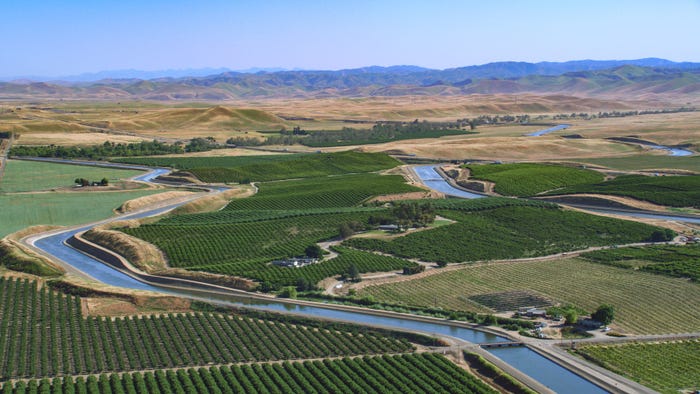
Farmers in the largest irrigation district in the nation — the 600,000-acre Westlands Water District on the West Side of the San Joaquin Valley — will learn this morning just how much damage the minnow may inflict on their farming operations.

The Westlands board is holding a special meeting at the district’s offices near Five Points. A big crowd is expected to learn what water supplies they can expect over the next 30 to 90 days, the peak of the irrigation season.

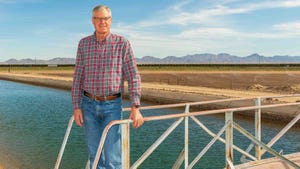
When the state shut down the pumps in late May to protect the endangered species smelt, Kings County, Calif., farmer Ted Sheely says he felt sick in his stomach.

The full extent of it became apparent a week later when the Westlands water policy committee met. Sheely is a member of that committee.

“When I learned about what the pumps shutdowns meant to Westlands farmers, I knew why I felt sick,” he says.

Unless the pumps are turned on immediately, Westlands will run out of water in less than a month. Such a crisis could not come at a worst time — this week temperatures are expected to top 100 degrees for the first time this season, placing high summertime water demands on Westlands crops.

“The past 10 days, after we learned the pumps were shut down, have been chaos on the West Side,” says Sheely, who has contacted his insurance agent to see if he can afford to abandon 450 acres of cotton in order to use the water scheduled for cotton to bring his pistachios and other permanent crops to harvest.

Westland growers already knew water deliveries would be short this year due to a sparse snow pack in the Sierra Nevada. Shutting down the SWP and CVP pumps has only exasperated a bad situation.

As a Westlands board member, Sheely expects to hear today from the Bureau of Reclamation exactly what the water situation will be. It all centers on the San Luis Reservoir near Los Banos, a major storage reservoir for the CVP south of the Delta, and a holding reservoir for delivering water to the valley and Southern California.

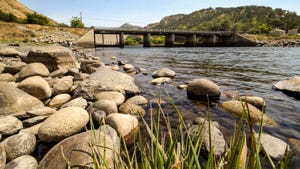
With the pumps shut off, San Luis’ water level started falling like a rock tossed off Glacier Point in Yosemite. San Luis has a capacity of more than 2 million acre feet; today, it contains only about 800,000 acre feet.

Cities, as well as farmers, take water from the reservoir. It is reaching a critical level, where the intake for South Bay cities would not be able to pick up water.

Birmingham says basically, there is a 25-day supply of Westlands Water District water in the reservoir without replenishment from Delta pumps.

Sheely is considering asking the board to allocate that water so everyone will receive at least water from the reservoir.

“As a director, I cannot allow Westlands to reach zero water supply,” he says. “We have never had to face this issue in Westlands since I began farming here in 1974.”

Birmingham said Westlands has allocated water above the Delta it cannot receive. It also has access to surplus water that growers and others in Northern California are willing to sell to SJV farmers. That water is stranded in the north of the state by the pumps shutdown.

“We’ve received requests from our growers to secure 120,000 acre feet of water, and we have acquired 56,000 acre feet south of the Delta,” Birmingham says. “There is about 50,000 acre feet available north of the Delta that we can’t get.”

Even if the large pumps started up today, the district’s general manager says that, going full bore, they can only divert water south that is already allocated. “We couldn’t get the surplus water we want to buy until it would be too late for this year’s crops.”

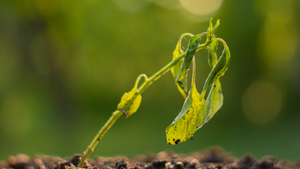
Water shortages have become a way of life in the central valley as courts and the weather continually short farmers. What is making it much more critical this season is that an estimated 25 percent of Westlands is in permanent crops, which must have water to survive since it doesn’t rain in the summer in the valley. Row crops can be water-shorted, but permanent crops cannot — which is why growers are abandoning crops like cotton and alfalfa so they will have water to keep orchards and vineyards alive.

Birmingham says cotton and other crops have already been abandoned or disked under. Growers also are planning to cut off water to summer alfalfa and not harvest it in order to save water for permanent crops.

Many growers have deep wells, but well water is expensive to pump and the quality often is too poor for crops. Many wells are high in boron; almonds, the largest acreage permanent crop on the West Side, cannot tolerate high boron levels.

“If growers are faced with a choice of no water for trees or water with boron for trees, I expect they’ll take the water with boron,” says Sheely. Pistachios do better on poor quality water than almonds and other crops.

One clue that the water crisis has reached the desperate level is a water auction held last Friday for 100 acre feet of surplus water. It went for $510 per acre foot, a figure that sent shock waves through Westlands and the rest of the state.

Birmingham calls the $510 price “an anomaly.” But it has not been uncommon for growers and water districts to buy water from those willing to sell this season, paying more than $200 per acre foot.

“I guarantee you that $500 water didn’t go for cotton,” Sheely says. “But when you’re looking at a 4,000 pound pistachio crop that needs some incremental water to finish the year, I’d spend $500 in a heartbeat if I needed that water to make a pistachio crop.”

email: hcline@farmpress.com

Get Copyright ClearanceWant to use this article? Click here for options!
© 2008 Penton Media, Inc.


Latest Jobs

resources

events icon events

product info icon tradeshows

tradeshow icon digests

research icon photos

Continuing Education

ACCREDITED IN CALIFORNIA ONLY:


Almond Pest Management

Get the latest info on almond insect pest management and earn 2 hrs. CE DPR and CCA credit in California.

California Groundwater Protection Regulations

Earn 2 hrs. in California laws and regs CE and learn how to protect California groundwater supplies.

(New Course)
Disease Management in California Almonds

Managing diseases in California almond production is a year-long process. This course provides the latest information on controlling these diseases with management practices and fungicides. The course is approved for 2 CEUs by DPR for PCAs and all applicator categories and California CCAs.

Powdery Mildew Control in California Grapevines

Learn about the No. 1 grape disease in California; earn 2 California CE hours.

ACCREDITED IN CALIFORNIA AND ARIZONA:


Insecticide Resistance Management in Agronomic and Row Crops

A 3-hr. CE approved for California and Arizona licensees and CCAs in both states.

Agronomic Weed Resistance Management in Row Crops, Trees Nuts and Vines

Weeds Resistance Management is approved for 3 hours of CE credit for all California and Arizona licensees and Certified Crop Advisers.

Lepidopterous Pest Management/ Pesticide Safety

This course is approved for 2 hours in Arizona and California (1 hr. of laws/regs; 1 hour Other) and for CCAs.

Managing Spray Drift to Minimize Problems

2-hrs laws and regs for California licensees; 2 hours in Arizona and for CCAs.

(New Course)
The Role of Copper in Disease Control

Copper has long been a key tool in disease control in a many crops. This 2-CEU course accredited California PCAs and all DPR applicator categories and Arizona applicators details how best to use copper to maximize its potential.

Back to Top

Browse Print Issues

Additional Resources

subscribe to Farm Press Daily Southeast Farm Press Southwest Farm Press Delta Farm Press