Railroad though Yuma farm fields could drive a nail into agriculture’s side

Jun 7, 2007 10:33 AM, By Cary Blake
Farm Press Editorial Staff

Yuma, Ariz., farmers should exhale a small but short-lived sigh of relief over the news from Union Pacific that the railroad has backed off its initial plans to jointly bid with the Hutchinson Port Authority on a proposed port and rail line at Punta Colonet, Baja Calif., Mexico.

The proposed gargantuan-sized port would, in part, import foreign-made goods for distribution by rail to stores across the United States.

While Union Pacific had originally planned to bid on the railroad puzzle piece, the railroad focused, in part, on potential routes from Mexico into the U.S. through Yuma, Ariz.

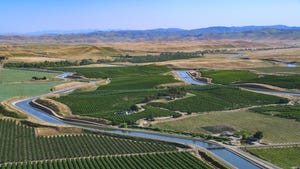
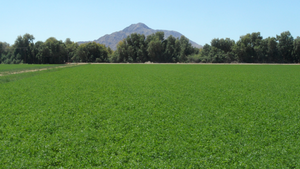
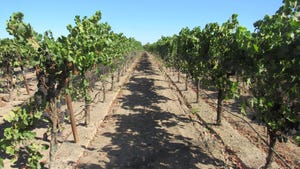
Unfortunately, among the considered steel paths was prized farm ground, where an estimated 85 percent to 90 percent of the nation’s supply of winter vegetables for salad and other crops are grown on 75,000 to 80,000 acres.

Due to Yuma’s close proximity to the Mexican border, trains would likely not be allowed to travel less than 15 miles per hour because of the illegal immigration factor, thus negating the opportunity to load locally-grown farm products on train cars for U.S. and export destinations.

Yuma farmers should nap with one-eye-open, as Union Pacific is still open to possible project involvement.

Some estimates put the total economic value of Yuma agriculture at around $3 billion, roughly a third of Arizona agriculture’s $9.2 billion industry. Yet the price tag fades beside the green gazillion dollars that Union Pacific or other rail suitors could take to the bank in profits from moving Chinese imports through Punta Colonet and Yuma to stores dotting the 50 states.

Railroads helped build America, and to this day remain the most economically viable and sensible transportation nationwide. Moving products by rail across the West makes more sense than movement by semi-truck.

But in these days of profits first and mega-mergers to consume and obliterate the competition, Yuma agriculture could stand as the potential sacrificial lamb for “progress.”

The western vegetable industry is already beset by challenges, including low commodity prices; a fall 2006 E. coli scare that siphoned about $1 billion out of the West’s vegetable industry; tighter environmental regulations; evaporating water availability; and decreasing prospects for a dependable labor supply year after year.

Yet, Yuma’s veggie industry remains a strong economic driver — an efficient, well-tuned, vegetable-producing machine, with farmers adapting the latest technology to gain efficiencies and become even greater stewards of the land. The Punta Colonet port and potential rail traffic remain a threat to Yuma agriculture.

Highly involved Yuma agriculture leaders should be commended for standing their ground on several high profile threats to local agriculture in recent years, including the railroad, and the proposed expansion of the Yuma Crossing National Heritage Area into farm fields.

Perhaps farmers should don binoculars as the Punta Colonet project goes from idea to fruition, and further focus on how Yuma agriculture could be literally divided by a railroad through farm areas.

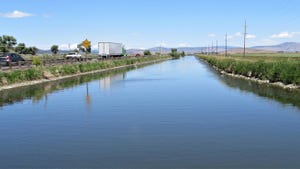
Such a scenario could likely create traffic backups at railroad crossings, interrupted irrigation schedules, constant ground vibrations to concrete irrigation canals, and prolonged delays moving workers and equipment from field to field.

I’m tired of giving America away for the almighty highest profit. While profit is what drives every company, perhaps sitting on a rural fence for a spell might invoke some pondering about the real value of one of this nation’s most endangered industries — agriculture.

A domestically produced food supply is a keystone to our nation’s national security. If Union Pacific does buy into the Punta Colonet project, let’s hope the tracks indeed bypass farm fields and travel a more deserted route.

email: cblake@farmpress.com

Get Copyright ClearanceWant to use this article? Click here for options!
© 2008 Penton Media, Inc.


Latest Jobs

resources

events icon events

product info icon tradeshows

tradeshow icon digests

research icon photos

Continuing Education

ACCREDITED IN CALIFORNIA ONLY:


Almond Pest Management

Get the latest info on almond insect pest management and earn 2 hrs. CE DPR and CCA credit in California.

California Groundwater Protection Regulations

Earn 2 hrs. in California laws and regs CE and learn how to protect California groundwater supplies.

(New Course)
Disease Management in California Almonds

Managing diseases in California almond production is a year-long process. This course provides the latest information on controlling these diseases with management practices and fungicides. The course is approved for 2 CEUs by DPR for PCAs and all applicator categories and California CCAs.

Powdery Mildew Control in California Grapevines

Learn about the No. 1 grape disease in California; earn 2 California CE hours.

ACCREDITED IN CALIFORNIA AND ARIZONA:


Insecticide Resistance Management in Agronomic and Row Crops

A 3-hr. CE approved for California and Arizona licensees and CCAs in both states.

Agronomic Weed Resistance Management in Row Crops, Trees Nuts and Vines

Weeds Resistance Management is approved for 3 hours of CE credit for all California and Arizona licensees and Certified Crop Advisers.

Lepidopterous Pest Management/ Pesticide Safety

This course is approved for 2 hours in Arizona and California (1 hr. of laws/regs; 1 hour Other) and for CCAs.

Managing Spray Drift to Minimize Problems

2-hrs laws and regs for California licensees; 2 hours in Arizona and for CCAs.

(New Course)
The Role of Copper in Disease Control

Copper has long been a key tool in disease control in a many crops. This 2-CEU course accredited California PCAs and all DPR applicator categories and Arizona applicators details how best to use copper to maximize its potential.

Back to Top

Browse Print Issues

Additional Resources

subscribe to Farm Press Daily Southeast Farm Press Southwest Farm Press Delta Farm Press