California almond acreage report

May 5, 2008 10:51 AM

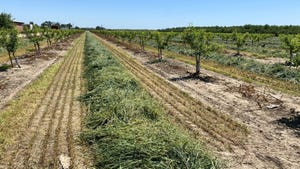
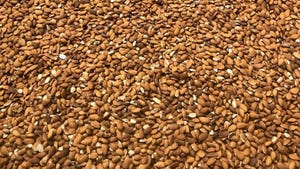
California’s 2007 almond acreage is estimated at 740,000 acres, up 1 percent from the 2006 acreage of 730,000, according to USDA/NASS.

Of the total acreage for 2007, 615,000 acres were bearing and 125,000 acres were non-bearing. Preliminary bearing acreage for 2008 is estimated at 660,000 acres.

Nonpareil continued to be the leading variety, followed by Carmel and Butte. Butte, Nonpareil, Monterey, and Padre varieties showed significant acreage increases.

Kern, Merced, Stanislaus, and Fresno were the leading counties. These four counties had 64 percent of the total acreage, unchanged from the previous year.

Objectives

The California Field Office of the USDA’s National Agricultural Statistics Service (NASS) conducts an annual acreage survey of California almond growers. The purpose of this survey is to provide annual almond acreage with information on new plantings and removals. It is a continuation of a long series of industry funded almond acreage surveys.

Users are cautioned that this report consists of two parts:

– Estimated almond acreage — bearing, non-bearing, and total.

– Detailed data by variety, year planted, and county — as voluntarily reported by almond growers and maintained in the NASS data base.

With perfect information, the estimated almond acreage and the detailed data would be the same. However, differences exist for the following reasons:

– A voluntary survey of approximately 5,000 almond growers is unlikely to ever attain 100 percent completeness.

– It is difficult for USDA, NASS to detect growers that are planting almonds for the first time.

– The detailed data reflects tree removals from nearly 13,000 acres (mostly older trees) during the past twelve months. Of this number, a significant amount of acreage was harvested in 2007 prior to being pushed out, and that acreage has already been removed from the detailed data.

The major source of the almond detailed data was a questionnaire mailed to all almond growers included on the NASS database. The mailing was made in early October 2007. The questionnaire contained previously reported crop, variety, and acreage information preprinted. Producers were asked to update the information with new plantings, removals, and any other corrections; new growers were mailed a blank questionnaire. Growers were given six weeks to respond by mail. Telephone and field follow-up was then undertaken. Data collection ended in April 2008.

To arrive at the estimated almond acreage, the NASS almond acreage database was compared with pesticide application data maintained by County Agricultural Commissioners and the California Department of Pesticide Regulation.

Get Copyright ClearanceWant to use this article? Click here for options!
© 2009 Penton Media, Inc.


Latest Jobs

resources

events icon events

product info icon tradeshows

tradeshow icon digests

research icon photos

Continuing Education


*View the entire list of courses offered.


Accredited for California, Arizona and CCA hours:


New Course
Using Organic Acids to Improve Plant Production

Healthy plants have a greater ability to resist soil pathogens and insect damage. This course details how organic acids can enhance plant health. It is accredited for 1 unit in nutrients for CCAs and .5 hours for Arizona licensees. Credit is pending at California Department of Pesticide Regulation


New Course

The ABCs of MRLs

American agriculture exports 20 to 30 percent of its production annually. For specific commodities, the percentage is much higher. When recommending and applying pest management products for crops, license Pest Control Advisers (PCAs)  and applicators and farmers must be aware of which products applied are in compliance with Maximum Residue Limits (MRLs) established by foreign customers. This CE course details the MRL issue and why compliance is critical to marketing into world trade.

Back to Top

Browse Print Issues

Additional Resources

subscribe to Farm Press Daily Southeast Farm Press Southwest Farm Press Delta Farm Press