High-tech makes vegetable transplants worth second look in Salinas Valley

Apr 22, 2008 10:38 AM, By Cary Blake
Farm Press Editorial Staff
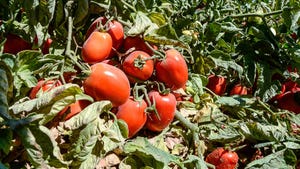

High-tech planting and cultivating equipment is elevating vegetable transplants as an economic alternative to traditional direct seeding in California’s Salinas Valley.

“Some people say let’s talk about it while others think it’s not a good idea,” said Steve Fennimore, University of California Cooperative Extension (UCCE) vegetable weed control specialist.

“The technology is here now,” Fennimore said. “We have to think outside the box to take advantage of new technologies and utilize them where they make sense in vegetable production.”

Transplants are typically used to fill in gaps in fields and during rainy planting seasons in the valley. Vegetable growers have experimented with transplanting vegetables on a limited basis instead of direct seeding, Fennimore said, but some are wary of the actual benefits.

Among the benefits of transplants in lettuce are shorter field times (30 days less than seed), increased fertilizer and water use efficiencies, plus fewer irrigations and related pumping costs, Fennimore said. Other pluses include reduced herbicide injury, and the decreased incidence of the soil-borne pathogen corky root.

Fennimore is convinced that combining vegetable transplant technology with high-tech machine vision cultivator systems could result in reduced labor inputs creating greater efficiency. Such savings could give growers the option of spending extra dollars for increased or stronger herbicide use.

Fennimore shared his perspectives and field trial research results at the 2nd annual Southwest Ag Summit in Yuma, Ariz. in March.

In field tests in the Salinas Valley, Fennimore ‘road-tested’ robotic machine vision inter-row cultivator systems in transplanted fields using the EcoDan, the RoboCrop, and a prototype of the Intra-row weeder.

The EcoDan is a first generation cultivator guidance system with a digital camera, a computer, and hydraulics. In 2005-2006, Fennimore tested the EcoDan in a broccoli field for the implement’s ability to increase herbicide efficiency and labor use, and determine the best combination of herbicide with uncultivated bands to reduce costs.

Two herbicides were used – Kerb, applied at the rate of 1.2 lb of active ingredient (ai) per acre, and Dacthal at 7.5 lb ai per acre.

Results showed a 3-inch wide band application of Dacthal plus cultivation controlled weeds equal to the 5-inch band. Hand weeding inputs and broccoli yields were the same for both bands.

In uncultivated band widths with weed control, closer cultivation to the seed line was better, Fennimore said, but it didn’t necessarily result in faster hand weeding. One-inch cultivation from the plant maybe too close – 1.5 inches is better, he said.

The RoboCrop follows up to 14 seedlines while the EcoDan follows a single seedline. Both systems feature hydraulics able to shift right and left. Fennimore’s 2007-2008 RoboCrop trial studied the efficiency of various cultivation tools, the ability to guide directed herbicide spray applications, and which cultivation tools and directed sprays allowed the most efficient use of hand labor.

Herbicides were direct sprayed to cultivate between the seed lines. The product Scythe was used at two application rates in different trials – three and six gallons in a 100-gallon spray mix. The herbicide Shark was applied at .032 pounds per acre.

Results showed knives, bezzerides, coulters, and Shark resulted in the best weed control, Fennimore said. Shark provided shorter weeding times, but moderate to severe crop injury that significantly reduced yields. Scythe didn’t provide weed control comparable to cultivation even at the 6 percent concentration.

RoboCrop is marketed in California by the Solex Corporation.

The Intra-row weeder was developed for use in weeding transplanted lettuce and cole crops in Europe. Fennimore recently saw the machine for the first time near Gonzales, Calif. being tested as a lettuce thinner. He hopes to gain funding for his own Intra-row weeder tests as a lettuce thinner and weeder.

On the issue of transplanting equipment, Fennimore said the 5-row Pearson Fountain Autoplanter is priced around $500,000. The machine uses standard plant trays and requires two people to operate, a tractor driver and transplant operator.

Fennimore shared figures compiled by UCCE Farm Advisor Richard Smith, Monterey County, on the estimated per-acre costs of direct-seeded lettuce, about $790 per acre, compared to about $960 for transplants. Not all figures necessarily showed recent cost increases.

The seeded lettuce breakdown included: $169 - seed, $172 - fertilizer, $48 - herbicide, $148 - thinning and weeding, $57 - hand weeding, and $27 - cultivation, thinning and weeding.

Smith’s estimated costs for transplanted lettuce were: $0 - seed, $509 - transplants, $172 - fertilizer, $48 - herbicide, $0 - thinning/weeding, $57 - hand weeding, $10 - cultivation, and $167 - irrigation.

Fennimore suggested growers remain open-minded on the increased use of transplants, and the financial benefits that can accrue from combining current technologies.

“We also need to encourage USDA breeders to increase the quality of lettuce transplants,” Fennimore said. “Transplants are a direction we can travel to take advantage of new technologies — from disease resistance, increased conventional or stronger herbicide use, and robotic technology.”

e-mail: cblake@farmpress.com

Get Copyright ClearanceWant to use this article? Click here for options!
© 2008 Penton Media, Inc.


Latest Jobs

resources

events icon events

product info icon tradeshows

tradeshow icon digests

research icon photos

Continuing Education

ACCREDITED IN CALIFORNIA ONLY:


Almond Pest Management

Get the latest info on almond insect pest management and earn 2 hrs. CE DPR and CCA credit in California.

California Groundwater Protection Regulations

Earn 2 hrs. in California laws and regs CE and learn how to protect California groundwater supplies.

(New Course)
Disease Management in California Almonds

Managing diseases in California almond production is a year-long process. This course provides the latest information on controlling these diseases with management practices and fungicides. The course is approved for 2 CEUs by DPR for PCAs and all applicator categories and California CCAs.

Powdery Mildew Control in California Grapevines

Learn about the No. 1 grape disease in California; earn 2 California CE hours.

ACCREDITED IN CALIFORNIA AND ARIZONA:


Insecticide Resistance Management in Agronomic and Row Crops

A 3-hr. CE approved for California and Arizona licensees and CCAs in both states.

Agronomic Weed Resistance Management in Row Crops, Trees Nuts and Vines

Weeds Resistance Management is approved for 3 hours of CE credit for all California and Arizona licensees and Certified Crop Advisers.

Lepidopterous Pest Management/ Pesticide Safety

This course is approved for 2 hours in Arizona and California (1 hr. of laws/regs; 1 hour Other) and for CCAs.

Managing Spray Drift to Minimize Problems

2-hrs laws and regs for California licensees; 2 hours in Arizona and for CCAs.

(New Course)
The Role of Copper in Disease Control

Copper has long been a key tool in disease control in a many crops. This 2-CEU course accredited California PCAs and all DPR applicator categories and Arizona applicators details how best to use copper to maximize its potential.

Back to Top

Browse Print Issues

Additional Resources

subscribe to Farm Press Daily Southeast Farm Press Southwest Farm Press Delta Farm Press