California wild pig population far larger than imagined

Feb 19, 2007 10:26 AM

Wild or feral pigs were implicated in at least one E. coli incident in a vegetable field in the Salinas Valley. Some have called wild pigs a minor contributor to the E. coli threat, pointing to domestic animals as larger sources for E. coli in California’s food crop.

However, domestic animals are far easier to see and photograph by the media than wild hogs. A University of North Dakota wildlife ecologist working in California says the wild pig problem is far greater than what the eye and camera captured and it is growing, posing a threat not only to crops, but to California’s natural habitat.

Using computer-aided mapping and records of hunting tags, Rick Sweitzer, a wildlife ecologist at the University of North Dakota supported by the University of California Exotic/Invasive Pests and Diseases Research Program has calculated how far wild pigs have expanded their range in California to encourage using alternative methods to control their spread.

Wild pigs have long been considered a threat to native species and especially native plants in California, Sweitzer says, “Unless we find better ways to manage wild pigs, California will risk losing many of its unique plants and animals. Equally important, agricultural losses might become enormously costly if wastes from wild pigs spread into croplands.”

Sweitzer and his research team compiled a database of more than 70,000 wild pig harvest locations, which they used to determine the pace of range expansion by the species in California over the last 13 years. When hunters in California apply for tags, the tags include a portion that requires hunters to provide the California Department of Fish and Game with a brief description of where the pigs are killed. Preliminary results indicate they expanded their range by more than 7,000 square miles between 1992 and 2004.

Overturn vegetation

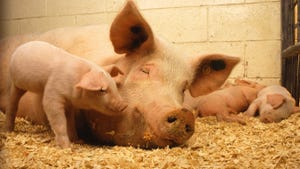
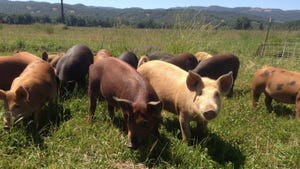
Wild pigs travel in herds, and create wallows, overturning native vegetation as they dig for food. Their rooting also damages the habitat of animals that live on or under ground such as amphibians, reptiles, mammals, and ground nesting birds. Rooting loosens soil, which may then be washed into streams and creeks, compromising water quality.

Sweitzer’s study has demonstrated that wild pigs are continuing to expand in California, even under very liberal hunting regulations of year-round hunting with no bag or possession limits. “Our results indicate that 97 types of vertebrates and plants identified as threatened, endangered, or rare are exposed to rooting and other activities of wild pigs.”

Since 1956, the California Department of Fish and Game, has classified wild pigs as big game mammals; the goal is to use sport hunting to reduce their spread. “The problem is that more than 85 percent of the current statewide population of wild pigs is in areas where hunting access is limited, such as state and federal parks, reserves and natural areas, and private lands,” says Sweitzer. “Many private landowners simply don’t want people on their properties, which means that sport hunters can’t harvest and reduce populations in the areas where most of the wild pigs live.“

There are other legal ways to manage and remove wild pigs that are causing damage to natural areas, private properties, and agriculture. The California Department of Fish and Game has made it relatively easy to obtain depredation permits that allow park managers and other people to use traps and trained hunters to remove wild pigs. This approach can be time consuming and costly, however, and is not always effective.

Smart animals

“One reason wild pigs are so popular among hunters in California is because they are smart,” says Sweitzer. “But the negative side of this is that they quickly learn to avoid traps when they sense danger, and they have even been known to play dead when being hunted from helicopters in areas like the Australian outback.”

Because it may be difficult to halt the spread of pigs by sport hunting, Sweitzer is taking a proactive approach and has used computer modeling to identify areas with suitable habitat conditions that are currently unoccupied by wild pigs. Results suggest that about 17,000 square miles of mixed hardwood and conifer woodlands in northern and eastern California are vulnerable, specifically areas in the western Sierras, Cascade Range, and along the margins of the Central Valley.

The third component of Sweitzer’s research involves a major effort to estimate how much damage feral pigs cause to California agricultural and ecological areas.

The ecologist and his team developed two surveys. One survey addresses damage to natural areas and was sent to national, state, regional, and private parks, monuments, and preserves, USDA National Forest districts, Bureau of Land Management field offices, USDI Army Corps of Engineer recreation areas, and tribal officials for Native American Tribal Lands and Reservations in California.

Sweitzer sent the second survey to all California county agricultural commissioners, including questions related to the history and trends of wild pig-related agriculture and livestock damage. Sweitzer also designed and sent commissioners maps of their counties, and asked them to mark the specific areas where damage is occurring.

“Once the areas with agricultural damage are linked up with the mapped locations of hunter-killed wild pigs, we will be able to identify statistical linkages between regions of important agricultural damage and wild pig population abundance.”

Results from these two surveys will provide the first look ever at how much damage wild pigs are causing across the state. Sweitzer’s hope is that once actual dollar numbers are assigned to the damage being caused by this non-native mammal, policy makers might think seriously about other approaches to managing them.

Get Copyright ClearanceWant to use this article? Click here for options!
© 2009 Penton Media, Inc.


Latest Jobs

resources

events icon events

product info icon tradeshows

tradeshow icon digests

research icon photos

Continuing Education

Accredited for California, Arizona and CCA hours:


(New Course)
Biopesticides -- Effective Use in Pest Management Programs

Biopesticides are increasingly being recommended as components of Integrated Pest Management (IPM) programs in the production of non-organic high-value specialty crops such as fruit, nut, vegetable, vine, ornamental and turf. This online, accredited course, sponsored by Marrone Bio Innovations, details some of the 245 registered biopesticide active ingredients used in a wide array pest management products.

Accredited in California and Arizona:


(New Course)
Agronomic Principles and Efficient Chemigation and Fertigation Using Center Pivot/Linear Sprinkler Systems

This online CE course details sound mechanical irrigation design and management practices to allow efficient chemigation and fertigation. It is accredited for Certified Crop Adviser CE units and is approved for credit hours in California and Arizona.


(New Course)
Pome, Stone Fruit Pest Management Using New Mode of Action Chemistry

New chemistry Rynaxypyr has proven effective against a wide range of economically important Lepidoptera species. Marketed under the trade name Altacor for use in grapes, pome and stone fruit, details on how to use this new chemistry are in this online Continuing Education course that is accredited in California, Pennsylvania, and New Jersey with CE applications pending in Oregon and Washington.


(New Course)
Vegetable Pest Management Using New Mode of Action

Integration of a new mode of action compound like Coragen into IPM and IRM programs to control Lepidoptera in leafy greens, fruiting vegetables, peppers and brassica or cole crops is always welcome. This online CE accredited details how best to use this new mode of action in intensive vegetable production. It is accredited in California, Arizona, Texas, Georgia, New Jersey and Pennsylvania. Application for credit is pending in Florida and Washington.

Accredited by Accredited in California and Washington:


(New Course)
Utilizing Calcium as Nutrient That Protects Against Disease Organisms

This online accredited course focus on Calcium, an important plant nutrient in fertilizer management for maximum, healthy plant development as well as disease and pest prevention. It is accredited in California, Georgia,: Pennsylvania and New Jersey. Credit pending in Florida, South Carolina, Tennessee, Virginia, West Virginia and Washington.


Accredited by California DPR and California and Arizona Certified Crop Advisers:


(New Course)

Nutrient Management in Key California Crops


This online CEU course offers a detailed look at the nutrient management in key California crops. It is sponsored online by Western Plant Health Association and funded by a grant from the California Department of Food and Agriculture Fertilizer Research and Education Program (FREP). It is accredited for one (1)-hour of credit by the California Department of Pesticide Regulation for California Pest Control Advisers (PCA), Private Applicators, Qualified Applicators and Aerial Applicators. The course is also accredited for 3 units in Nutrient Management (NM) for California and Arizona Certified Crop Advisers (CCAs).

Accredited in California, Arizona, Idaho, Oregon and Washington and for Certified Crop Advisers:


(New Course)
Organic/Sustainable Agricultural Production in the West

Organic/sustainable agriculture is expanding rapidly in the U.S. with an average annual increase of 20% during the last 15 years. This course covers a wide range of pests and organic control strategies. It is accredited for up to 4 continuing education hours for PCAs and Applicator Licensees in California, Arizona, Idaho, Oregon and Washington. It is also approved for Certified Crop Adviser credit.


ACCREDITED IN CALIFORNIA ONLY:


Almond Pest Management

Get the latest info on almond insect pest management and earn 2 hrs. CE DPR and CCA credit in California.

California Groundwater Protection Regulations

Earn 2 hrs. in California laws and regs CE and learn how to protect California groundwater supplies.


Disease Management in California Almonds

Managing diseases in California almond production is a year-long process. This course provides the latest information on controlling these diseases with management practices and fungicides. The course is approved for 2 CEUs by DPR for PCAs and all applicator categories and California CCAs.

Powdery Mildew Control in California Grapevines

Learn about the No. 1 grape disease in California; earn 2 California CE hours.

ACCREDITED IN CALIFORNIA AND ARIZONA:


The Role of Copper in Disease Control

Copper has long been a key tool in disease control in a many crops. This 2-CEU course accredited California PCAs and all DPR applicator categories and Arizona applicators details how best to use copper to maximize its potential.

Insecticide Resistance Management in Agronomic and Row Crops

A 3-hr. CE approved for California and Arizona licensees and CCAs in both states.

Agronomic Weed Resistance Management in Row Crops, Trees Nuts and Vines

Weeds Resistance Management is approved for 3 hours of CE credit for all California and Arizona licensees and Certified Crop Advisers.

Lepidopterous Pest Management/ Pesticide Safety

This course is approved for 2 hours in Arizona and California (1 hr. of laws/regs; 1 hour Other) and for CCAs.

ACCREDITED IN CALIFORNIA, ARIZONA, OREGON, AND WASHINGTON:

Managing Spray Drift to Minimize Problems

This online CEU on managing spray drift to minimize problems is accredited for 2-hours in California (Laws and Regs); Arizona, Oregon and Washington.

Back to Top

Browse Print Issues

Additional Resources

subscribe to Farm Press Daily Southeast Farm Press Southwest Farm Press Delta Farm Press