As 2007 farm bill debate heats up specialty crops seek share of federal farm programs

Jan 30, 2007 3:56 PM, By Harry Cline
Farm Press Editorial Staff

A coalition of more than 80 specialty crop producer organizations nationwide is continuing its united effort in Congress to garner a significant chunk of the new 2007 farm bill.

U.S. producers, handlers, processors, and retailers of fruit, vegetable, tree nut, and nursery crops represent 50 percent of American farm gate receipts worth $50 billion. They say they deserve the same type of federal support producers of commodity crops like cotton, rice, corn, soybeans and feed grains receive.

That’s needed, they say, to improve the competitiveness of specialty crops.

American specialty producers plan to be at the table when the new federal farm program is debated and finalized. They have spent at least three years lobbying Congress for that seat.

While commodity groups may agree that specialty crops deserve federal support, they are fearful any dollars earmarked for specialty crops will be cut from direct payment farm support. No major commodity group has endorsed the specialty crop effort.

The specialty crop group has formed the Specialty Crop Farm Bill Alliance to further their cause in Congress this year.

This effort is not new. In late December 2004, President Bush signed into law the Specialty Crops Competitiveness Act. It carried a price tag of $54 million annually, but has gone largely unfunded since it was passed.

The act identified several major challenges facing specialty crops: high vulnerability to emerging pests and diseases, trade restrictions for phytosanitary reasons, non-tariff trade barriers, and competition from subsidized imports.

To meet these challenges, the 2004 bill authorized a federal pest and disease response requirement that USDA’s Animal and Plant Health Inspection Service reduce a backlog of export permits, a peer review system to strengthen the science behind the APHIS standards that govern import and export permit requests and additional funds for a program that provides technical support to the specialty crop industry.

Most of these provisions were included in a new specialty crop bill. Called the Equitable Agriculture Today for a Healthy America Act (EAT Healthy America Act), it was introduced by U.S. Rep. Richard Pombo, R-Calif., Rep. Dennis Cardoza D-Calif. Rep. John Salazar, D-Colo., and Rep. Adam Putnam, R-Fla. All except Pombo won re-election. Cardoza is expected to provide leadership for this new bill in the new Democratically-controlled Congress.

Gain most

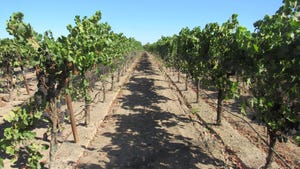
California stands to gain the most since about one-half of the nation’s special crop production is from California.

The new EAT Healthy America Act also recommends an overseas specialty crop marketing program jump by 75 percent to $350 million and that the government buy at least $400 million worth of fruits and vegetables annually for school lunch programs.

It includes expanding a block grant program tenfold to $500 million.

It proposes doubling the size of the existing wetlands reserve program and increasing fivefold the size of existing grassland reserve programs.

It provides $10 million annually for specialty crop producers who want to investigate whether foreign countries are dumping products in the U.S.

It would create a $100 million per year matching grant program to promote consumption of fruits and vegetables. It would also establish a $3.7 million specialty crop economic and policy institute.

There are no provisions in the bill for direct payments to growers.

This new bill was introduced as a marker bill last year to shape debate this year on a special crop provision in the 2007 farm bill. A complete cost estimate will likely be tallied as this debate heats up in Congress. The bill introduced last fall garnered the support of 74 co-sponsors from 20 states, according to a spokesman for the alliance.

It has also gained the support of the Environmental Defense Fund (EDF) and American Farmland Trust. Support of EDF for this bill will not endear the specialty crop effort to commodity producers who have been publicly castigated by EDF for the amount of crop subsidies they receive.

“This bill is a comprehensive farm bill package providing the necessary framework to enhance the competitiveness of the specialty crop industry,” states Tom Nassif, president of Western Growers.

Western Growers is an agricultural trade association whose 3,000 members grow, pack and ship 90 percent of the fresh vegetables and nearly 70 percent of the fresh fruit and nuts grown in Arizona and California, about one-half of the nation's fresh produce. Western Growers has been a major driving force of the specialty crop alliance and legislation.

Other major specialty crop groups have joined Western Growers.

Components included

“As the debate on the 2007 farm bill takes shape, we will work with the agriculture committees and the other members of Congress to ensure that the components of this legislation become a part of U.S. farm policy,” said Mike Stuart, president of Florida Fresh Fruit and Vegetable Association, another major supporter of this effort.

“Specialty crops face significant challenges,” said John Keeling, executive director and CEO of the National Potato Council. “While it is clear that specialty crop producers do not favor a direct payment program for themselves, it is equally clear that they expect their needs to receive the same attention as those of producers who have been the focus of previous farm programs. By establishing farm bill programs that address the priorities of both specialty crops and program crops, our farm policy will be more equitable for all of agriculture.”

California secretary of the California Department of Food and Agriculture A.G. Kawamura has strongly endorsed a strengthened specialty crop component in the federal farm program. “I believe there are a number of federal policy changes that are needed to accomplish the compatible goals of achieving a healthy diet for the American public and increasing the competitiveness of specialty crop producers.

“I support this legislation, as not only a means to address sanitary and phytosanitary issues facing farmers, but also as a way to address nutritional challenges facing an increasingly obese society.”

USDA Secretary Mike Johanns has added his support to the concept by saying, “The value of specialty crops is now equal to the value of program crops. And they've continued to grow over the last couple of decades."

He added federal agricultural policies should take into account the high value that specialty crops have in U.S. agriculture. Moreover, Congress can provide leadership to develop a farm bill that affords a greater sense of balance between specialty crops and traditional program crops.

“Ninety-two percent of commodity program payments go to five crops. When combined they represent a quarter of U.S. production value,” noted Johanns.

Often California growers farm both commodity and specialty crops. One of those is Charlie Fanucchi, a Kern County, Calif., farmer who grows cotton and fresh produce.

He is the chairman of Calcot, the largest cotton marketing cooperative in the West, and is also a director of Western Growers.

Achieve goals

He believes both commodities and specialty crops can achieve their goals of continued commodity support and increased specialty crop funding in the new farm bill.

“There are 268 million acres of program crops in the U.S. and it is important that those crops continue to receive direct payment support,” Fanucchi said. “You take that money away and you destroy rural America.”

He noted that the government pays $11 billion in direct payment support for commodity crops. “This represents only 11 percent of the department’s $100 billion budget. I think the money for the specialty crop element of the new farm bill can come from some other area of the department’s budget than direct payments.”

While the specialty crop segment and commodity groups have been at odds over the push for enhanced specialty crop programs, Fanucchi says there should be an alliance for both to accomplish their goals.

“The nutritional element of the specialty crop bill is one area where we can create alliances that would help both segments,” he said.

Here are a few Sunbelt organizations in the specialty crop alliance: Alabama Watermelon Association, Arizona Winegrowers Association, Blue Diamond Growers, California Association of Wine Grape Growers, California Citrus Mutual, California Grape and Tree Fruit League, California Strawberry Commission, California Table Grape Commission, California-Arizona Watermelon Association, Cherry Marketing Institute, Florida Citrus Mutual, Florida Citrus Packers, Florida Fruit and Vegetable Association, Florida Strawberry Growers Association, Florida Tomato Exchange, Florida Watermelon Association, Georgia Fruit and Vegetable Growers Association, Georgia Watermelon Association, Grower-Shipper Association of Central California, Missouri Wine and Grape Board, Missouri-Arkansas Watermelon Association, National Berry Crop Initiative, National Watermelon Association, New Mexico Wine Growers Association, North American Blueberry Council, North American Bramble Growers Association, North American Strawberry Growers Association, North Carolina Grape & Wine Council, North Carolina Potato Association, North Carolina Strawberry Association, North Carolina Watermelon Association, Peace River Valley Citrus Growers Association, Peerbolt Crop Management, South Carolina Watermelon Association, Sunkist Growers, Tennessee Farm Winegrowers Association, Texas Citrus Mutual, Texas Produce Association, Texas-Oklahoma Watermelon Association, U.S. Apple Association, United Fresh Fruit & Vegetable Association, Virginia Wineries Association, Wine America and Winegrowers Association of Georgia.

email: hcline@farmpress.com

Get Copyright ClearanceWant to use this article? Click here for options!
© 2008 Penton Media, Inc.


Latest Jobs

resources

events icon events

product info icon tradeshows

tradeshow icon digests

research icon photos

Continuing Education

Accredited by California DPR and California and Arizona Certified Crop Advisers:


(New Course)

Nutrient Management in Key California Crops


This online CEU course offers a detailed look at the nutrient management in key California crops. It is sponsored online by Western Plant Health Association and funded by a grant from the California Department of Food and Agriculture Fertilizer Research and Protection Program (FREP). It is accredited for one (1)-hour of credit by the California Department of Pesticide Regulation for California Pest Control Advisers (PCA), Private Applicators, Qualified Applicators and Aerial Applicators. The course is also accredited for 3 units in Nutrient Management (NM) for California and Arizona Certified Crop Advisers (CCAs).

Accredited in California, Arizona, Idaho, Oregon and Washington and for Certified Crop Advisers:


(New Course)
Organic/Sustainable Agricultural Production in the West

Organic/sustainable agriculture is expanding rapidly in the U.S. with an average annual increase of 20% during the last 15 years. This course covers a wide range of pests and organic control strategies. It is accredited for up to 4 continuing education hours for PCAs and Applicator Licensees in California, Arizona, Idaho, Oregon and Washington. It is also approved for Certified Crop Adviser credit.

ACCREDITED IN OREGON AND WASHINGTON:


(New Course)
Managing Spray Drift to Minimize Problems

This online spray drift management course has been certified by the Oregon Department of Agriculture and the Washington Department of Agriculture for 2 hours of credit for licensed Applicators and Consultants in Oregon and Washington.

ACCREDITED IN CALIFORNIA ONLY:


Almond Pest Management

Get the latest info on almond insect pest management and earn 2 hrs. CE DPR and CCA credit in California.

California Groundwater Protection Regulations

Earn 2 hrs. in California laws and regs CE and learn how to protect California groundwater supplies.


Disease Management in California Almonds

Managing diseases in California almond production is a year-long process. This course provides the latest information on controlling these diseases with management practices and fungicides. The course is approved for 2 CEUs by DPR for PCAs and all applicator categories and California CCAs.

Powdery Mildew Control in California Grapevines

Learn about the No. 1 grape disease in California; earn 2 California CE hours.

ACCREDITED IN CALIFORNIA AND ARIZONA:


The Role of Copper in Disease Control

Copper has long been a key tool in disease control in a many crops. This 2-CEU course accredited California PCAs and all DPR applicator categories and Arizona applicators details how best to use copper to maximize its potential.

Insecticide Resistance Management in Agronomic and Row Crops

A 3-hr. CE approved for California and Arizona licensees and CCAs in both states.

Agronomic Weed Resistance Management in Row Crops, Trees Nuts and Vines

Weeds Resistance Management is approved for 3 hours of CE credit for all California and Arizona licensees and Certified Crop Advisers.

Lepidopterous Pest Management/ Pesticide Safety

This course is approved for 2 hours in Arizona and California (1 hr. of laws/regs; 1 hour Other) and for CCAs.

Managing Spray Drift to Minimize Problems

2-hrs laws and regs for California licensees; 2 hours in Arizona and for CCAs.

Back to Top

Browse Print Issues

Additional Resources

subscribe to Farm Press Daily Southeast Farm Press Southwest Farm Press Delta Farm Press