Lower Colorado River basin crops fare well in perchlorate testing

Jan 11, 2007 11:01 AM, By Cary Blake
Farm Press Editorial Staff

Collaborative efforts over the last three- and a-half years by three researchers portends the perchlorate level in food and feed crops grown in the lower Colorado River basin is far lower than the 2005 National Academy of Sciences’ recommended reference dose of .7 micrograms per kilogram of body weight per day.

“Even the latest research indicates the perchlorate level in crops is not a serious public health issue,” said Charles Sanchez, who spoke to farmers during the Desert Vegetable Crops Workshop in Yuma, Ariz., in late November. He is the resident director of the University of Arizona’s Yuma Agricultural Center in Yuma, Ariz., and a professor of soil, water and environmental science.

Perchlorate background

Detected in the 1990s, the chemical ammonium perchlorate leaked from a defense-related plant near Henderson, Nev., into the Colorado River. While cleanup efforts have been successful, the bottom line is that the rocket fuel ingredient continues to exist in crops in the lower Colorado River basin. Food safety has been in question since the spill.

The human issue – perchlorate levels in the body can interrupt iodine intake in the thyroid gland leading to goiter development. The ongoing issue remains: how much perchlorate leads to the problem?

Perchlorate and agriculture

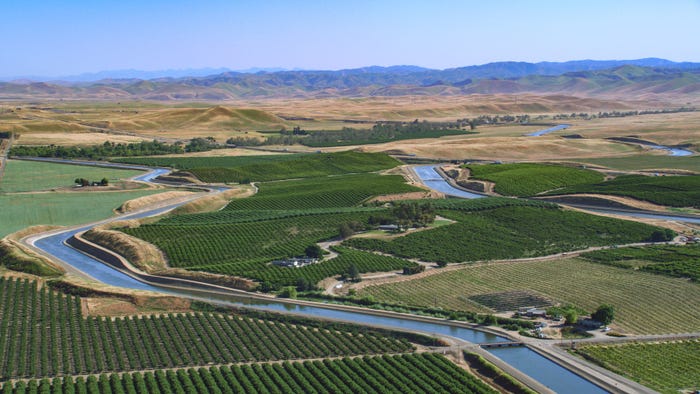
The affected river basin includes areas in California and Arizona including the Coachella Valley north of the Salton Sea, the Imperial Valley (south of the sea), the Yuma County and Imperial County valleys adjacent to the Colorado River, the Parker and Palo Verde Valleys, and the Wellton-Mohawk Irrigation and Drainage District on the Gila River that is fed by the Colorado River.

Sanchez, along with University of California-Riverside toxicologist Bob Krieger, and Center for Disease Control chemist Ben Blount, have ongoing research, testing crops grown in the basin for perchlorate levels. The U.S. Department of Agriculture, Kerr Magee (former owner of the perchlorate plant), and commodity councils have funded the projects. So far, test results are positive for agriculture.

The scientists’ agricultural findings have been reviewed through normal scientific review channels.

2006 findings

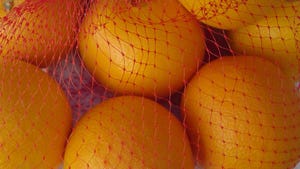
All of the research by Sanchez, Krieger and Blount has been published. The latest information released in 2006 was a telltale on perchlorate levels in citrus. Results showed below detection or very low levels.

In separate findings also published in ‘06, durum wheat was the focal point. Sanchez told the farmers in Yuma, “You can get high concentrations in the leaves and can get other concentrations in other parts of the plant. However, the perchlorate level in the grain is very low in most situations.”

‘04-’05 findings

In lettuce results published in 2004, lettuce grown in California outside of the referenced basin, plus product grown in Michigan, Ohio, New York and New Jersey, and even from Quebec, Canada, was tested. Four hundred samples were evaluated.

In ’05 published testing on various lettuce types in the Colorado River basin, perchlorate levels varied across lettuce varieties. The bottom line was exposure usually less than three percent of the reference dose.

Sanchez said, “The point is there is perchlorate in all lettuce. You can’t eat enough lettuce to get the perchlorate reference dose. The doses found in other parts of the U.S. and Canada are similar to what we’re finding in the lower Colorado River area.”

2007 and beyond

The researchers have collected data on all crops grown in the basin. Testing on brassica crops like broccoli, cabbage, and collards will soon be submitted for review.

“We have data on dairy, watermelons, cantaloupes, alfalfa, Bermuda hay, carrots, green beans, and egg plant. We should publish the information in the spring (2007).” Sanchez called the researchers’ efforts a comprehensive estimate of exposure in the area.

The information for review will also address a broader perspective - cumulative exposure.

“That’s where we’re headed in the studies. We don’t have the data yet but ultimately we’re going to see what happens to the person who eats for example lettuce, watermelon, and pasta grown in the basin. How does cumulative exposure play out with the reference dose,” Sanchez asked. He acknowledged early findings - cumulative exposure for adults will not be an issue under the current reference dose. The impact on children will be more difficult to determine.

Timely reductions

As the river cleanup continues and time moves forward, Sanchez said perchlorate amounts would fall in crops. Yet, contaminated groundwater would recover more slowly.

“This (perchlorate) will have a much longer residence time and will take a lot longer for our groundwater to turnover than will our soil solutions in the rooting zone,” he said.

Front-page news again

While news of the NAS-developed reference dose opened a floodgate of controversy in 2005 that the level was not high enough, the perchlorate issue is expected to seize headlines in 2007 on two fronts.

“Key leaders in the new Democratic-controlled U.S. Congress with perchlorate agendas have assumed key leadership of major committees. They are expected to bring the issue back to the forefront,” said Sanchez.

According to a Nov. 20, 2006 story posed on the Web site insideEPA.com , four California Democrats in Congress will likely seek more attention to the perchlorate issue including Sens. Barbara Boxer and Diane Feinstein; and Reps. Hilda Solis, 32nd Dist., and Henry Waxman, 30th Dist.

At press time, Sen. Boxer was in line to become the new chair of the Senate Environment and Public Works Committee. Sen. Feinstein was expected to chair an appropriations panel funding military construction and other areas.

Rep. Solis was the likely subcommittee chair of the House Energy and Commerce Committee’s subcommittee on Environment and Hazardous Materials. Rep. Waxman was the expected chair of the House Government Reform Committee. The Congressional leaders are likely to insist on more strict risk controls on toxic substances like perchlorate.

Also expected to create a firestorm in ’07 is a CDC finding published in the journal Environmental Health and Perspective that suggested lower levels of perchlorate lead to thyroid malfunction. The report indicated a relationship between perchlorate concentrations and the thyroid-stimulating hormone (TSH) thyrotropin.

According to the report, TA4 and THS in women changed relative to perchlorate exposure particularly when iodine was marginal. The report said predicted reductions were significant. Some women under the reference dose experienced significant hormone changes.

Sanchez noted, “The report will be a catalyst for the key Democratic leadership to reopen the debate.”

Bottom line

While the debate on acceptable perchlorate levels will face renewed challenges, Sanchez predicted the current reference dose would remain in effect for the next 2-3 years. Yet he pointed to the ongoing awareness and concern expressed by the retail food industry.

“In 2005, lettuce growers received calls from buyers for Wal-Mart and Albertson’s asking if the growers could assure them that the lettuce was perchlorate-free,” said Sanchez. “Growers can’t give them that. It comes down to dose. Our analytical methodology is so good these days to the point that we can find anything in everything. The relevant issue is the dose versus the level of concern.”

He pointed to a separate study conducted by another group, which tested urine samples in 3,000 U.S. citizens. The results - every sample contained perchlorate. The chemical occurs naturally in the environment even from lightning, Sanchez said.

email: cblake@farmpress.com

Get Copyright ClearanceWant to use this article? Click here for options!
© 2008 Penton Media, Inc.


Latest Jobs

resources

events icon events

product info icon tradeshows

tradeshow icon digests

research icon photos

Continuing Education

Accredited by California DPR and California and Arizona Certified Crop Advisers:


(New Course)

Nutrient Management in Key California Crops


This online CEU course offers a detailed look at the nutrient management in key California crops. It is sponsored online by Western Plant Health Association and funded by a grant from the California Department of Food and Agriculture Fertilizer Research and Protection Program (FREP). It is accredited for one (1)-hour of credit by the California Department of Pesticide Regulation for California Pest Control Advisers (PCA), Private Applicators, Qualified Applicators and Aerial Applicators. The course is also accredited for 3 units in Nutrient Management (NM) for California and Arizona Certified Crop Advisers (CCAs).

Accredited in California, Arizona, Idaho, Oregon and Washington and for Certified Crop Advisers:


(New Course)
Organic/Sustainable Agricultural Production in the West

Organic/sustainable agriculture is expanding rapidly in the U.S. with an average annual increase of 20% during the last 15 years. This course covers a wide range of pests and organic control strategies. It is accredited for up to 4 continuing education hours for PCAs and Applicator Licensees in California, Arizona, Idaho, Oregon and Washington. It is also approved for Certified Crop Adviser credit.

ACCREDITED IN OREGON AND WASHINGTON:


(New Course)
Managing Spray Drift to Minimize Problems

This online spray drift management course has been certified by the Oregon Department of Agriculture and the Washington Department of Agriculture for 2 hours of credit for licensed Applicators and Consultants in Oregon and Washington.

ACCREDITED IN CALIFORNIA ONLY:


Almond Pest Management

Get the latest info on almond insect pest management and earn 2 hrs. CE DPR and CCA credit in California.

California Groundwater Protection Regulations

Earn 2 hrs. in California laws and regs CE and learn how to protect California groundwater supplies.


Disease Management in California Almonds

Managing diseases in California almond production is a year-long process. This course provides the latest information on controlling these diseases with management practices and fungicides. The course is approved for 2 CEUs by DPR for PCAs and all applicator categories and California CCAs.

Powdery Mildew Control in California Grapevines

Learn about the No. 1 grape disease in California; earn 2 California CE hours.

ACCREDITED IN CALIFORNIA AND ARIZONA:


The Role of Copper in Disease Control

Copper has long been a key tool in disease control in a many crops. This 2-CEU course accredited California PCAs and all DPR applicator categories and Arizona applicators details how best to use copper to maximize its potential.

Insecticide Resistance Management in Agronomic and Row Crops

A 3-hr. CE approved for California and Arizona licensees and CCAs in both states.

Agronomic Weed Resistance Management in Row Crops, Trees Nuts and Vines

Weeds Resistance Management is approved for 3 hours of CE credit for all California and Arizona licensees and Certified Crop Advisers.

Lepidopterous Pest Management/ Pesticide Safety

This course is approved for 2 hours in Arizona and California (1 hr. of laws/regs; 1 hour Other) and for CCAs.

Managing Spray Drift to Minimize Problems

2-hrs laws and regs for California licensees; 2 hours in Arizona and for CCAs.

Back to Top

Browse Print Issues

Additional Resources

subscribe to Farm Press Daily Southeast Farm Press Southwest Farm Press Delta Farm Press