Tiny wasp joins California’s effort to combat LBAM

  • A stingerless wasp is the CDFA’s latest IPM tool in the ongoing effort to control infestations of the LBAM, an invasive agricultural and environmental pest.

A stingerless wasp no bigger than a grain of rice is the California Department of Food and Agriculture’s latest integrated pest management tool in the ongoing effort to control infestations of the light brown apple moth (LBAM), an invasive agricultural and environmental pest.

“These tiny wasps are harmless to people and pets, but they have a big appetite for the eggs of light brown apple moths,” said California Agriculture Secretary Karen Ross.  “These kinds of pest control measures are the result of CDFA’s continuing commitment to the principles of integrated pest management (IPM).  It’s a thoughtful approach that selects management options to achieve results while minimizing detrimental impacts.”

The pale yellow wasps, known to scientists as Trichogramma platneri and Trichogramma pretiosum, are native to California. CDFA plans to augment the wasp populations in areas where LBAM infestations have recently been detected.  Crews will place small cards with the wasp pupae on outdoor plants in the infested neighborhoods.  When the adults Trichogramma emerge, they will seek out LBAM egg masses in the area and lay their own eggs inside the LBAM eggs, eventually killing the developing LBAM when the wasp larvae emerge.

The initial sites chosen for this project are small LBAM-infested areas in San Luis Obispo and Sacramento counties.  Placement of the wasp pupae is scheduled to begin in July. Public meetings were held locally to inform residents of the plans, and residents will be contacted individually by crews as the wasp cards are placed.

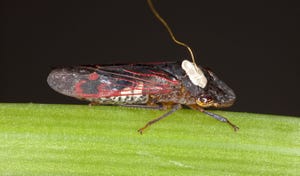
“CDFA has a long history of employing biological controls such as these tiny wasps,” said Secretary Ross.  “We’ve been using them for many years to help protect California’s grapevines from the glassy-winged sharpshooter, for example.”

The LBAM is native to Australia and is known to damage crops as well as trees and plants found in urban landscapes, parks and the natural environment. California is the only known infested area in the continental U.S.

Further information about the LBAM and CDFA’s integrated pest management efforts to control it is available at cdfa.ca.gov/lbam.

Discuss this Article 1

RobertWilliams
on Jul 7, 2011

THE LIGHT BROWN APPLE MOTH (LBAM) IS NO MORE OF A THREAT TO AGRICULTURE THAN THE WIND.

The entomologist who first noticed it, three courts who evaluated it, the state senate committee on agriculture all determined that the moth is a NON-ISSUE to agriculture.

Only the California Department of Agriculture (CDFA), the USDA, and the chemical companies who stood to rob the taxpayers of $100 Million per year for unnecessary pesticide contracts for 30 years are keeping this propaganda about LBAM alive. Also, A couple of kiss-up county agriculture commissioners who promote the CDFA's scams rather than working for the people of the county.

These wasps are another unnecessary inappropriate biological method to continue to extort taxpayers of their hard earned and these days in short supply funds.

The expensive wasps will likely throw natural systems out of balance and that will create more problems that CDFA can then pretend to solve (for more $$$ of course.)

In Northern California, these false claims about LBAM were finally uncovered and CDFA had to stop the unnecessary pesticide program there. But in order to continue to rob taxpayers, CDFA is now pulling this wasp scam and the same old pesticide scam in San Diego and San Luis Obispo where the people simply aren't familiar with the truth about this moth and this fraudulent program.

The quarantines and interference with farming are very real, but they are caused by the CDFA, not LBAM.

Contact any/every agriculture commissioner in the state and you will find: NO DOCUMENTED DAMAGE FROM LBAM in the state of California. Media reports of damage are taken from false information given to the media by the CDFA.

LBAM has been in the state for over 50 years now, not a recent arrival (about 12 years) as CDFA preaches, but regardless, NO DAMAGE, NONE. Check for yourself!

See a Professor's Press Release on the Fraud of the CDFA LBAM program:
http://www.indybay.org/newsitems/2008/10/07/18543314.php

Post new comment
Sign In or register to use your Western Farm Press ID
(optional)

Continuing Education Courses
This accredited CE course focuses on choosing the correct variety alfalfa based on a number of...
New Course
The 2,000-member Weed Science Society of America’s (WSSA) Herbicide Resistance Action...

The course details six of the primary diseases affecting citrus: Huanglongbing (Citrus...

Newsletter Signup