Planning best roadmap for invasive species control

What is in this article?:

  • Major invasive species facing California agriculture include the European grapevine moth, fruit flies, Asian citrus psyllid, and the light brown apple moth.
  • About 1,700 invasive species threaten California, according to a list from the Invasive Species Council of California.
  • California is inundated with invasive pests, says Robert Leavitt, ISCC executive director.
  • Planning, reporting, plus local, state, and national coordination are critical to invasive pest control. 

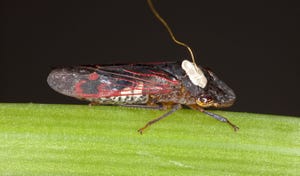
The star-studded list of invasive species facing California resembles a Hollywood ‘Who’s Who’ list for a red carpet movie premiere: the European grapevine moth, fruit flies, Asian citrus psyllid, and the light brown apple moth.

Today, about 1,700 invasive species threaten California, according to a list compiled by the advisory committee to the Invasive Species Council of California (ISCC). The ISCC is a California state agency council working toward complementary, cost-efficient, environmentally sound, and effective state activities aimed at invasive species.

“California is inundated with invasive pests,” said Robert Leavitt, ISCC executive director and director of Plant Health and Pest Prevention Services with the California Department of Food and Agriculture (CDFA), Sacramento, Calif.

Leavitt says planning, reporting, plus local, state, and national coordination are critical to invasive pest control.

Leavitt discussed invasive species during the 36th annual California Association of Pest Control Advisers (CAPCA) Conference in Anaheim, Calif., in October. More than 1,100 pest control advisers and related industry members attended the event.

Invasive species challenge pest control advisers, farmers, and government, education, and industry leaders. Leavitt outlined the ongoing combat against several major invasive species.

European grapevine moth

The CDFA, University of California, USDA, PCAs and others found themselves at war over the last year against the European grapevine moth (EGVM), Lobesia botrana. The first U.S. find of the insect occurred last fall in the Oakville area in Napa County’s wine grape country.

The moths then spread into other counties. Second and third-generation larvae cause severe damage to grapes. The battle this year focused on utilizing integrated pest management (IPM) practices in vineyards.

“The highest priority was given to grape growers with vineyards that lie within 400 meters of a confirmed trapping of EGVM,” Leavitt said.

Treatment coordinators (all licensed PCAs) served as grower liaisons in several counties to manage and monitor grower strategies. USDA’s Natural Resources Conservation Services in California provided $1 million to assist grape growers with IPM practices including “softer” chemical use. NRCS funds from the agency’s environmental quality incentives program helped eligible farmers cover about half the costs of IPM materials.

Discuss this article 1

There is NO THREAT caused by the LBAM ANYWHERE it is found in the world. The moth has been in the state for decades and has, by CDFA's own admission in their EIR, NOT CAUSED ANY DAMAGE in the state. The moth was misclassified decades ago and the USDA and CDFA refuse to respect modern research and knowledge regarding the real threat of this innocuous insect. In New Zealand, where it has been found for more then 100 years (this is true also for Hawaii, the UK, and everywhere it is native or has been introduced) farmers are required to provide only LBAM-free produce if they intend to export to the US. New Zealand farmers are not subject to quarantines, do not have to have LBAM-free farms, and the government helps these farmers with useful information on control. Our CDFA and USDA are not there to help just prevent farmers from doing their jobs and imposing restrictions. LBAM is easy to control with organic IPM methods.

The ONLY threat of LBAM is the inspections and draconian quarantines imposed on our farmers and the violation of our farms and businesses by the CDFA/USDA. The media and agricultural commissioners have not acted responsibly and need to check the misinformation they promulgate as facts regarding the LBAM and the eradication program.

Be aware that the mating disruption hormones used to reduce the number of LBAM have never had efficacy tests completed in any setting outside of agriculture. The CDFA do not know if these substances will even work. These chemical pheromones have also never been tested for any effects on humans. Please understand that the levels of these artificial substances being used in urban areas are at levels 10's of thousands of times more concentrated than those encountered in nature. What are the effects of these very persistent chemicals on humans? No one knows? Do you want to accept that risk?

Resist the quarantines, ask questions, get educated (Northern California resisted after the CDFA sprayed regions of Santa Cruz and Monterey counties with synthetic chemicals never meant for or tested for exposure to humans and without any efficacy tests on how these treatments might work), urge reclassification of LBAM. Refuse to sign compliance agreements until all of your questions are answered. Stand up and fight with legal challenges. LBAM is not a threat, our Ag agencies are the real threat despite the fact their job is to protect us.

By Stan Roller (not verified)  on Nov 10, 2010
Post new comment
Sign In or register to use your Western Farm Press ID
(optional)

Continuing Education Courses
New Course
The 2,000-member Weed Science Society of America’s (WSSA) Herbicide Resistance Action...
New Course

The course details six of the primary diseases affecting citrus: Huanglongbing (Citrus...

Get the latest info on almond insect pest management.
Farmer-to-Farmer Used Equipment